2026-07-14
Types of Double Eyelid Surgery: A Guide to Different Lines
Understanding the various types of double eyelid surgery lines is crucial for achieving optimal aesthetic results. This guide covers in-line, in-out line, semi-out line, and out-line, along with surgical methods like natural adhesion, incisional, and partial incisional techniques.

Types of Double Eyelid Surgery: A Guide to Different Lines. Understanding ‘your line’ is essential for achieving improved cosmetic results.
Our eyes are one of the most functionally important body parts for seeing and perceiving things. However, beyond their functional role, eyes also play another significant part. What makes them so crucial in this regard? I believe that for most of you reading this post, the first thing you see when you wake up each morning and face yourself in the mirror is your eyes. Whether you’re looking at yourself or others, the eyes are the first feature people notice. This is why many individuals are concerned about their eyes, both functionally and aesthetically, and frequently seek eye surgery for various reasons. Today, we’ll discuss the most common types of double eyelids and related surgeries, which are among the most representative and sought-after solutions for eye complexes.
The foundation of eye surgery begins with double eyelid surgery. Many people explore cosmetic procedures due to functional issues like entropion or aesthetic concerns about their eye shape. A double eyelid is a distinct crease that forms in the skin surrounding the eye, and this crease determines the overall eye shape, including its size and form. In the past, before cosmetic surgery became as common as it is today, many people tried to create eye lines that suited their faces using double eyelid glue or tape. Sometimes, if you have a naturally occurring double eyelid line, these artificial methods can cause its shape to change over time.
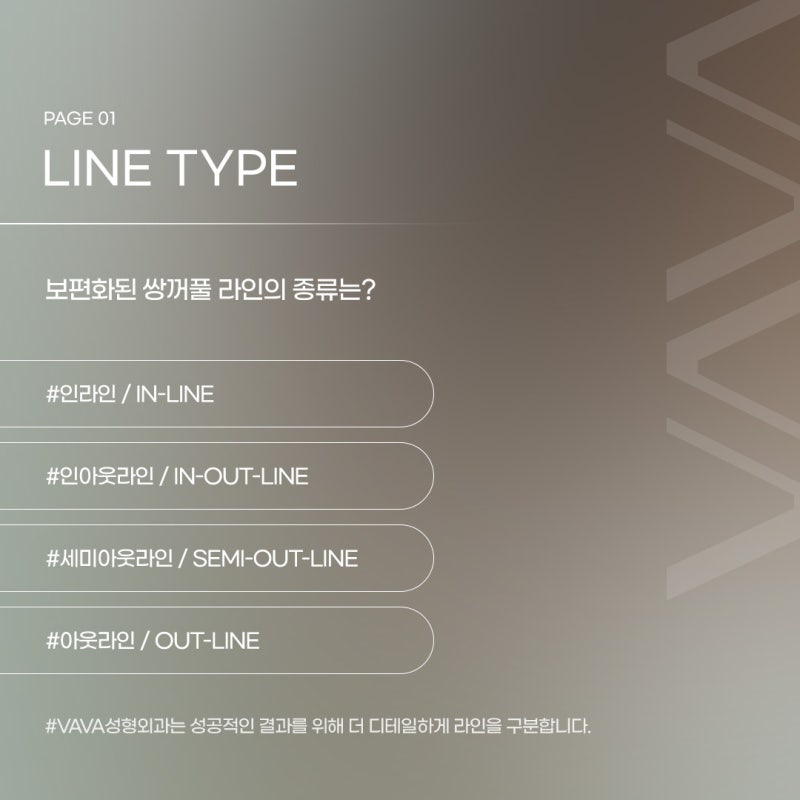
Let's explore the different types of double eyelids and their characteristics. Traditionally, double eyelids were broadly categorized into three types, but recently, considering specific eye characteristics, they are now divided into four detailed categories, allowing us to recommend the most suitable double eyelid type for your facial features.
The first is the ‘IN-LINE’.
This refers to a case where the double eyelid line and the eyelash line are almost at the same position and height. People commonly refer to this as naturally beautiful eyes, and a characteristic feature is that even after surgery, the eyes appear as if they naturally had a double eyelid. Therefore, it can be said that this technique and eye type are preferred by those who wish to enhance their appearance subtly, making it look ‘as if nothing was done’.
The second is the ‘IN-OUT-LINE’.
The in-out line is the most common method due to its versatility, suiting various eye shapes. It is particularly suitable for individuals with medium-sized eyes, neither too large nor too small, like many Koreans. This line starts with the double eyelid line aligning with the eyelash line at the inner corner of the eye, but gradually widens and rises slightly towards the outer corner. The in-out line offers a natural look while creating a clearer eye definition, making it a recommended choice for those who prioritize a strong visual impression.
The third is the ‘SEMI-OUT-LINE’.
The semi-out line is also suitable for Asians with average-sized eyes and is an appropriate surgical method for those with eyes slightly larger than average. It has gained significant attention for creating a softer impression. Furthermore, as it is a surgical method improved for East Asians, it has received positive reviews in Korea.
The last line we will explain is the ‘OUT-LINE’.
The double eyelid line is positioned above the eyelashes, creating the effect of significantly larger eyes. Therefore, this line is recommended for those who desire a distinct impression, as it can create a clear eye definition for individuals with thin eyelids whose eyes might otherwise appear somewhat blurry.
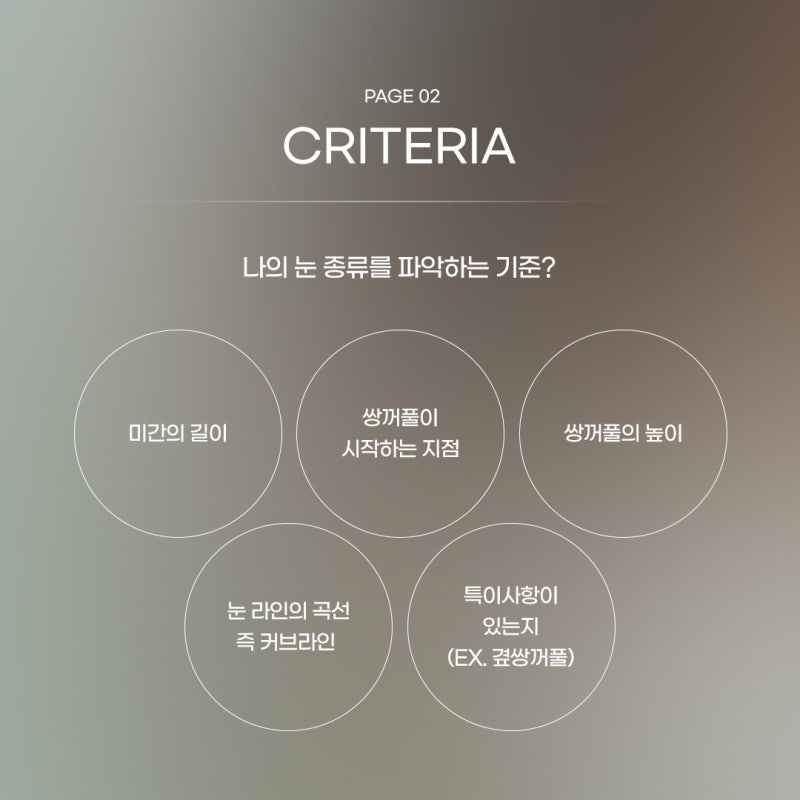
To achieve the correct eye line, it's essential to accurately understand your eye type, isn't it? At this point, you need to consider factors such as the length of the epicanthal fold, the starting point of the double eyelid, the height of the eyelashes and double eyelid, the curve of the eye line, or any unique features like multiple creases, to ensure you get the exact line you desire.
Simply put, most people have a Mongolian fold. If you create a low line based on this and your individual characteristics, you get an in-line. However, if you form the line in the same direction as the Mongolian fold, it can become an in-out or semi-out line. Finally, if you create a line higher than the Mongolian fold, you get an out-line.
The most crucial point here is to identify the line that suits you best in advance and then undergo the surgery.
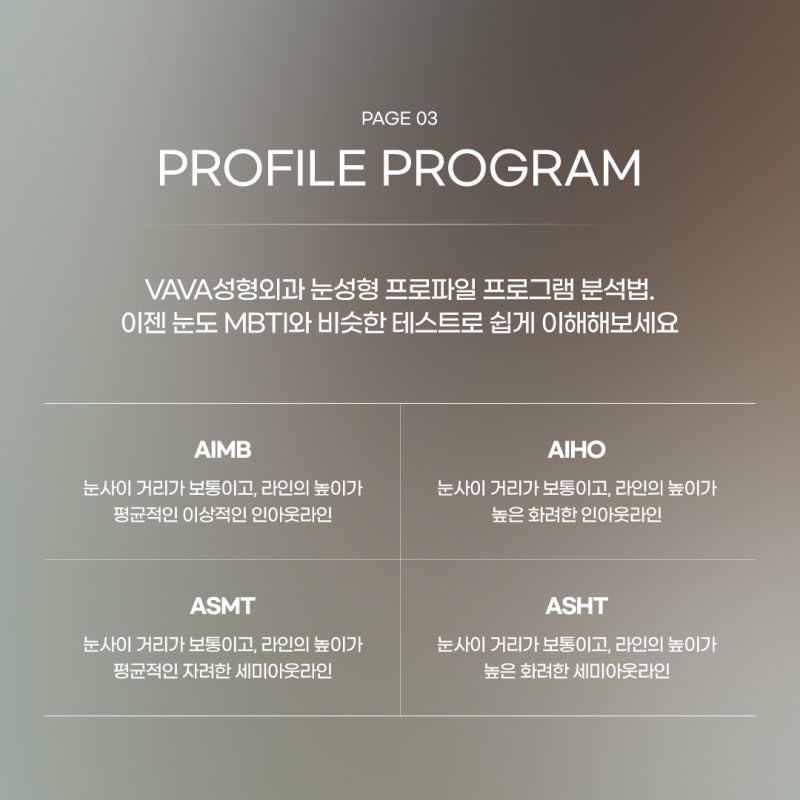
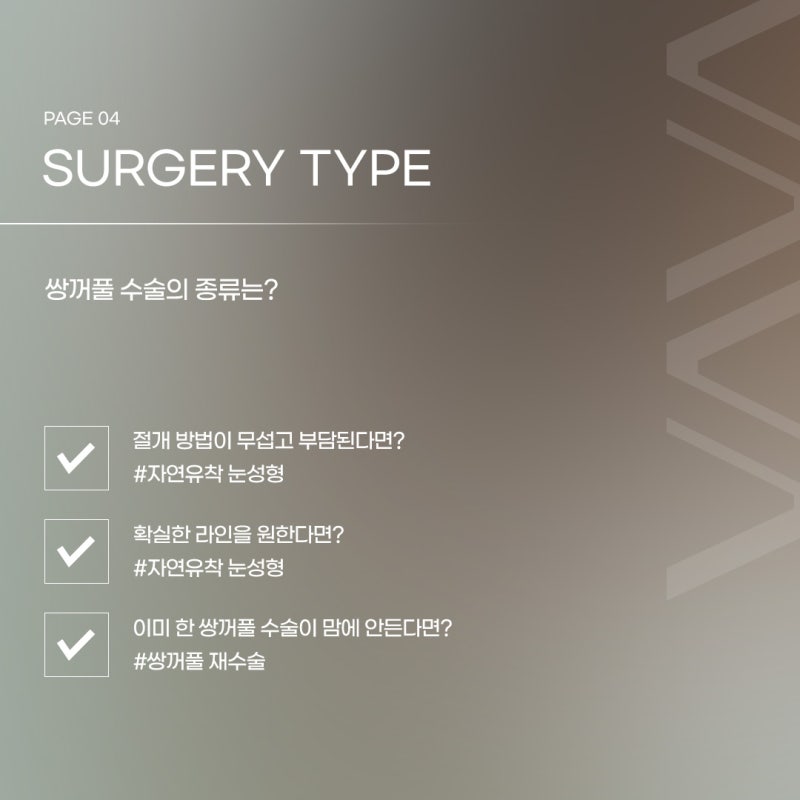
Double eyelid surgery can be categorized by eye type, and the appropriate surgical method can be chosen for each individual.
The most common double eyelid surgery method is natural adhesion, which begins by creating tiny holes at the desired double eyelid position. After removing fat, the skin is connected to the muscle located in the eyelid (levator palpebrae superioris), resulting in a clearer and more natural surgical outcome.
Next is incisional eye surgery. When creating a double eyelid line, an incision is made at the desired location to remove unnecessary skin tissue, fat, or muscle, after which the surgery proceeds. This method can improve symptoms such as sagging eyelid skin or ptosis that may occur when the eyelid skin is thick or when a thick layer of fat has accumulated on the upper eyelid. Therefore, it is a suitable surgery for those who require surgical effects for functional improvement.
Finally, the partial incisional method, as the name suggests, involves making small incisions to partially remove unnecessary fat or muscle, and then firmly supporting and suturing the skin and muscle. This method can be applied in cases where improvement is difficult with natural adhesion or buried suture techniques, or in cases where there is relatively more fat and muscle in the eyelid, or when the line created by the buried suture method has loosened.
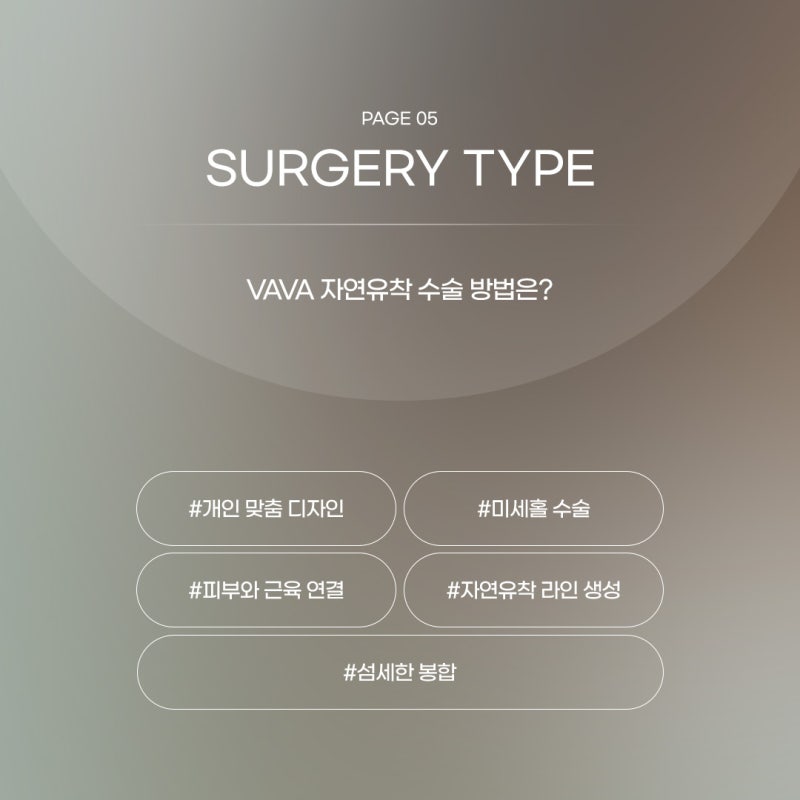
Among the types of double eyelid surgery, natural adhesion is a technique that can be applied to individuals with eyelids that are not thick and have minimal sagging, like many Koreans. It results in minimal scarring and swelling, and the extent of the surgery is not visibly noticeable, making it a natural procedure. By creating tiny holes at the desired double eyelid line, removing fat, and connecting the skin to the levator palpebrae superioris muscle, a natural eye shape can be achieved.
Although the natural adhesion method is often perceived as relatively simple, it is essential that a customized design tailored to the individual is applied in this technique. It is important to understand that tiny holes are created to firmly connect the skin and muscle, thereby forming a natural double eyelid line. Furthermore, meticulous suturing to prevent scarring is crucial for the final result.
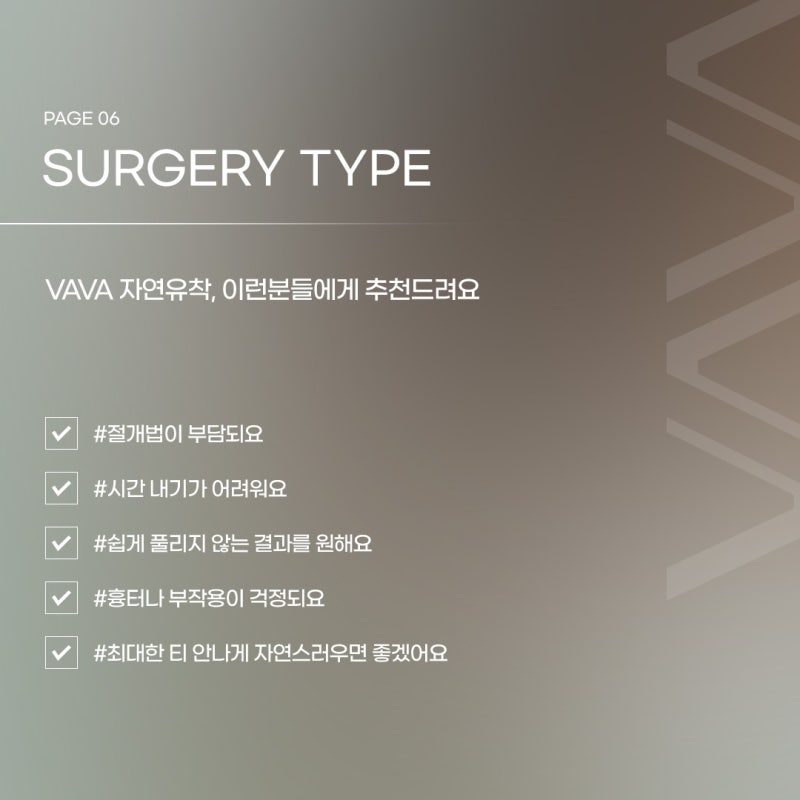
As such, natural adhesion eye surgery is suitable for those who find incisional techniques burdensome among the various types of double eyelid creation, those who desire a shorter recovery period due to time constraints, those who wish to be free from the burden of scars or side effects, and finally, those who desire a natural look that is not obvious while also wishing for semi-permanent results.
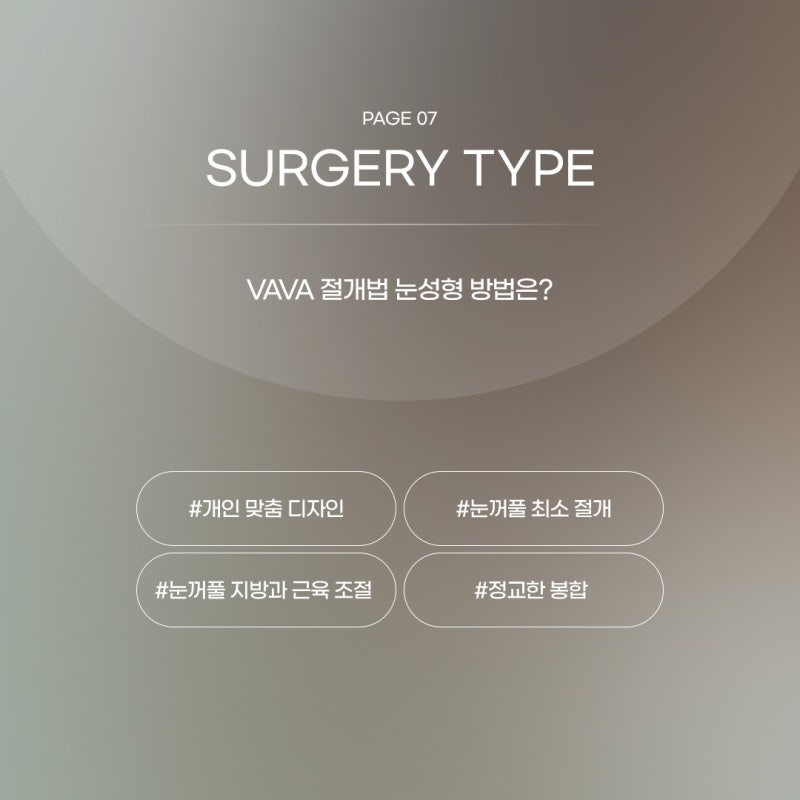
Just as human appearances vary, human eyes also differ. Beyond common eye types, even eyes with thick skin or thick fat layers can be improved with specific techniques, namely the incisional method.
This also requires the procedure to begin with a personalized design. As the scope of incision increases in any surgery, it can be difficult to avoid side effects such as scarring or inflammation. Therefore, preserving the condition of the eyelid through minimal incision and precisely controlling the fat and muscle in the lower layer of the eyelid are essential. Finally, meticulous suturing is key, as unskilled suturing can allow external viruses to penetrate the body and cause inflammation.
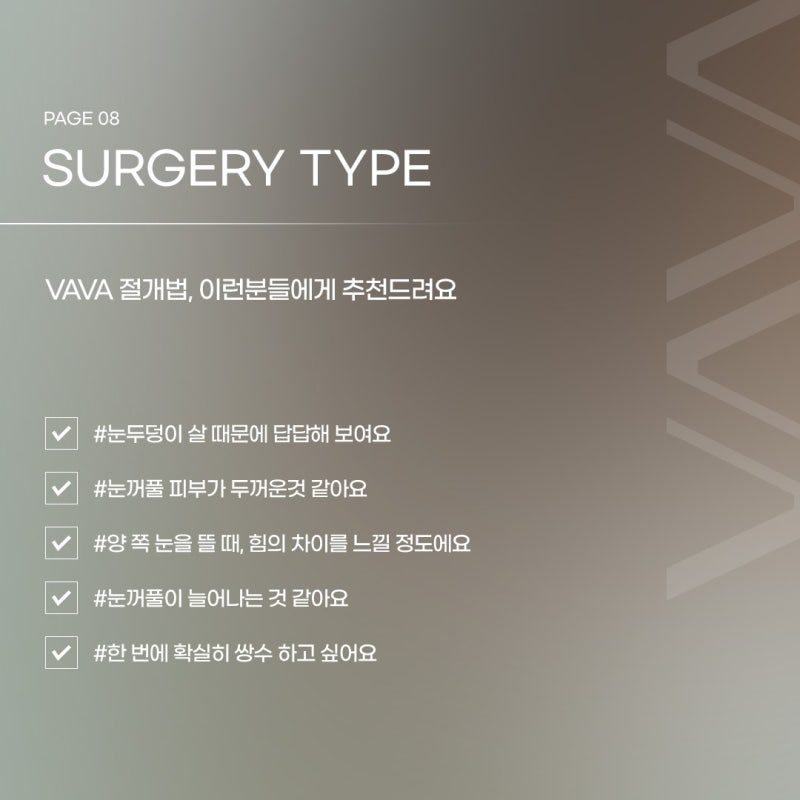
The necessity for incisional eye surgery is as shown in the example in the image above. It is crucial to first understand your own eye characteristics to determine if an incision is truly needed. We remind you that a thorough plan developed through consultation with a specialist is essential, as an incorrect choice could lead to an undesirable eye shape.
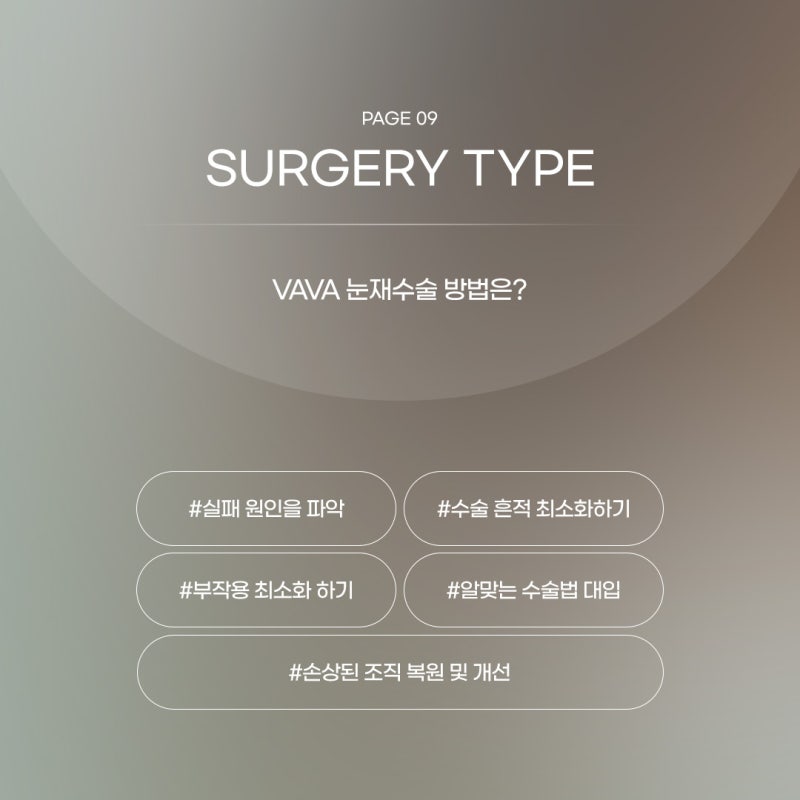
The final point of today's post is revision eye surgery. There are generally three main reasons why many people desire revision eye surgery:
First, they are dissatisfied with the shape of their eyes. Second, inflammation or side effects have occurred. Third, the initial surgery has loosened.
It can be said that the most efficient approach is to follow the step-by-step revision method shown in the image above before undergoing revision surgery.
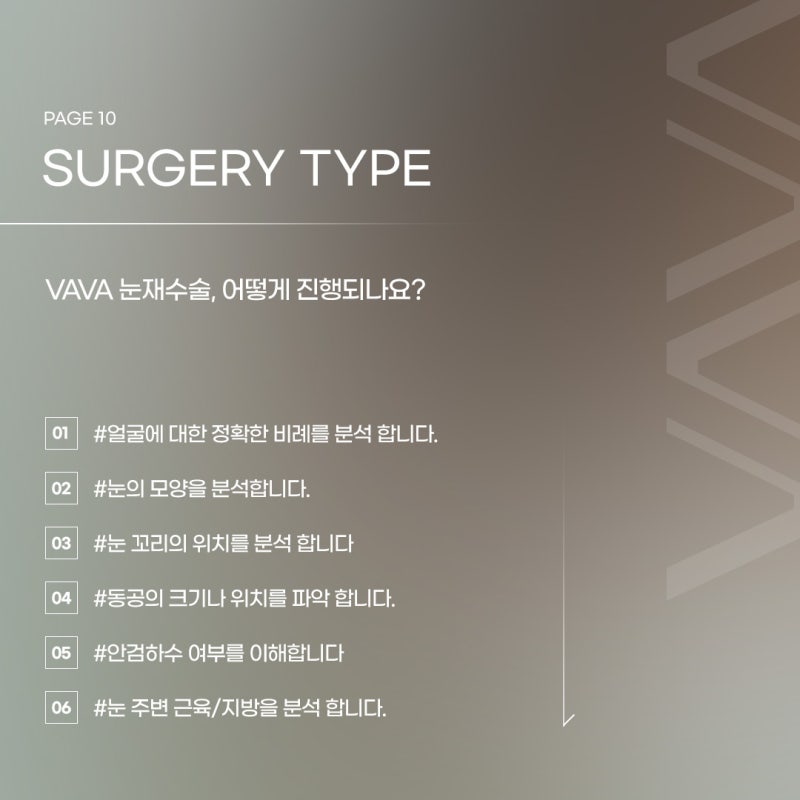
In the case of revision surgery, it is crucial for both the patient and the medical team to ‘identify the cause of the failure and consider the current condition or image’ when planning the procedure.
Through this post, we have explored the types of double eyelids and the corresponding surgical techniques that can be applied. Stating these points verbatim makes it difficult to ascertain the specific improvement points or needs of various individuals, so please use this information as a helpful reference. If you have any further questions, please feel free to communicate with us at VAVA anytime.
#VAVAPlasticSurgeryClinic #DoubleEyelidTypes #DoubleEyelidSurgeryTypes #DoubleEyelidSurgery