2026-09-07
Shindang-dong Dental Clinic: Do Wisdom Teeth Always Need to Be Extracted? What to Note When Extracting Impacted Wisdom Teeth? (Post-Extraction Pain and Swelling)
This article from Shindang-dong Dental Clinic discusses when wisdom teeth need extraction, considerations for impacted wisdom teeth, and managing post-extraction pain and swelling.
Hello,
This is Dr. Kim Tae-young, director of Bareunyoung Dental Clinic in Shindang-dong.^^
Wisdom tooth extraction seems to be a treatment that instills fear just by hearing about it.
I also had all four of my wisdom teeth extracted when I was a student.
I was scared of the anesthesia, and the thought of having something pulled out was daunting.
That's why I try my best to administer anesthesia as painlessly as possible to my patients,
and reassure them during treatment.
During check-ups, I often get questions about wisdom teeth.
‘Do wisdom teeth always need to be extracted?’
I tell them that wisdom teeth don't necessarily need to be extracted.
If the upper and lower wisdom teeth are in proper occlusion,
and brushing is effective enough to prevent cavities in adjacent teeth,
or if they are deeply impacted and not causing any problems,
I advise against extracting them unnecessarily.
Recently, we've had many inquiries about wisdom tooth extraction at our clinic,
so I've been diligently performing extractions.^^;
This particular case features various types of wisdom teeth in one patient,
making it an excellent opportunity to introduce them all at once.
Can wisdom teeth be extracted?
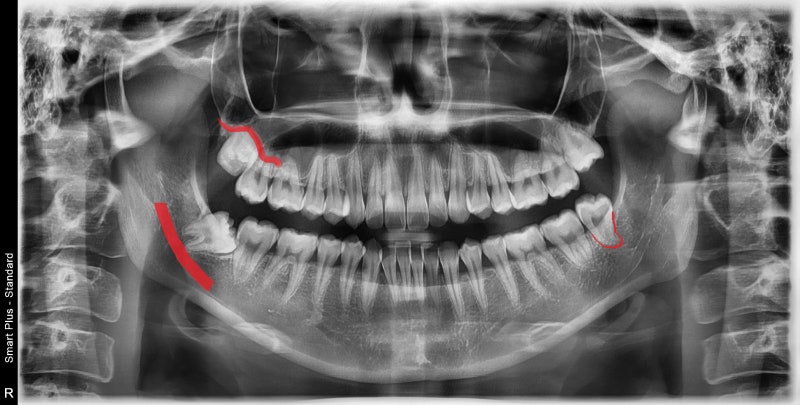
All four wisdom teeth, both upper and lower on both sides, were present.
One side was moderately erupted and could be extracted without much difficulty.
However, the wisdom teeth on the opposite side were all completely impacted,
and were even lying horizontally, pressing against the adjacent teeth.
When a dentist plans a wisdom tooth extraction, they consider factors such as:
the position of the impacted tooth, its distance from the nerve canal, the curvature of the roots, the shape of the alveolar bone surrounding the tooth, and more.
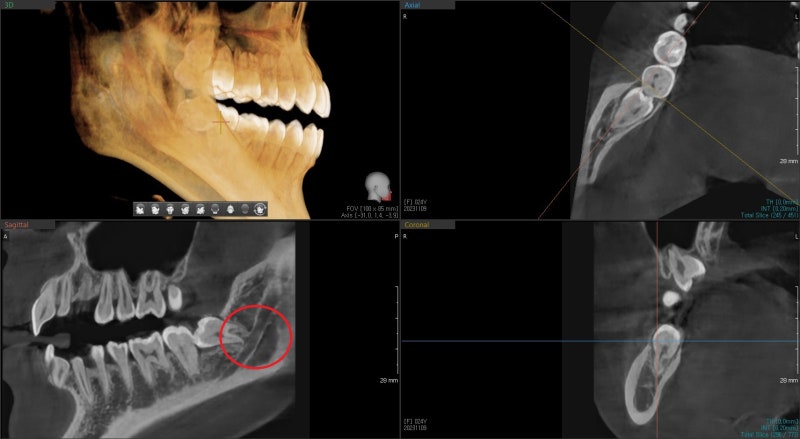
We take a 3D CT scan to evaluate the position of the impacted tooth and analyze it.
The impacted lower wisdom tooth was close to the nerve canal and its root was slightly curved,
but it didn't seem to pose a major problem for extraction.
However, gum incision and minimal bone removal around the tooth appeared necessary during the extraction process.
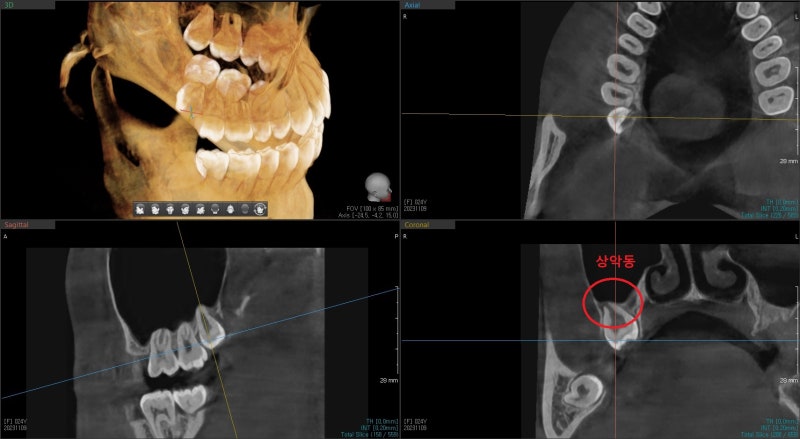
The impacted upper wisdom tooth was small,
but it was connected to the maxillary sinus (paranasal sinus) membrane,
and in cases where the surrounding bone is weak,
the tooth sometimes enters the maxillary sinus during the extraction process.
Even if this happens, it eventually needs to be removed,
so we began the extraction as carefully as possible.
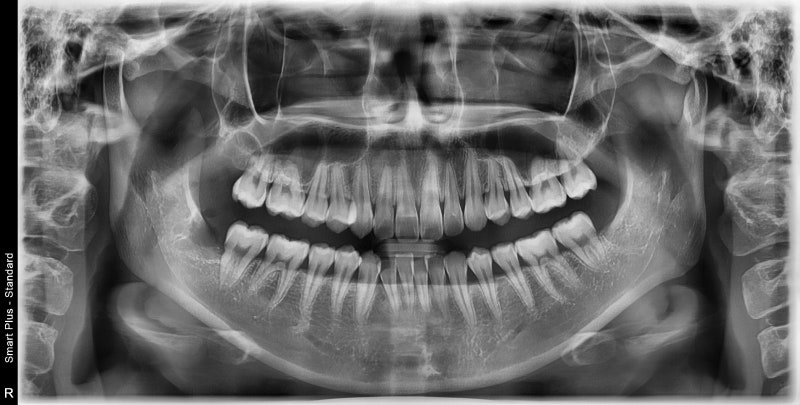
Fortunately, the extraction was smooth, as shown in the post-extraction photo.
Since various types of wisdom teeth were extracted from one patient, the swelling and pain will differ in each area.
The causes of pain after wisdom tooth extraction include:
gum incision, amount of bone removed around the tooth, extent of bleeding, duration of extraction, maxillary sinusitis
Because of these factors, we try to perform extractions with the minimum intervention and in the shortest time possible.
Even for similar cases, the degree of pain varies from person to person,
but generally, it subsides within 1-2 days.
For some individuals, it can last up to a week.
To manage these, we sometimes use injections and hemostatic agents.
Not just wisdom teeth, but any tooth that develops inflammation due to cavities
can be difficult to anesthetize and control pain afterward.
Therefore, if you anticipate a problem, we recommend getting an early check-up
and planning the extraction.
Thank you.^^
Frequently Asked Questions
Do wisdom teeth always need to be extracted?
No, not necessarily. If the upper and lower teeth occlude well, brushing is effective enough to prevent cavities in adjacent teeth, or if they are deeply impacted and not causing any problems, extraction is not strictly necessary.
What factors are considered when extracting impacted wisdom teeth?
The dentist considers various conditions such as the position of the impacted tooth, its distance from the nerve canal, the curvature of the roots, and the shape of the alveolar bone surrounding the tooth to plan the extraction. A 3D CT scan is used for precise analysis to ensure a safe extraction.
Why does pain occur after wisdom tooth extraction?
Pain after wisdom tooth extraction can be caused by various factors, including gum incision, the amount of bone removed around the tooth, the extent of bleeding, the duration of the extraction, and maxillary sinusitis. We strive to minimize these factors.
How long does pain last after wisdom tooth extraction?
Generally, it subsides within 1-2 days, but there are individual differences, and for some, it can last up to a week. Injections or hemostatic agents may be used to help control the pain.
Is a pre-extraction check-up important for wisdom teeth?
Yes, it is important. If inflammation occurs due to cavities, anesthesia may not work well, and pain control can be difficult. Therefore, if a problem is anticipated, it is recommended to get a check-up in advance and plan the extraction.