2026-09-03
Sinnonhyeon Station Dermatology: Why Does a Peanut-Shaped Face Occur? Lifting vs. Filler Treatment Differences Explained
Discover why a peanut-shaped face develops and the key differences between lifting and filler treatments at Sinnonhyeon Station Dermatology.
※ This article is written for the purpose of providing medical information.
It is not subject to review under Article 56, Paragraph 2 and Article 57 of the Medical Act,
and we inform you that it is not an advertisement unrelated to the content of the review.
Hello,
I am Dr. Park Jeong-geun,
Director of Face Plus Plastic Surgery Clinic.

Among those seeking a dermatology clinic near Sinnonhyeon Station,
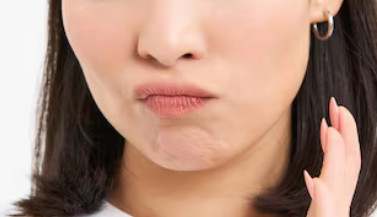
it's not uncommon for people to express concerns about a ‘peanut-shaped face’.
They often describe their face as looking narrow and angular,
with the central part appearing sunken while the cheekbones or lower jaw on both sides stand out.
This shape is often not simply due to weight loss,
but rather a result of changes in facial volume distribution,
leading to a stronger relative contrast.
As we age, the central part of the cheeks tends to sink,
while the outer areas may relatively remain or
shift downwards, easily creating this impression.
Therefore, when addressing a peanut-shaped face, focusing on just one area can sometimes
exacerbate the issue. It's crucial to consider the entire facial structure together.
Lifting and fillers have different objectives from the outset.
When improving a peanut-shaped face, lifting and fillers are commonly compared approaches.
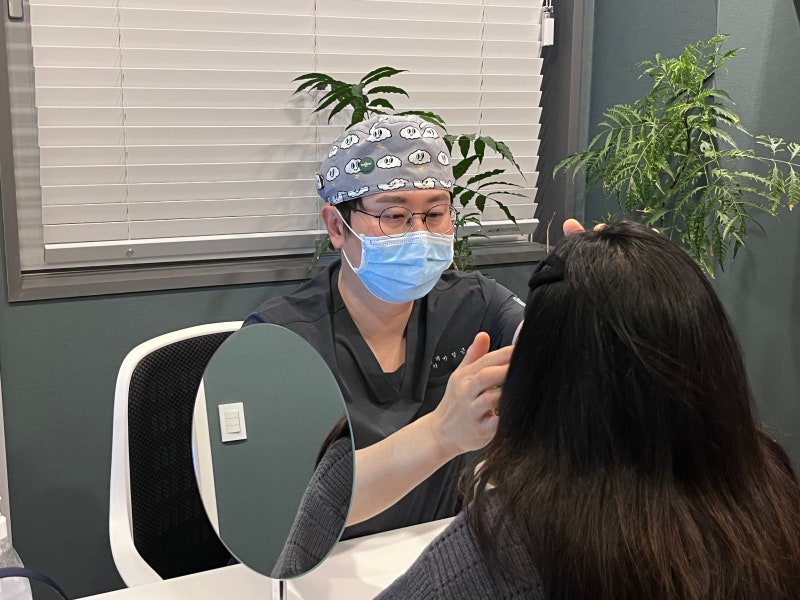
These two methods have fundamentally different purposes.
Lifting focuses on smoothing the facial contours by repositioning descended tissues,
while fillers serve to restore balance by adding volume to sunken areas.
Problems arise when these two are applied without proper distinction.
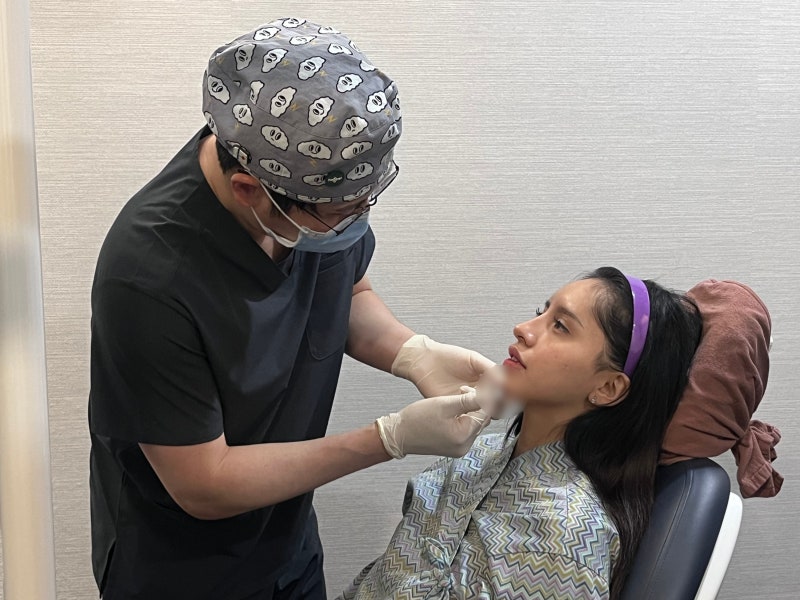
For example, if only strong lifting is applied to a face primarily characterized by hollowness,
the contrast between the sides might become even more pronounced.
Conversely, if structural sagging is the cause but only fillers are repeatedly used,
the face might appear dull or the overall impression could become heavy.
Therefore, rather than deciding which procedure is 'right', it's essential to first determine
whether the current face needs 'repositioning' or 'volume enhancement' to achieve natural results.
Naturalness depends more on the application method than the type of procedure.
Naturalness depends more on the application method than the type of procedure.
If excessive changes are made to a peanut-shaped face,
it can actually make the impression sharper or reveal awkwardness in expressions.
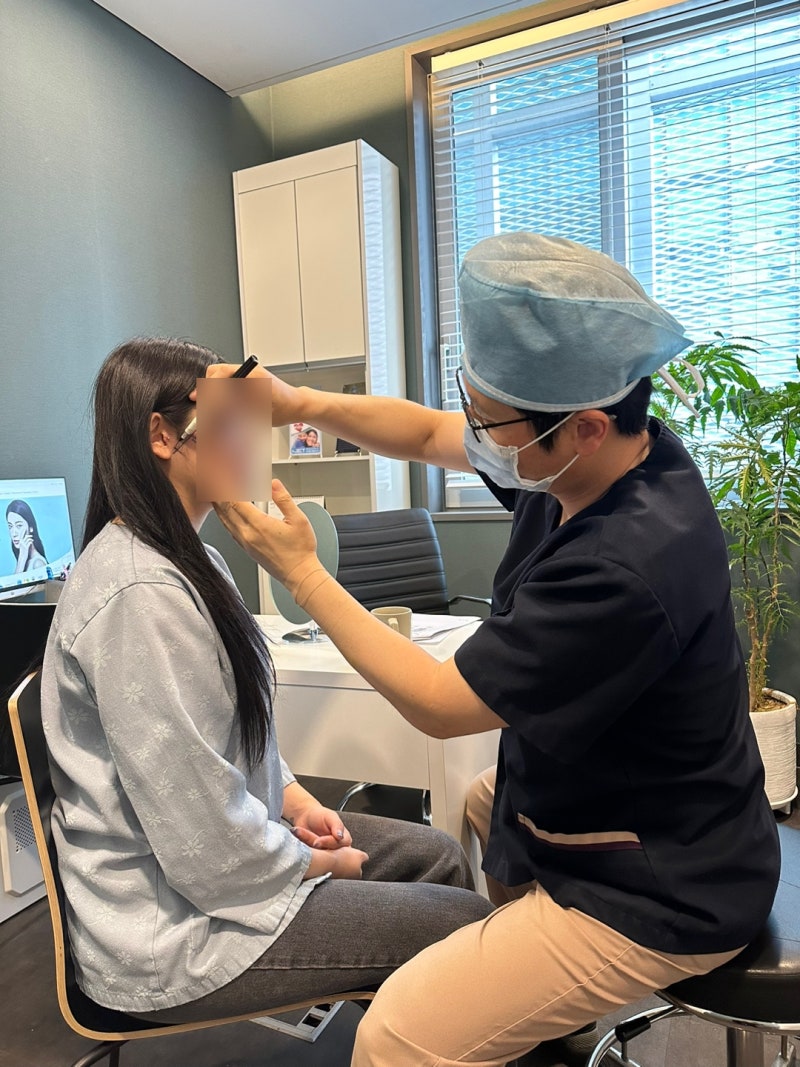
Especially when applying lifting, it's important to distribute the force to balance the entire face,
rather than pulling strongly at a single point.
This approach also tends to result in relatively stable swelling and bruising.
Conversely, if the procedure is performed according to a fixed pattern without sufficient consideration of the facial structure,
the changes might feel excessive, or the recovery process could be more burdensome.
The same applies to fillers: when used to soften contour contrasts rather than simply to add volume,
the facial impression becomes smoothly refined.
The key to improving a peanut-shaped face is balance adjustment.
Ultimately, the core of improving a peanut-shaped face is not ‘how much to change’, but ‘where and how to adjust’.
Trying to solve all facial concerns with a single method will inevitably lead to limitations in the results.
Natural refinement is only possible when considering the relationship between the central and outer parts of the face,
the upper and lower balance, and even the movements revealed in expressions.

Lifting and fillers are not interchangeable; rather, they are tools whose roles vary depending on the facial condition.
I hope this article has helped you understand the causes of a peanut-shaped face and the differences between procedures.
Thank you for reading to the end.
Happy New Year!
-Operating Hours-
Weekdays 9:00 ~ 18:00 Saturdays 9:00 ~ 16:00 Public Holidays / Sundays Regular closure |
-Contact Us-
Face Plus Plastic Surgery Clinic | ||
Consultation Phone: 02-541-8500 Inquiries: KakaoTalk Inquiry |
-Directions-
Frequently Asked Questions
Why does a peanut-shaped face occur?
A peanut-shaped face often results not merely from weight loss, but from changes in facial volume distribution, leading to a stronger relative contrast. As one ages, the central part of the cheeks tends to sink, while the outer areas may relatively remain or shift downwards, easily creating this impression.
Which treatment, lifting or filler, is more effective for improving a peanut-shaped face?
Lifting and fillers have fundamentally different objectives. Lifting smooths facial contours by repositioning descended tissues, while fillers add volume to sunken areas. Therefore, rather than one being ‘more effective’, it's crucial to first determine whether the current face needs ‘repositioning’ or ‘volume enhancement’ to achieve natural results.
How can one achieve natural results with a lifting procedure?
For natural results with a lifting procedure, it's important to distribute the force to balance the entire face, rather than pulling strongly at a single point. When the procedure is performed in a personalized manner that sufficiently considers the facial structure, rather than a fixed pattern, it allows for moderate changes and stable recovery.
What should be considered when using filler treatment to improve a peanut-shaped face?
Filler treatment refines the facial impression more smoothly when used to soften contour contrasts rather than simply to add volume. If structural sagging is the cause but only fillers are repeatedly used, the face might appear dull or the overall impression could become heavy, so an application method that considers the entire facial structure is important.
What is the key to improving a peanut-shaped face?
The key to improving a peanut-shaped face is not ‘how much to change’, but ‘where and how to adjust’. It's crucial to adjust the overall balance of the face, considering the relationship between the central and outer parts, the upper and lower balance, and even the movements revealed in expressions.