2026-09-07
Problems Arising When Too Much Time Passes After a Tooth Extraction Near Singeumho Station Dental Clinic
Discover the issues that arise when tooth extraction is delayed, such as shifting and extrusion of adjacent teeth, making subsequent treatments more complex and lengthy. Learn why prompt dental care is crucial for maintaining oral health.
Singeumho Station Dental Clinic: Problems Arising When Too Much Time Passes After a Tooth Extraction (Why Immediate Treatment is Necessary)
Hello,
I am Dr. Kim Tae-young, the head director of Bareunyoung Dental Clinic,
where the head director personally explains treatment cases.

Many patients who visit our clinic for the first time or are referred to us have a fear of dental treatment.
Of course, it's important to administer anesthesia painlessly and proceed with treatment, but I believe that conducting treatment in a psychologically stable state
allows patients to receive treatment comfortably and yields better results. Therefore, sometimes the time spent explaining in detail and waiting is longer than the actual treatment time.^^
Even if it takes a long time, I believe it is very important for patients to understand what treatment they are receiving and to provide predictable treatment.
What happens if a long time passes after a tooth is extracted?
Sometimes, teeth need to be extracted due to periodontal problems or deep cavities, but patients delay treatment because they are afraid of subsequent dental procedures.
In such cases, let's explore what happens to the teeth in our oral cavity when a long time passes after a tooth extraction.
The teeth in the oral cavity support each other, with the upper and lower teeth providing mutual support and lateral stability.
When an opposing tooth or an adjacent tooth is lost and time passes, the teeth may supraerupt or tilt into the empty space.
In such cases, if treatment is delayed, it may become necessary to treat not only the missing tooth area but also the surrounding teeth that have shifted position.
Tilting and Supraeruption of Teeth
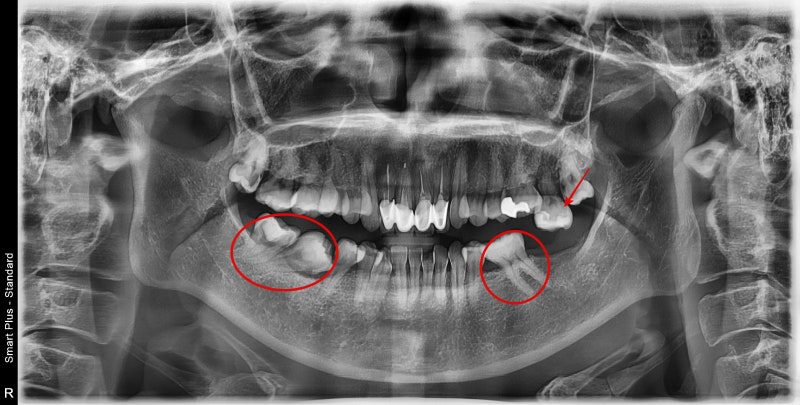
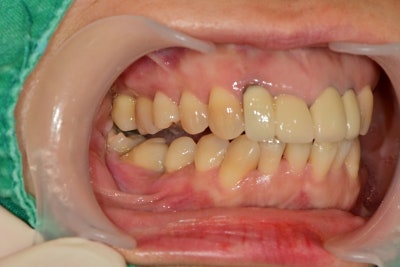
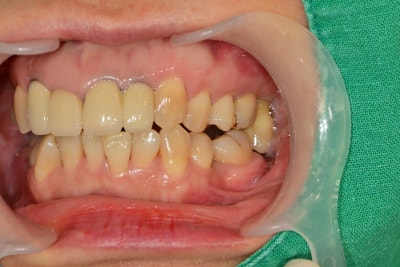
A patient who had delayed treatment due to fear of dental procedures visited us through a family referral.
Three lower molars had been extracted, and over a long period, the lower molars had tilted, and
the upper teeth had supraerupted downwards because there were no teeth below to support them.
The degree of tilting and supraeruption of the teeth was so severe that extraction of these teeth was unavoidable for implant surgery.
We explained the current situation in detail to the patient, who had shown great courage to visit, and decided to proceed with treatment one side at a time.
The Beginning of Implant Surgery
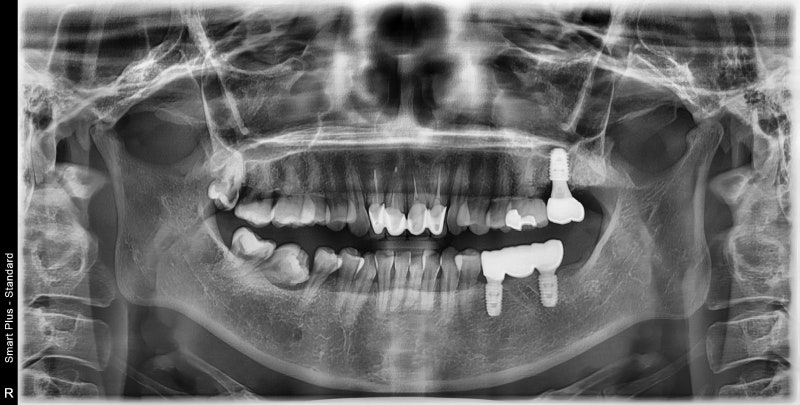
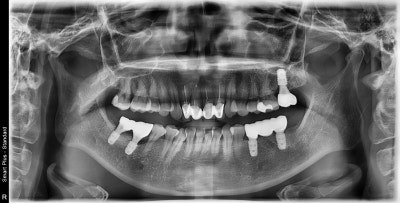
After extracting the left teeth, implant surgery was performed, and the prosthetics were completed.
Fortunately, on the right side, the tilted molars were supporting the upper molars, so the occlusal changes were not significant. Only existing cavity treatment was performed, and implant surgery was carried out only in the lower area.
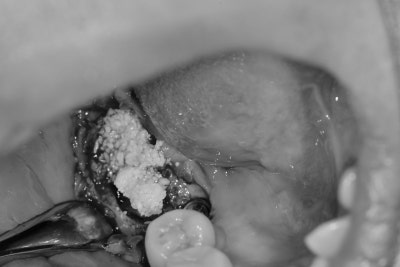
Since the space where the teeth had tilted was very large, alveolar bone grafting was performed in the empty space around the implant
to reinforce the bone around the implant.
The surgery was divided, and the right side took longer than the left, so the total treatment period was inevitably extended. However, the patient followed instructions well, and we were able to complete it successfully.
In retrospect, the surgery itself was not that difficult.
However, I can't help but think that if treatment had been sought a little earlier, it could have been completed with minimal intervention without extracting natural teeth.
Patients may not have been able to proceed with treatment at the time due to various circumstances, but when they decide to seek treatment after a long time, the treatment period can be longer, and the scope of treatment may inevitably widen.
While implants are not a panacea or a permanent solution, they are certainly an excellent option for replacing missing teeth.
To maintain these implants for as long as possible, it is important to visit regularly for preventive treatment for periodontal disease.
Those who are afraid of dental treatment can greatly benefit from regular check-ups and preventive treatments like scaling by visiting the clinic.
Today, at #SingeumhoStationDentalClinic,
we've looked into situations that can arise when a long time passes after a tooth extraction.
I hope your questions have been answered. If you have any discomfort, please visit us, and we will assist you in detail.
Thank you^^
▼ Related cases you might find helpful
I believe that proper treatment leads to proper results.My ideal dental clinic is one where all patients who visit with worries can leave feeling reassured and confident in the care they received.- Bareunyoung Dental Clinic
DirectionsJYJ Building, 2nd Floor, 179 Dongho-ro, Jung-guRight in front of Exit 6 of Yaksu Station, towards Yaksu MarketVillage Bus 5 (Yaksu Station)Village Bus 12 (Namsan Town, Yaksu Police Station)Bus stops (Yaksu Heights, Sindang Social Welfare Center, Gaon Library, Geumho Tunnel Entrance)From Yuyu Pharmaceutical towards Geumho Station
This post was written directly by Bareunyoung Dental Clinic for the purpose of providing medical information and hospital advertising (in compliance with Article 56, Paragraph 1 of the Medical Service Act).
Frequently Asked Questions
What problems arise if a tooth is left extracted for a long time?
Yes, if a tooth is extracted and a long time passes, surrounding teeth may tilt into the empty space, or opposing teeth may supraerupt downwards. This can lead to the need to treat not only the missing area but also the shifted surrounding teeth when treatment is eventually sought.
Does delaying treatment after extraction make implant surgery more difficult?
Yes, delaying treatment can make implant surgery more complex. If the tilting or supraeruption of teeth is severe, additional extractions of those teeth may be necessary for implant surgery, and the treatment period may also be extended.
What should I do if I am afraid of dental treatment?
If you are afraid of dental treatment, it is advisable to visit the dental clinic regularly for preventive treatments like scaling and routine check-ups. It is important to proceed with treatment in a psychologically stable state.
Is an implant a permanent treatment?
No, an implant is not a panacea or a permanent treatment. However, it is an excellent option for replacing missing teeth, and to maintain it for as long as possible, it is crucial to visit regularly for preventive treatment for periodontal disease.
When is alveolar bone grafting necessary?
Alveolar bone grafting may be performed during implant surgery when the space where the tooth had tilted is very large, requiring bone reinforcement around the implant. This procedure strengthens the bone around the implant.
Why should treatment be done immediately after tooth extraction?
Treatment should be done immediately after tooth extraction because delaying it can cause the surrounding teeth to shift, leading to a wider scope of treatment and a longer treatment period later on. If treated promptly, it might have been possible to complete the treatment with minimal intervention without extracting natural teeth.