2026-09-03
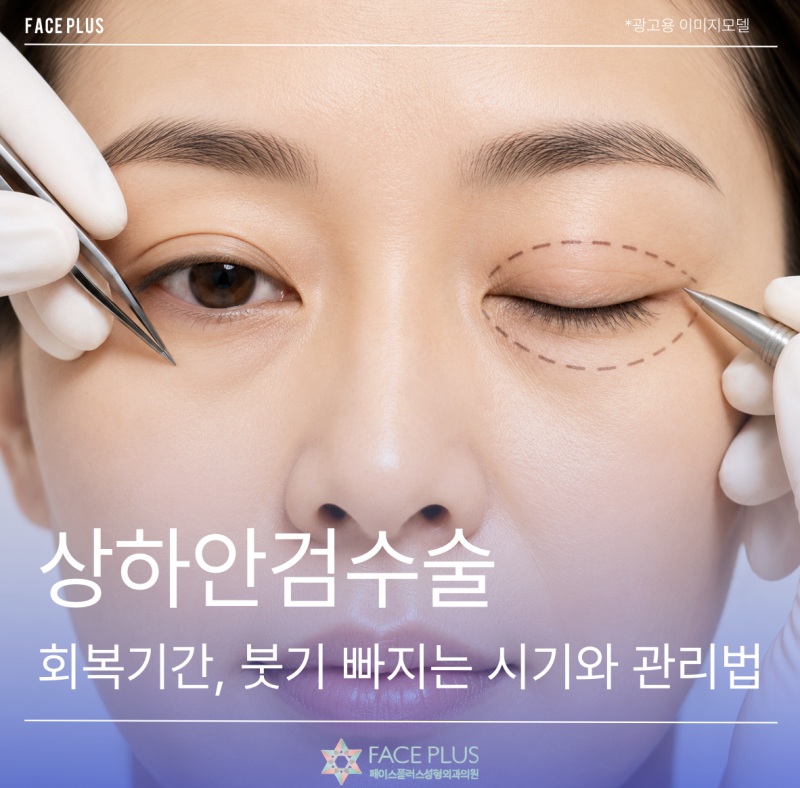
Upper and Lower Blepharoplasty Recovery Period: Swelling Timeline and Management Tips
Understand the recovery process after upper and lower blepharoplasty, including why swelling occurs, its timeline, and essential management tips for a smooth return to daily life.
※ This article is intended to provide medical information.
It is not subject to review under Article 56, Paragraph 2 and Article 57 of the Medical Service Act,
and we inform you that it is not an advertisement unrelated to the review content.
Hello,
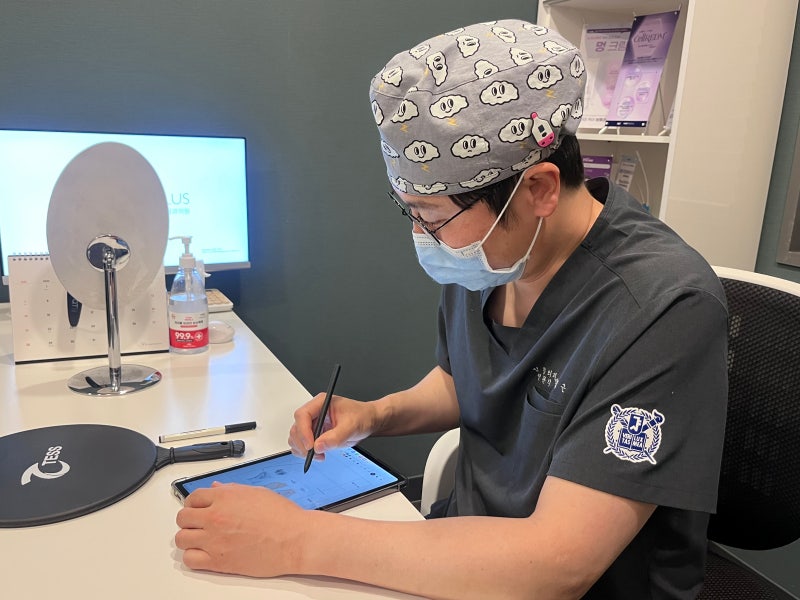
I am Dr. Park Jeong-geun,
Director of Faceplus Plastic Surgery Clinic.
As people age, many consider
upper and lower blepharoplasty due to changes around their eyes.
Among the most frequently asked questions in consultations are:
‘When will the swelling go down?’
‘When can I return to daily life?’
Upper and lower blepharoplasty involves correcting
the skin and tissues around the eyes,
so understanding the recovery process is crucial.
Today, I will explain in detail
the recovery period, swelling changes,
and management methods after upper and lower blepharoplasty.
Table of Contents | ||
Why does swelling occur after upper and lower blepharoplasty? How long should the recovery period be? When does the swelling subside? Management tips to aid recovery |
1. Why does swelling occur after upper and lower blepharoplasty?
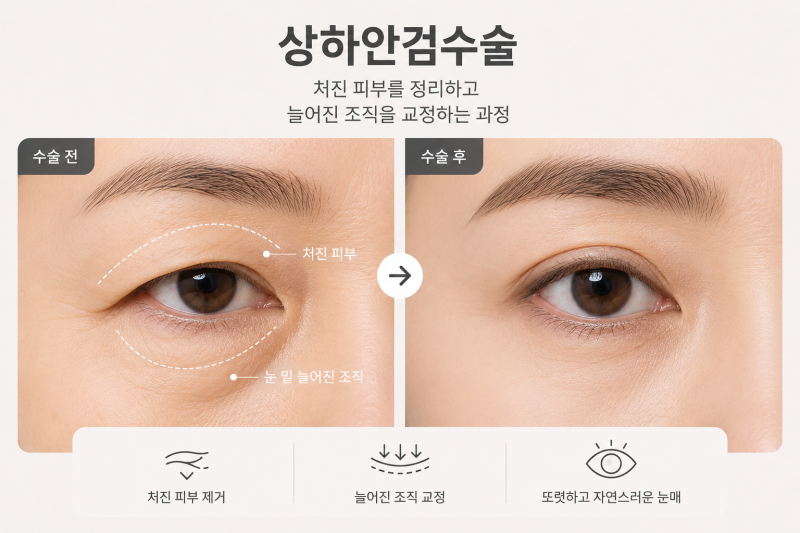
Upper and lower blepharoplasty involves removing sagging skin
and correcting loose tissue.
During the surgical process, the skin, muscles,
and surrounding fat layers are stimulated,
so swelling and bruising are
natural parts of the recovery process.
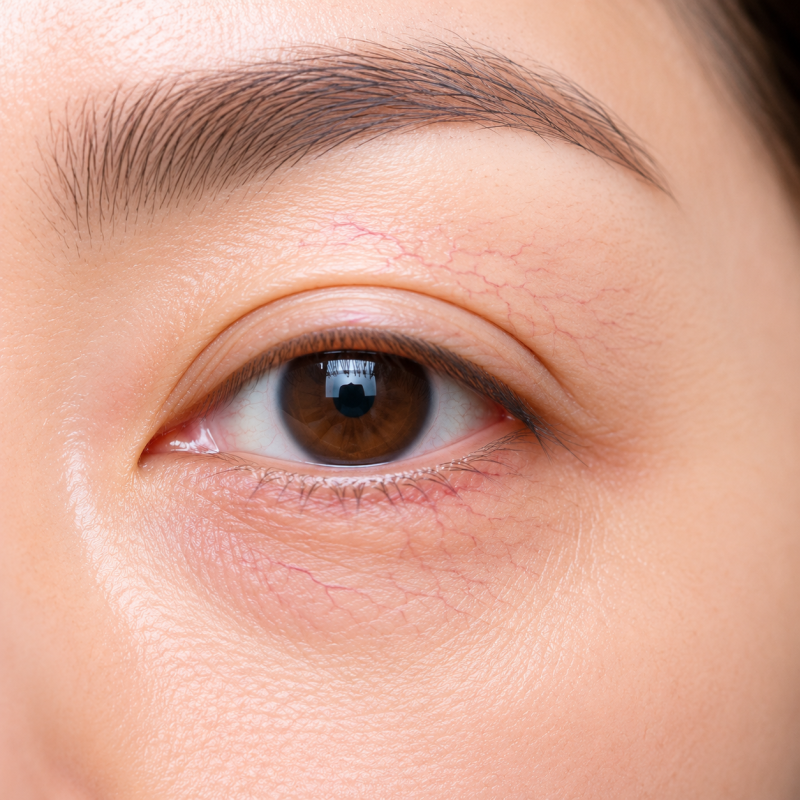
The eye area, in particular, is rich in blood vessels.
Therefore, even minor stimulation
can cause noticeable swelling.
Immediately after surgery, you might feel a heaviness
or pulling sensation in your eyes.
These are changes that occur as the tissues
settle into place.
2. How long should the recovery period be?
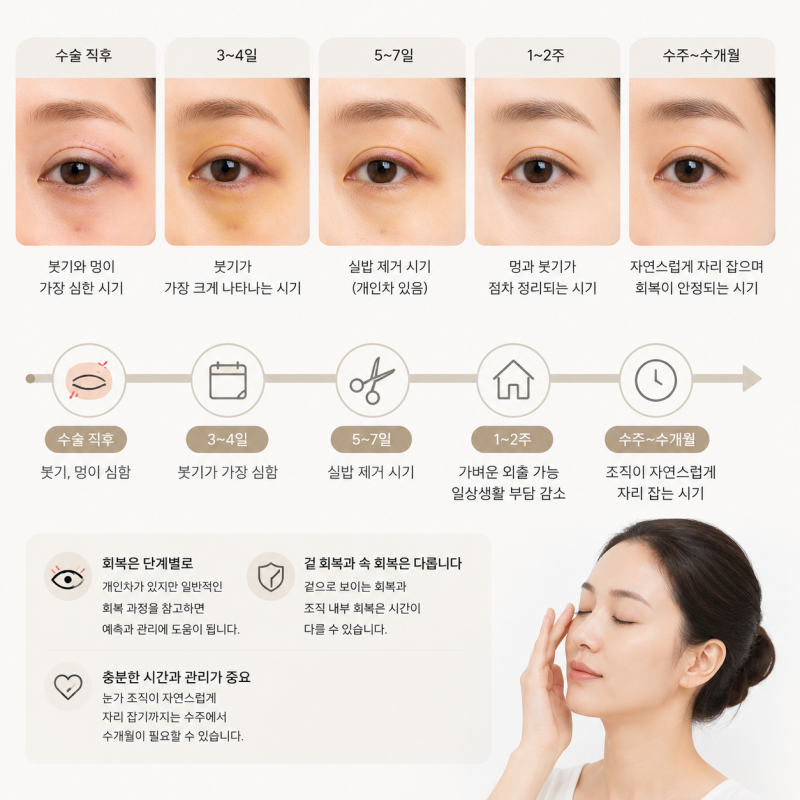
It is best to consider the recovery period after upper and lower blepharoplasty
in stages.
For about 3 to 4 days after surgery,
swelling is most pronounced.
After this, it gradually decreases
over time.
Stitches are usually removed around 5 to 7 days
after surgery.
Light outings are often possible
from about 1 to 2 weeks, and as bruising and swelling
subside to some extent,
the burden of daily life also decreases.

However, visible recovery and
internal tissue recovery are different.
It can take several weeks to several months
for the eye tissues to settle naturally.
3. When does the swelling subside?
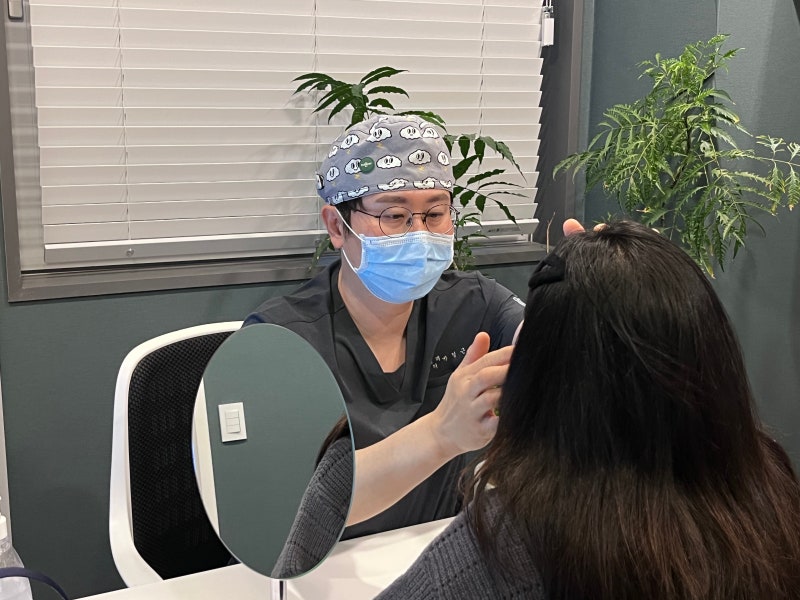
Many people expect swelling to disappear overnight,
but actual recovery progresses gradually.
Initial significant swelling often decreases
within 1 to 2 weeks.
After this period,
the degree of discomfort experienced in daily life
will largely diminish.
However, residual swelling
can persist longer.
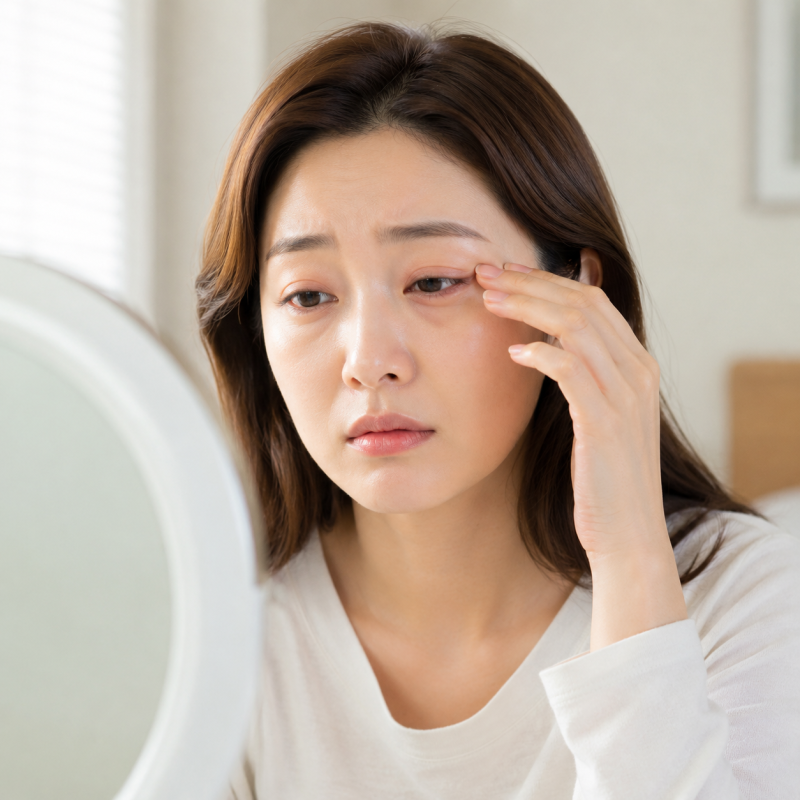
When you wake up in the morning,
your eyelids might appear slightly swollen,
or your eye area might feel firm.
These are common changes
during the recovery process.
As time passes and the tissues stabilize,
they will settle into a more natural appearance.
4. Management tips to aid recovery
Post-operative care is also
a crucial part of the recovery process.
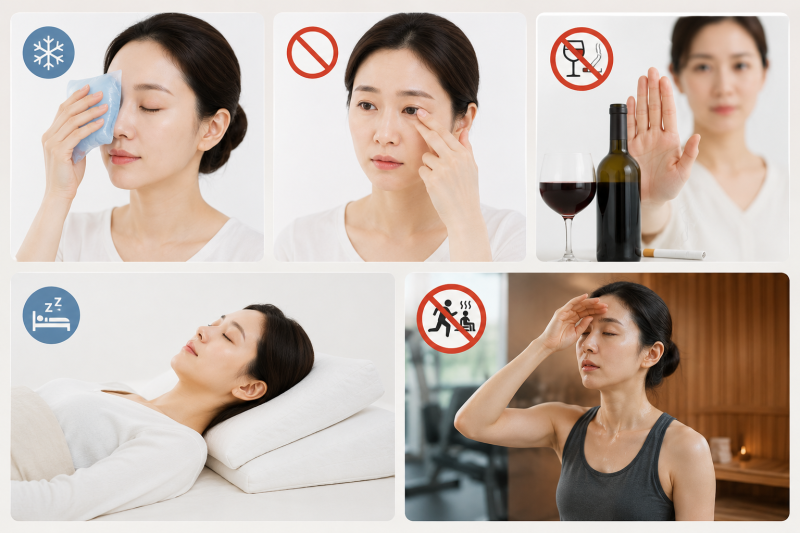
Initially, cold compresses can help
reduce swelling.
Avoid frequently touching or
aggressively rubbing the surgical area.
Alcohol consumption and smoking can delay recovery,
so it is best to refrain for a certain period.
Also, sleeping with your head slightly elevated
rather than sleeping face down
can be helpful.
Strenuous exercise, saunas, and jjimjilbangs (Korean bathhouses) should also be avoided
for the period advised by your medical team.

For upper and lower blepharoplasty,
the surgery itself is important, but how you manage
the recovery process is equally vital.
Swelling and bruising are natural changes
that can occur during recovery.
By fully understanding the recovery period
and adhering to the management methods,
you can return to daily life more stably.
-Operating Hours-
Weekdays 9:00 ~ 18:00 Saturdays 9:00 ~ 16:00 Public Holidays / Sundays Regular closure |
-Contact Us-
Faceplus Plastic Surgery Clinic | ||
Consultation Phone: 02-541-8500 Inquiries: KakaoTalk Inquiry |
-Directions-
Frequently Asked Questions
Why does swelling occur after upper and lower blepharoplasty?
Yes, swelling is a natural part of the recovery process. During the surgery, the sagging skin and loose tissues are corrected, stimulating the skin, muscles, and surrounding fat layers, which causes swelling and bruising. The eye area, in particular, has many blood vessels, so even minor stimulation can lead to noticeable swelling.
How long is the recovery period after upper and lower blepharoplasty?
The recovery period varies in stages. Swelling is most pronounced for about 3 to 4 days after surgery and then gradually decreases. Significant visible swelling typically subsides within 1 to 2 weeks, but it can take several weeks to several months for the eye tissues to settle naturally.
When are the stitches removed after upper and lower blepharoplasty?
Stitches are usually removed around 5 to 7 days after surgery. Even after stitch removal, swelling and bruising will gradually improve, and it is important to follow your medical team's guidance for care.
How should I manage swelling after upper and lower blepharoplasty?
Initially, cold compresses can help reduce swelling. Avoid frequently touching or aggressively rubbing the surgical area. Additionally, sleeping with your head slightly elevated can help manage swelling.
When can I drink alcohol or smoke after upper and lower blepharoplasty?
Alcohol consumption and smoking can delay recovery and cause inflammation, so it is best to refrain for a certain period. You must avoid them for the duration advised by your medical team and only resume after sufficient recovery for safety.