2026-09-03
Upper and Lower Blepharoplasty: What to Check Before and Why Surgical Results Vary
Before undergoing upper and lower blepharoplasty, understand why results differ. It's not just about removing skin; it's about adjusting complex eye structures for a natural, harmonious outcome.

※ This article is for the purpose of providing medical information.
It is not subject to deliberation under Article 56, Paragraph 2 and Article 57 of the Medical Service Act,
and we inform you that it is not an advertisement unrelated to the content of the deliberation.
Hello,
I am Dr. Park Jeong-geun,
Director of Faceplus Plastic Surgery Clinic.
Those considering eye area surgery often say one thing:
‘All the reviews look good, but why do the results vary so much?’
This is a common concern.

In reality, upper and lower blepharoplasty are not simply procedures to tidy up the eyelids;
they are fields where results can vary significantly depending on an individual's eye structure and the state of aging.
If you understand a few key criteria, interpreting reviews becomes much easier.
Table of Contents | ||
1. Why Upper and Lower Blepharoplasty Are Not Simple Excision Surgeries 2. Structural Factors That Create Differences in Results 3. Why Reviews and Actual Results May Differ 4. Criteria for Natural and Successful Results |
1. Why Upper and Lower Blepharoplasty Are Not Simple Excision Surgeries
Upper blepharoplasty is a surgery to improve sagging upper eyelids,
and lower blepharoplasty addresses under-eye fat and skin sagging.
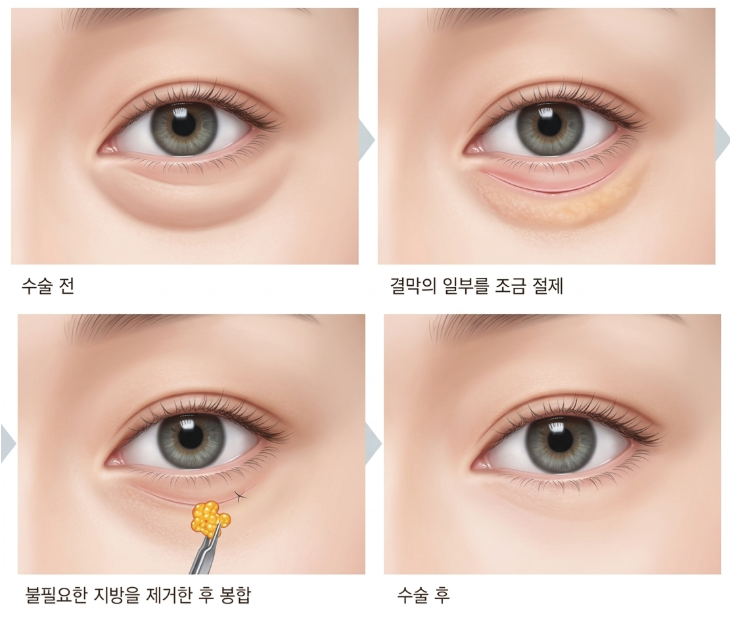
Outwardly, it may seem like a method of removing loose skin,
but in reality, it deals with much more complex structures.
The eyelids are affected not only by the skin but also by muscles, fat, and structures connected to the function of opening the eyes.
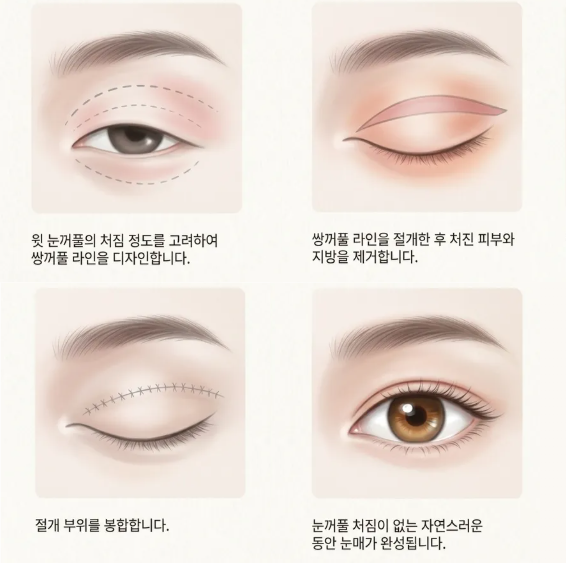
If only one part is simply tidied up,
it may look neat temporarily, but over time,
it can lead to an unnatural appearance or re-sagging.
Therefore, the key is not simple excision, but
‘how the structure is adjusted.’
2. Structural Factors That Create Differences in Results
Aging around the eyes is not just about sagging;
it's a change where tissue positions shift downwards.
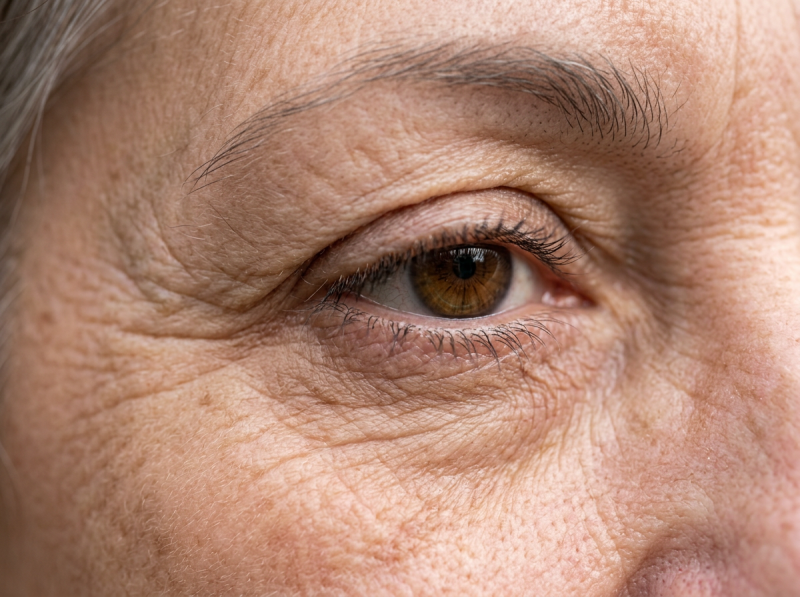
The same phenomenon occurs throughout the face,
as the midface and lower face tissues descend, changing the overall impression.
For upper blepharoplasty, eyelid thickness, the strength of eye opening, and eyebrow position must all be considered.
For lower blepharoplasty, the approach varies depending on whether there is fat protrusion, hollowing, or skin elasticity.
For example, sometimes fat repositioning is needed instead of simply removing under-eye fat,
and conversely, sometimes unnecessary fat needs to be reduced.
The more accurate this judgment, the more natural and stable the results will be.
3. Why Reviews and Actual Results May Differ
Many of the reviews you see often show the immediate post-operative or relatively early appearance.
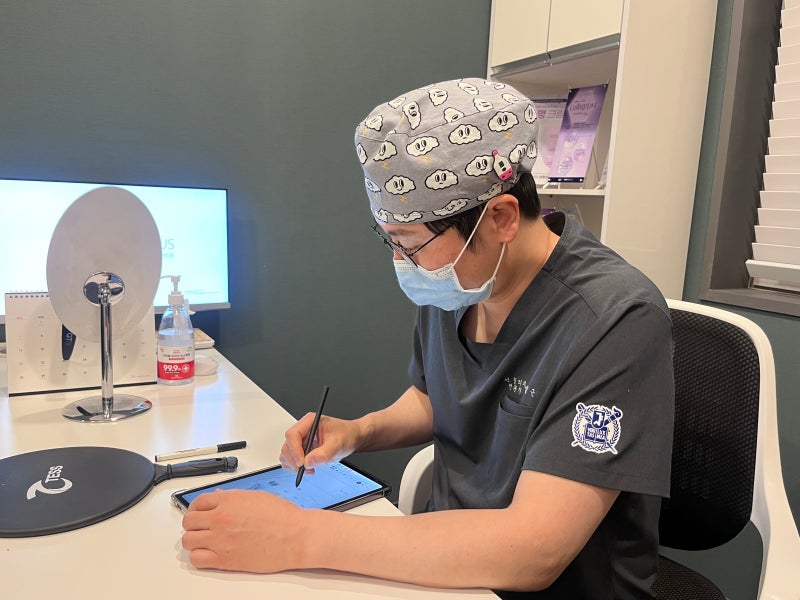
However, actual surgical results are generally judged at the point when the tissues stabilize, usually after 6 months.
Initially, due to swelling or tension, the eyes may appear more defined, but over time, they settle naturally.
Another important point is that everyone's eye structure is different.
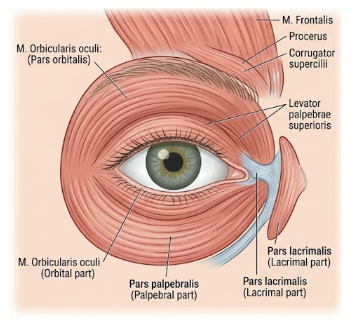
Skin thickness, fat volume, eyebrow position, and eyelid strength all vary, so it is normal for the results to differ even with the same surgery.
Understanding this will reduce confusion when viewing reviews.
4. Criteria for Natural and Successful Results
The most important criterion in eye surgery is not
‘how much has been changed,’ but
‘how harmoniously it fits with the face.’

Excessive excision in upper blepharoplasty can make the eyes appear unnaturally wide open,
and excessive fat removal in lower blepharoplasty can lead to a hollowed or tired impression.
Furthermore, because the eyes and forehead are interconnected structures,
in some cases, the problem may not be limited to the eyelids alone.
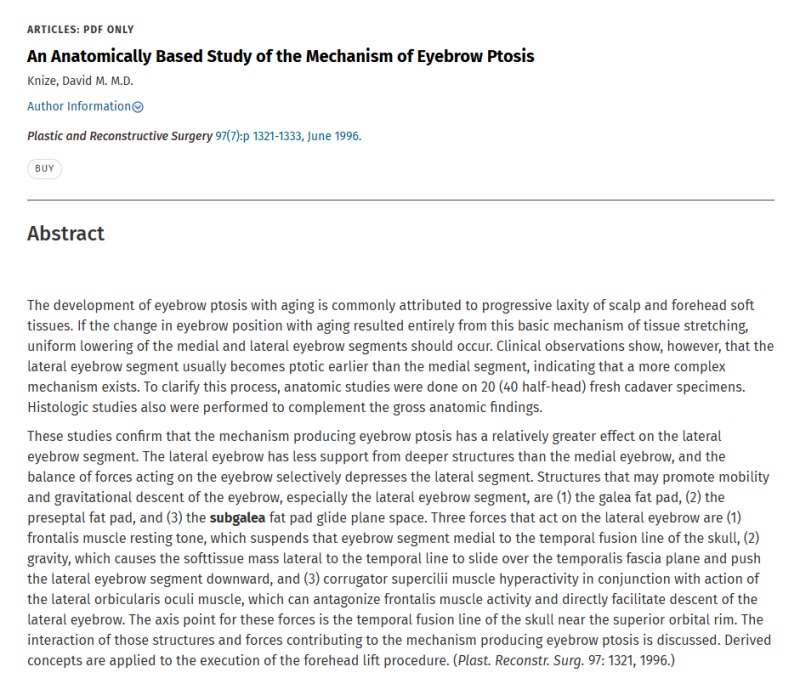
Although the eyes are a small area, they are a crucial region that determines the overall impression of the face.
While looking at reviews is helpful, understanding the condition of your own eye structure is an even more important criterion.
-Operating Hours-
Weekdays 9:00 ~ 18:00 Saturdays 9:00 ~ 16:00 Public Holidays / Sundays Regular Day Off |
-Contact Us-
Faceplus Plastic Surgery Clinic | ||
Consultation Phone: 02-541-8500 Inquiries: KakaoTalk Inquiry |
-Directions-
Upper and Lower Blepharoplasty
Frequently Asked Questions
What is the difference between upper and lower blepharoplasty?
Upper blepharoplasty is a surgery to improve sagging upper eyelids, while lower blepharoplasty addresses under-eye fat and skin sagging. Both procedures involve adjusting the complex structures around the eyes, not just removing loose skin.
Why do upper and lower blepharoplasty results vary from person to person?
Yes, results vary significantly depending on an individual's eye structure and the state of aging. Various structural factors such as eyelid thickness, the strength of eye opening, eyebrow position, and whether fat protrudes all influence the outcome.
Why might surgical reviews look different from actual results?
Reviews often show immediate post-operative or early appearances. Actual surgical results are generally judged after the tissues stabilize, typically around 6 months post-surgery. Since each person's eye structure is different, results will naturally vary.
What are the criteria for a natural and successful upper and lower blepharoplasty?
The criterion for a natural result is not ‘how much has been changed,’ but ‘how harmoniously it fits with the face.’ Excessive excision or fat removal can lead to an unnatural or tired impression, so harmony with the overall face is crucial.
Is under-eye fat always removed during lower blepharoplasty?
No, it is not always removed. Instead of simply removing under-eye fat, appropriately repositioning it to fill in the contours under the eyes can create a much more three-dimensional and natural result. In some cases, unnecessary fat may be reduced.