2026-07-14
Improved Impression Before and After Bulbous Nose Surgery
Discover how bulbous nose surgery can transform your appearance. This article details various types of bulbous nose corrections, including revision surgery, combined hump and bulbous nose correction, and tip-focused bulbous nose surgery, showcasing before-and-after improvements.

A nose with a round and large tip, or one that is blunt and has thick skin, was historically referred to as a ‘bok-ko’ (복코) or ‘bulbous nose’ in Korea, meaning it brought good fortune and was considered a symbol of wealth.
However, this type of nose, being centrally located on the face, can noticeably affect one's first impression, disrupt facial balance, and have a negative impact on overall aesthetics.
The causes of a bulbous nose are diverse, including thick skin tissue or abundant subcutaneous tissue forming the outer part of the nasal tip, excessively spread or developed alar cartilages, or a nasal bridge significantly lower than the tip, making the nose appear blunt. Since these bulbous nose types
are diagnosed and occur due to different causes, a surgical method tailored to one's specific nose type is essential for more effective results. Therefore,
today, as many people seek bulbous nose surgery, we will explain the types of improvements seen before and after bulbous nose surgery.
1. Alar Bulbous Nose Revision Surgery Type
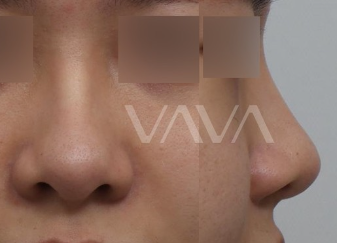
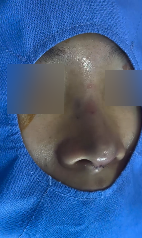
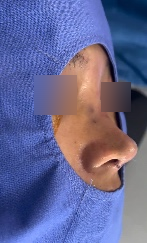
This patient had a history of bulbous nose surgery at another hospital, but the blunt appearance of the bulbous nose was not improved and
remained. They visited our hospital for bulbous nose revision surgery.
To completely eliminate the blunt appearance caused by the wide alar base, we first removed the previously used materials.
The nasal bridge was replaced with silicone, and the nasal tip was augmented using donated rib cartilage and
ear cartilage together to further raise the tip and improve the bulbous appearance.
Additionally, bulbous nose correction using alar reduction, nostril lowering, nasal bridge line refinement,
and columellar retraction improvement were performed to achieve a more natural-looking semi-straight line,
demonstrating an improved impression before and after bulbous nose surgery.
2. Hump Nose and Nasal Bridge Bulbous Nose
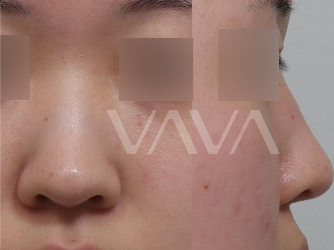

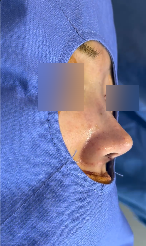
This patient had a lack of midface volume and simultaneously presented with a hump nose and a bulbous nose. They visited our hospital for improvement of the hump and bulbous nose, as well as overall facial volume.
To create the appearance of filled midface volume, the surgery was designed with a glamorous semi-straight line. First, the hump was corrected by lateral osteotomy, moving the outer nasal bone to narrow the width of the nasal bone base and straighten the curved line caused by the hump. Nasal bridge osteotomy was also performed to neatly correct the nasal bridge.
Additionally, for the part where the low nasal bridge made the nose appear bulbous, bulbous nose correction and columellar lowering were performed to define the overall nasal line. Silicone was used for the nasal bridge, and ear cartilage and septal cartilage were used together for the nasal tip to raise it and connect smoothly with the nasal bridge, showing a moisturized appearance where the bulbous nose and hump have disappeared.
3. Nasal Tip Bulbous Nose
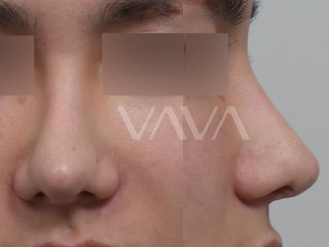
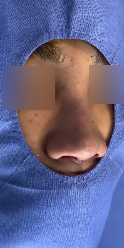
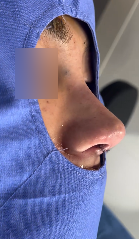
This patient had a crooked nose from the front, a pinched nasal tip, and a bulbous nose above the tip.
They visited our hospital to improve the crooked nose and bulbous nose.
Upon examining the inside of the nose, it was found that the deviated septum was not properly corrected, so the septum was straightened.
The nasal cartilage was strongly tied to release the pinched appearance, thereby correcting the pinched area and the bulbous nose.
The bulbous nose in the upper part of the nasal tip was of a type where the skin of the nasal tip was thick and had a lot of subcutaneous fat, making it appear blunt.
The nasal tip cartilage was newly tied for reinforcement, and at the same time, some subcutaneous fat was removed. Ear cartilage and donated rib cartilage were used together
to raise the nasal tip, showing a sharp and improved impression before and after bulbous nose surgery.



As such, for bulbous nose types, not only the nasal bridge but also the nasal tip requires meticulous consideration of all detailed aspects such as height, angle, length, and width.
Delicate surgery must be performed simultaneously to experience a more improved before and after bulbous nose.
Therefore, if you are considering bulbous nose surgery, it is essential to undergo a systematic examination process with skilled medical professionals
to achieve an ideal proportion and harmony with your individual facial features, thereby improving the before and after results of bulbous nose surgery.
Furthermore, to achieve the desired nose line, additional surgeries such as hump nose surgery or alar reduction may be necessary simultaneously with bulbous nose surgery. Therefore, we recommend obtaining an improved impression and highly satisfactory results before and after bulbous nose surgery that are optimal for you.


Frequently Asked Questions
Why do people have a bulbous nose?
A bulbous nose can result from various causes, such as thick skin tissue or abundant subcutaneous tissue at the nasal tip, excessively spread or developed alar cartilages, or a low nasal bridge that makes the tip appear blunt.
How is bulbous nose surgery performed?
Bulbous nose surgery is customized according to the individual's nose type and cause. It may involve tying or repositioning the nasal tip cartilage, removing skin or subcutaneous tissue if necessary, and using silicone, ear cartilage, septal cartilage, or donated rib cartilage to adjust the nasal bridge height.
Is bulbous nose revision surgery possible?
Yes, it is possible. If a bluntness remains after bulbous nose surgery at another hospital, it can be improved by removing previous materials, replacing nasal bridge silicone, and readjusting nasal tip cartilage, using donated rib cartilage, ear cartilage, etc.
Can a bulbous nose and a hump nose be corrected simultaneously?
Yes, it is possible. The hump can be corrected through lateral osteotomy and nasal bridge osteotomy, a low nasal bridge can be augmented with silicone, and the nasal tip can be enhanced using ear cartilage and septal cartilage to simultaneously correct both the bulbous nose and hump, establishing an overall refined line.
What should be considered during bulbous nose surgery?
During bulbous nose surgery, meticulous attention to all detailed aspects of the nose, including height, angle, length, and width, is required. A systematic examination process is necessary to achieve an ideal proportion that harmonizes with the individual's facial features.