2025-04-04
Abdominal Liposuction: Who Might Regret It?
Abdominal liposuction is a complex medical procedure, not just a simple fat removal. Factors like skin elasticity, visceral fat, and post-procedure management significantly influence outcomes, especially for middle-aged individuals.

Regarding abdominal liposuction,
many people have a common question:
Will abdominal liposuction really make my stomach flat?
It's difficult to answer this question with a simple 'yes' or 'no'.
Abdominal liposuction is not merely a procedure to remove belly fat; it's a medical process that requires consideration of various factors.
Especially for middle-aged individuals, the results after abdominal liposuction might differ from expectations, requiring a clear understanding.
1. The Relationship Between Abdominal Liposuction and Elasticity
One of the crucial factors to consider when contemplating liposuction is elasticity.
Elasticity is largely influenced by congenital factors.
Experiences such as childbirth, increasing age, and rapid weight changes can affect skin tissue, making it difficult for elasticity to recover.
As it's a process of removing subcutaneous fat, skin sagging can occur as the skin adapts to the new body shape after the procedure.
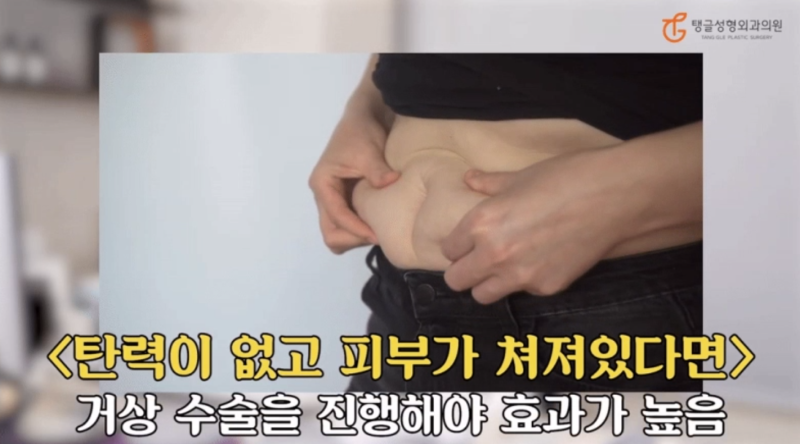
If elasticity is insufficient,
it may be challenging to achieve the desired aesthetic results.
In cases of severe skin sagging,
additional skin correction procedures may be necessary.
Since this involves a more complex process,
consultation with medical professionals is essential before deciding on abdominal liposuction.
2. Unremovable Visceral Fat
Abdominal liposuction primarily removes subcutaneous fat.
Visceral fat is located inside the peritoneum, making it difficult to access with standard liposuction procedures.
Therefore, if there is a large amount of visceral fat,
the abdomen may still appear protruded even after abdominal liposuction.
To reduce visceral fat,
regular aerobic exercise and healthy eating habits are essential.

If these lifestyle improvements are not maintained after abdominal liposuction,
the results may not meet expectations.
For women, major organs such as the uterus, bladder, and large intestine are located in the lower abdomen, so a slight protrusion in this area is natural.
Instead of expecting a completely flat abdomen, it's important to set realistic goals that suit one's body type.
3. The Importance of Management
Abdominal liposuction is not the end of treatment but the starting point for building a healthy body.
After the recovery period following the procedure,
it's advisable to consult with medical staff and begin appropriate exercises.
Generally,
it's recommended to start with mild aerobic exercise
and gradually increase the intensity.
Healthy eating habits are also crucial.

Maintaining adequate protein intake and reducing sodium intake helps with recovery and body shape maintenance.
To sustain the results long-term,
these lifestyle improvements must be accompanied.
4. Effectiveness in Middle-Aged Individuals
For middle-aged individuals aged 40-60,
the results of abdominal liposuction may differ from younger individuals due to relatively lower elasticity and a higher proportion of visceral fat.
If considering this procedure at this age,
it's important to approach it with realistic expectations.
Abdominal liposuction is an excellent method for removing subcutaneous fat in localized areas that are difficult to reduce through diet.

However, for ideal results,
pre-procedure consultation and an assessment of the individual's body type,
skin condition, and health status are essential.
In conclusion, satisfactory results from abdominal liposuction can be achieved when appropriate candidate selection and post-procedure management are performed together.
If you are considering liposuction,
we recommend consulting with a medical professional to find the method that is right for you.