2026-06-26
Two Crucial Factors When Deciding on Breast Augmentation with Implants?
When considering breast augmentation with implants, while brand and CC volume are important, the placement of the implant is key. Dr. Jaesoo Lee, a plastic surgeon, shares two core principles for satisfactory results.
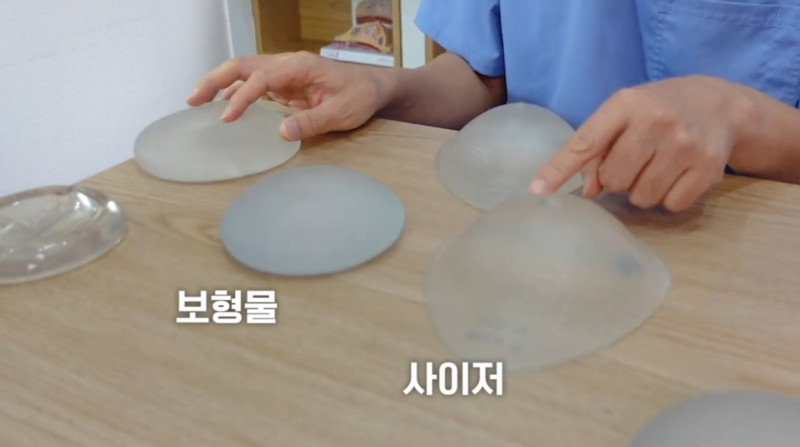
When undergoing breast augmentation surgery with implants, while factors like the breast implant brand or CC volume size are certainly important,
how and where the implant is placed is crucial.
Dr. Jaesoo Lee, a board-certified plastic surgeon, shares the two core principles that must be followed to achieve satisfactory results in breast augmentation surgery!

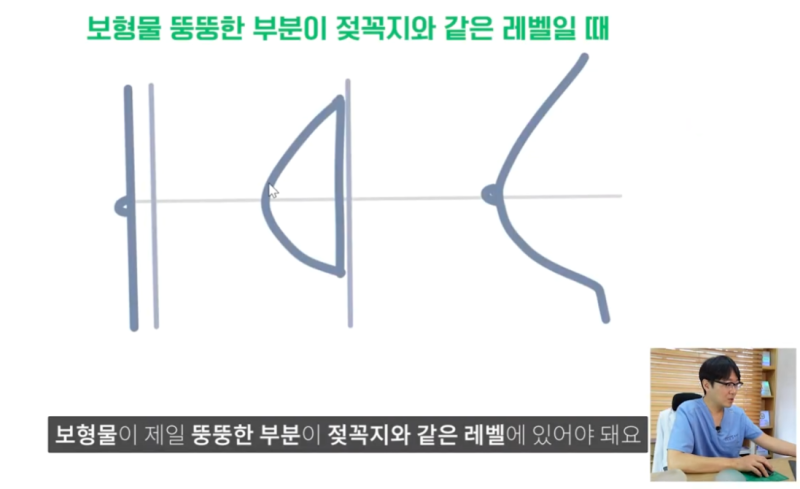
📌 Principle 1: The thickest part of the implant should align with the nipple.
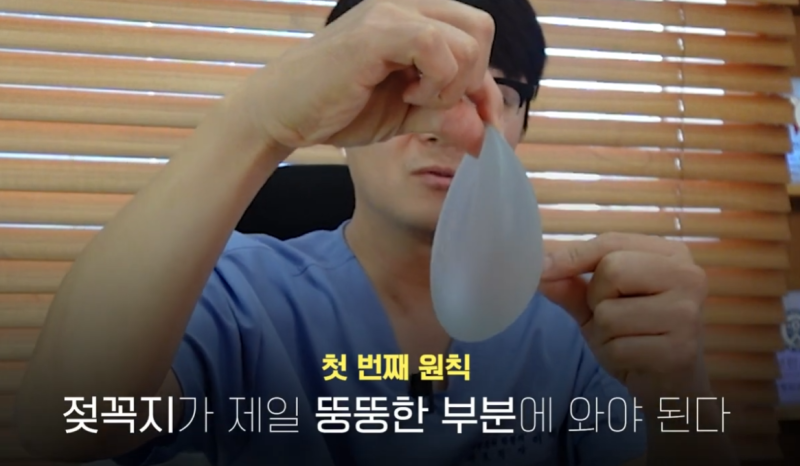
Key Point: Breast implants are typically thickest slightly below the middle. During surgery, the patient’s nipple should be positioned at the same height as the thickest part of the implant to achieve a natural shape.
When the implant is placed too high: Only the upper breast appears full, and the nipple looks saggy, pointing downwards.
When the implant is placed too low: The nipple appears to point upwards, the breast looks saggy, and the nipple might be exposed when wearing a bikini.
📌 Principle 2: The original breast tissue and the implant should overlap well.
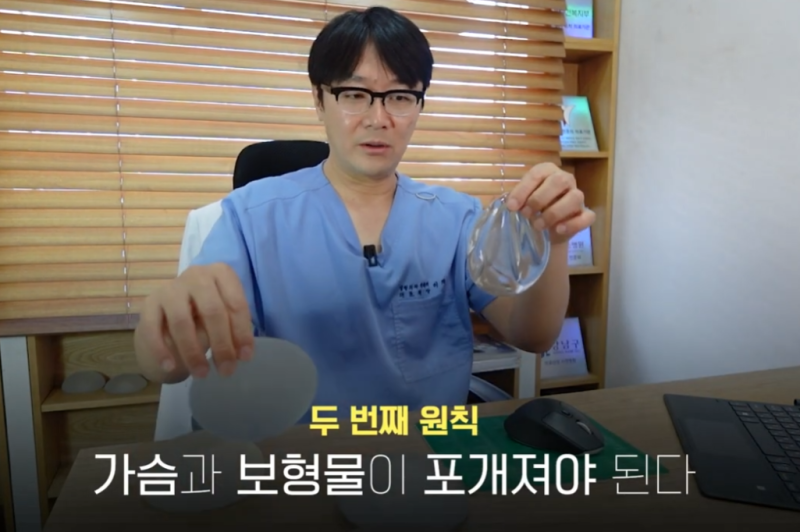
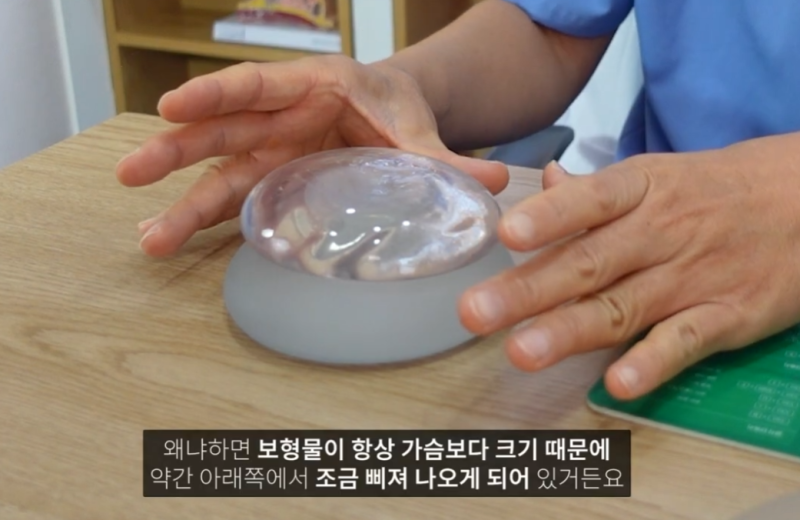
Key Point: The implant should be positioned so that it seamlessly overlaps with your natural breast, as if they are one, preventing a visible ‘step’ or ‘ledge’ on the skin’s surface.
If the two tissues do not overlap properly and become separated, a ‘double bubble’ phenomenon can occur, where the original inframammary fold and the new fold created by the implant appear distinct.
⚠️ Reasons why it's difficult to adhere to both principles simultaneously (in cases of a short inframammary fold)
For body types where the distance from the nipple to the inframammary fold is short, these two principles often conflict.
If the implant is lowered to adhere to Principle 1, a double bubble may occur.
If the implant is raised to adhere to Principle 2, an upper pole fullness (top-heavy) phenomenon may occur.
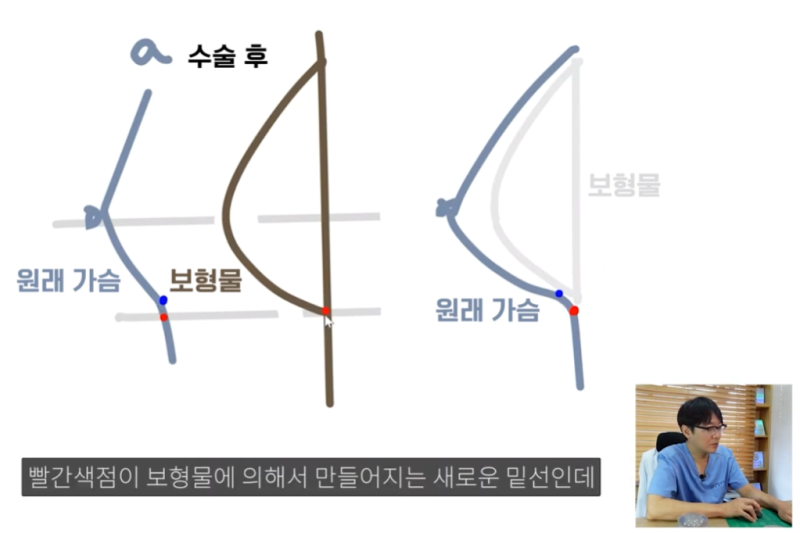
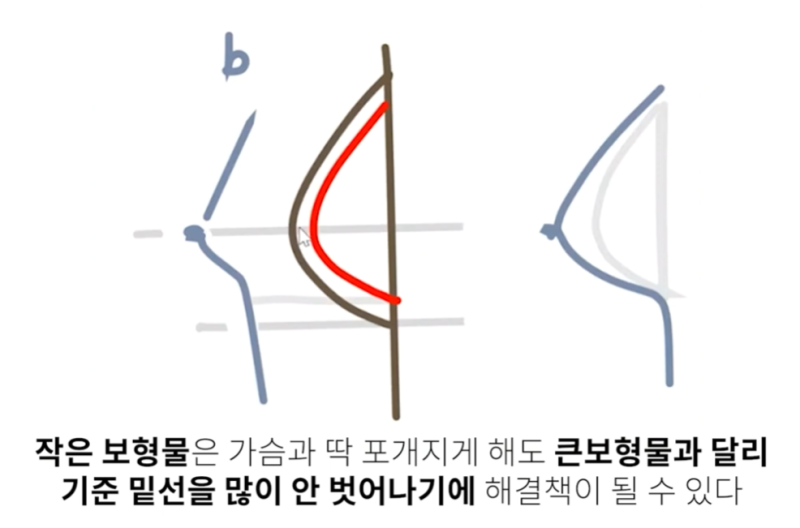
💡 Solutions for body types with a short inframammary fold
Inframammary fold incision (most effective): Performing the surgery with an inframammary incision instead of an axillary incision can prevent double bubbling by more than 70-80%.
Reduce implant size: Opt for a slightly smaller implant rather than an excessively large one to prevent the implant from extending too far beyond the inframammary fold.
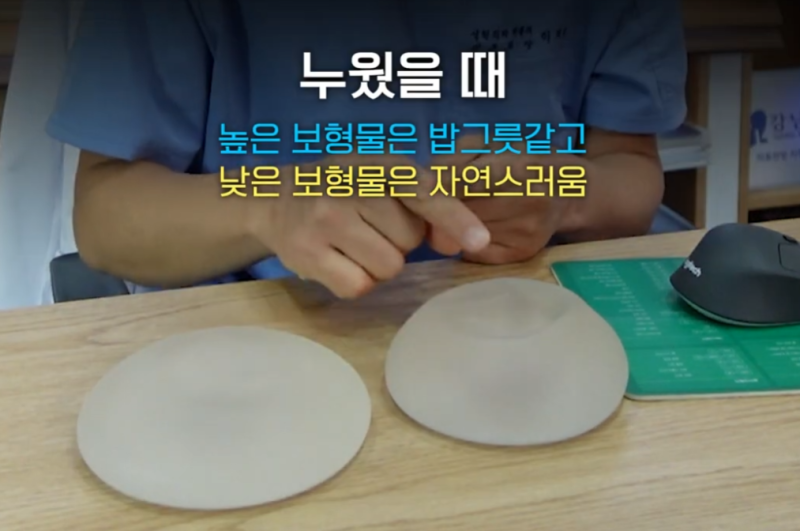
Choose a high-profile implant: Using a high-profile implant, which projects more forward, can reduce the likelihood of a double bubble even with a short inframammary fold, compared to flatter implants.
Subfascial dissection: This method involves placing the implant beneath the fascia, but it is only suitable for fuller body types, not slender ones.
📏 Relationship between implant volume (cc) and bra cup size
You can estimate the approximate change based on the volume of a standard paper cup.
Guideline: Roughly, each 140cc can be considered to increase the cup size by one.
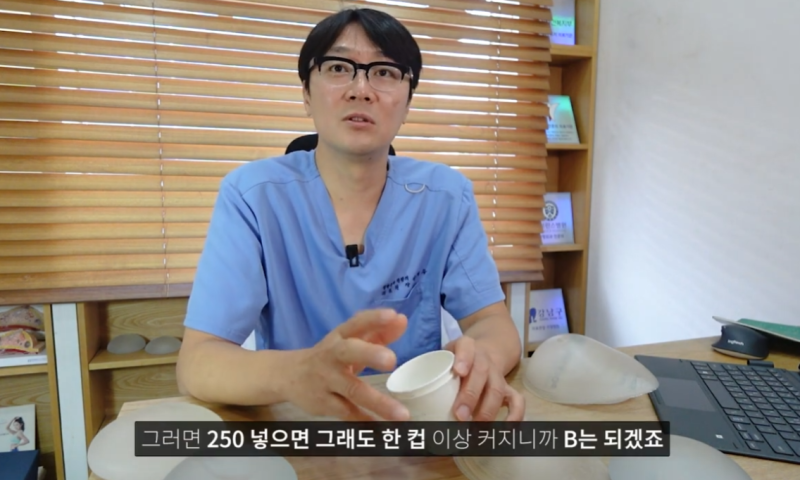
Example: Even a very petite person with completely flat A-cup breasts can safely accommodate at least 250cc implants. In this case, they can expect an increase of nearly two cup sizes, resulting in a definite B-cup or larger.
Caution: An excessive desire for an unsafe size beyond the recommended range is the biggest cause of side effects (violating the principles). It is best to try on ‘sizers’ (dummy implants) available at the clinic under your clothes and discuss the safe maximum with your doctor.
This information is based on a video containing general medical facts and serves as guidance. For an accurate diagnosis tailored to individual body shape and chest conditions, direct consultation with a specialist is recommended.
* This article was written to help NEXT Plastic Surgery patients understand medical information and is in compliance with Article 56, Paragraph 1 of the Medical Service Act.
After breast augmentation procedures or surgery, individual conditions may vary in terms of swelling, recovery period, bleeding, etc., and caution against side effects is necessary. Therefore, we recommend careful decision-making and planning the surgery after thorough consultation with a specialist.