2026-07-20
Presbyopia LASIK, Monovision LASIK: A Good Option When Your Vision is Blurry but You Don't Have Cataracts?
Learn about presbyopia LASIK and monovision LASIK, a surgical option for blurry vision due to presbyopia, even without cataracts.
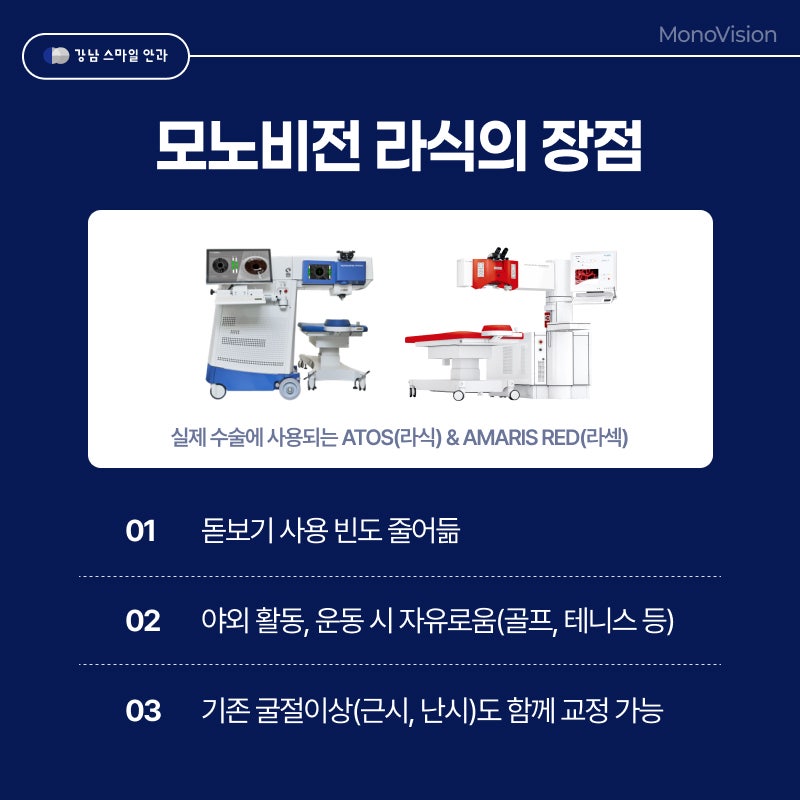
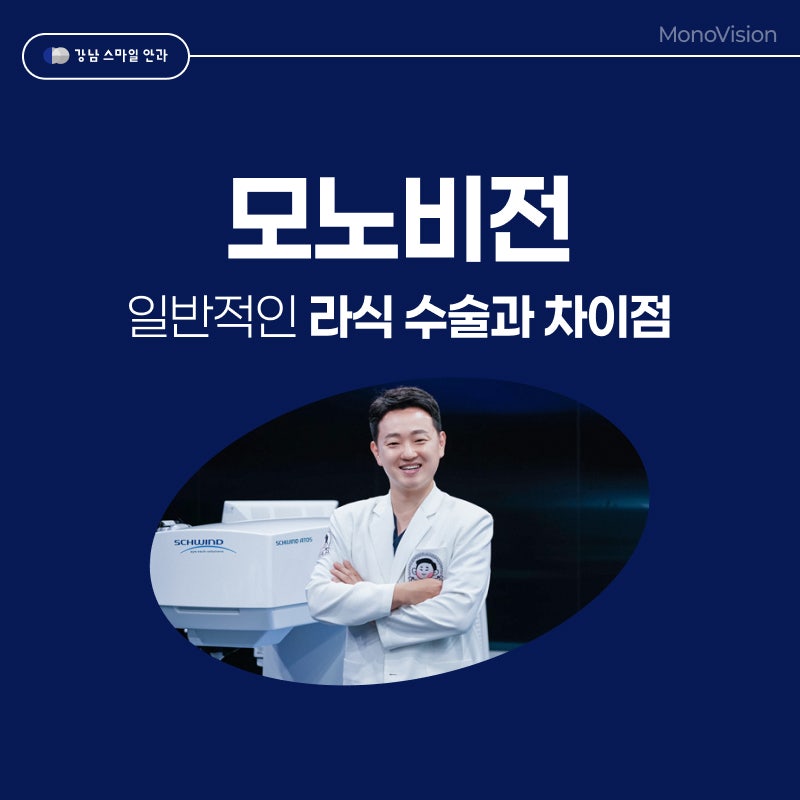
Hello, this is Gangnam Smile Eye Clinic 😊💙
If you're finding it difficult to see close-up text as you age,
and you have to hold your phone further away to read the letters,
it might be a sign that presbyopia has begun.
In such cases, many people search for
‘presbyopia LASIK’.
Among these, a method that has recently become popular is
monovision LASIK.
Today, we will delve into what presbyopia LASIK is,
the surgical principle of monovision LASIK, and its differences from standard LASIK.
What is Monovision LASIK, or Presbyopia LASIK?
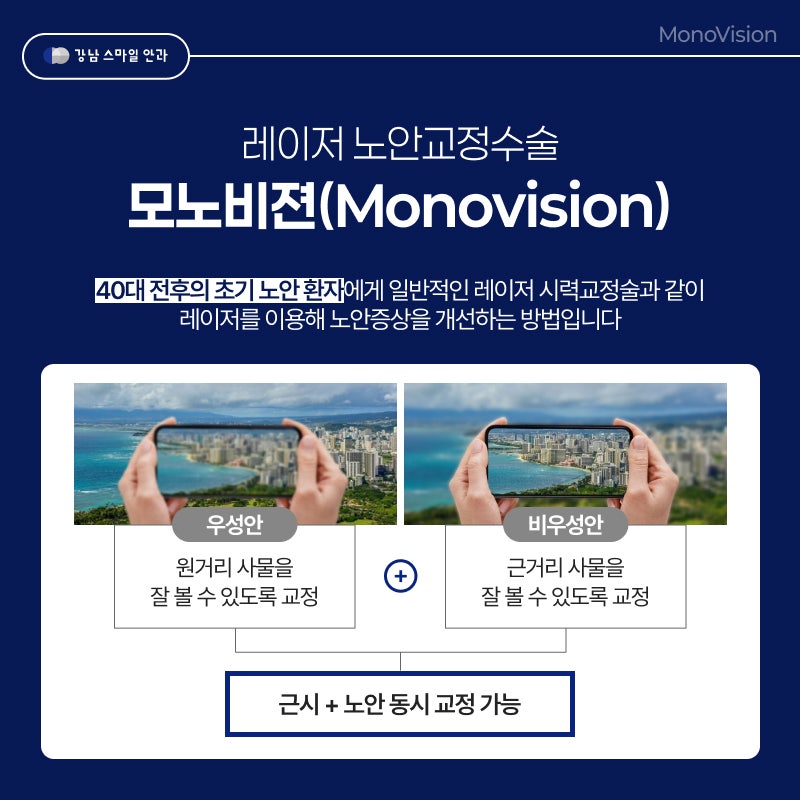
Monovision is a method where one eye (the dominant eye) is corrected for distance vision,
and the other eye (the non-dominant eye) is corrected for near vision.
In other words, it works by making each eye perform a different role,
thereby reducing the discomfort of near vision caused by presbyopia.
✅Surgical Method:
Using a laser to correct the dominant and non-dominant eyes differently.
✅Recovery Speed:
Similar to or faster than standard LASIK; most can return to daily life within a few days.
✅Adaptation Period:
A short adaptation period is needed to get used to the difference in vision between the two eyes, but most stabilize within 1-2 weeks.
Thus, monovision presbyopia LASIK can be described as a ‘realistic presbyopia correction surgery’ that helps you see both near and far distances somewhat naturally.
Differences Between Standard SMILE LASIK and Presbyopia LASIK
Many people ask, “How is presbyopia LASIK different from SMILE LASIK?”
Simply put, SMILE LASIK focuses on vision correction (primarily myopia and astigmatism),
whereas presbyopia LASIK (monovision LASIK) focuses on presbyopia correction (balancing near and far vision).
Category | SMILE LASIK | Presbyopia LASIK (Monovision LASIK) |
Purpose | Corrects myopia and astigmatism | Improves presbyopia, balances near and far vision |
Correction Method | Both eyes corrected identically | One eye for distance, one eye for near |
Target Age Group | Younger adults (20s-30s) | Middle-aged and older adults (40s and above) |
Expected Outcome | Clear distance vision | Reduced near vision discomfort + natural transition between distances |
In other words, presbyopia LASIK is not just simple vision correction,
but a surgery more focused on ‘improving daily convenience’.
If Presbyopia is Suspected, Always Get an Examination First
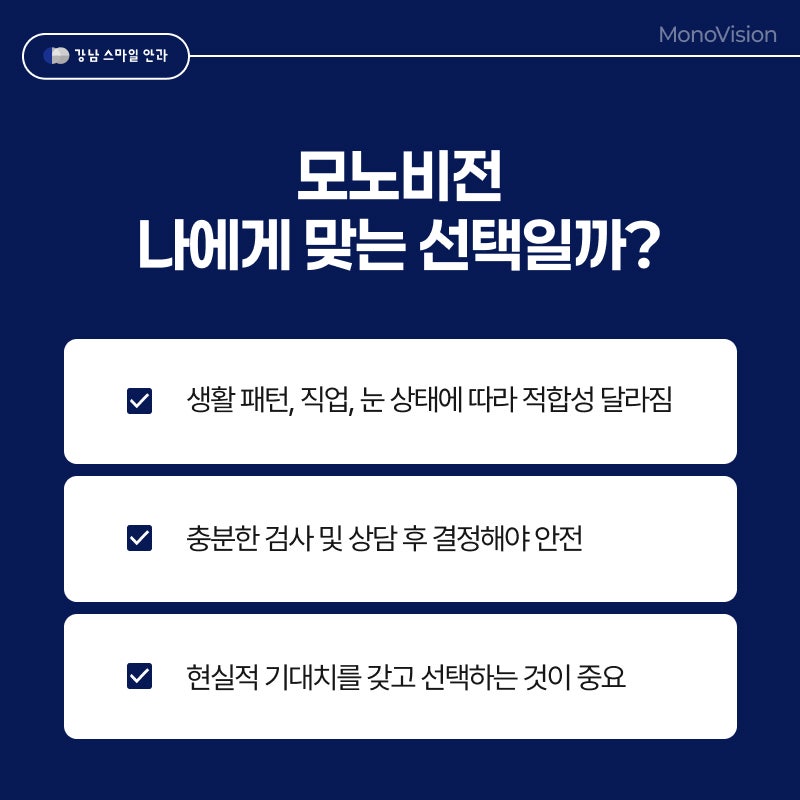
Presbyopia symptoms vary greatly depending on individual lifestyle, occupation, and eye condition.
Therefore, it is crucial to undergo a detailed examination to assess suitability rather than deciding on surgery without prior evaluation.
It is also important to have realistic expectations.
Presbyopia LASIK does not provide 100% clear vision for both near and far distances, like the vision of someone in their teens or twenties.
It is closer to a feeling of seeing both far and near distances naturally at about 80-90% clarity.
If you fully understand these points and choose the surgery,
you can significantly reduce the discomfort caused by presbyopia
and gain much freer vision in your daily life.
A Good Alternative for Those with Blurry Vision but No Cataracts
While cataracts generally follow presbyopia symptoms,
for those who have not yet developed cataracts, presbyopia LASIK (monovision LASIK) can be an excellent alternative.
This is because it allows for ‘non-invasive’ presbyopia improvement, maintaining your natural lens without the need for an artificial lens implant.
In other words, if you currently have no cataracts or are in the early stages, monovision LASIK can improve presbyopia discomfort,
and later, if cataracts actually develop, cataract surgery can be performed separately at that time.
To reiterate, presbyopia LASIK can be a realistic and safe option for those who are uncomfortable with presbyopia but do not have cataracts.
The ability to continue treatment in stages according to the stage of eye aging is a significant advantage.
Get an Accurate Diagnosis for Presbyopia LASIK at Gangnam Smile Eye Clinic!
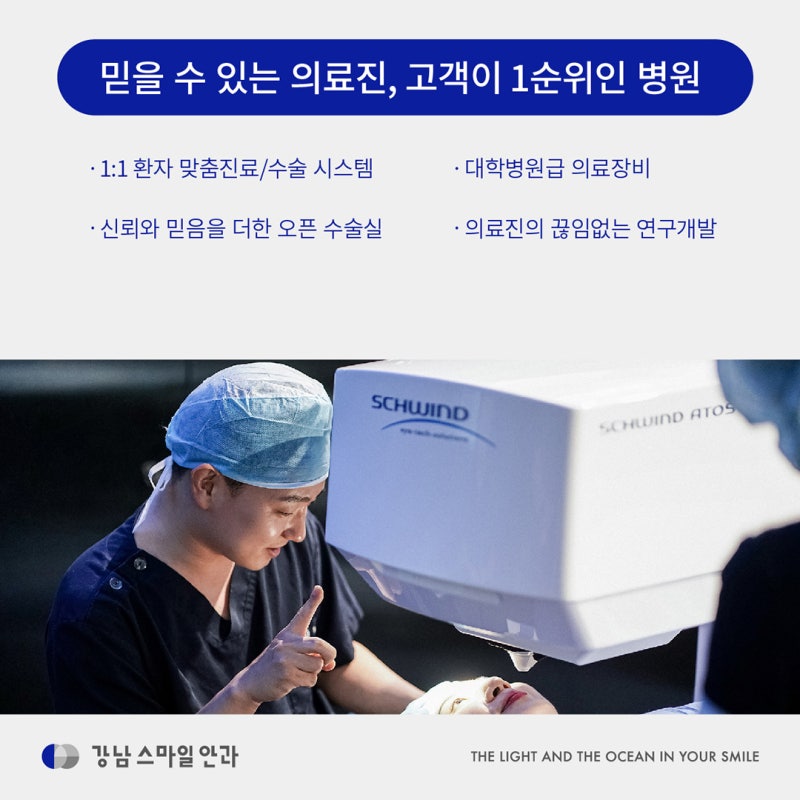
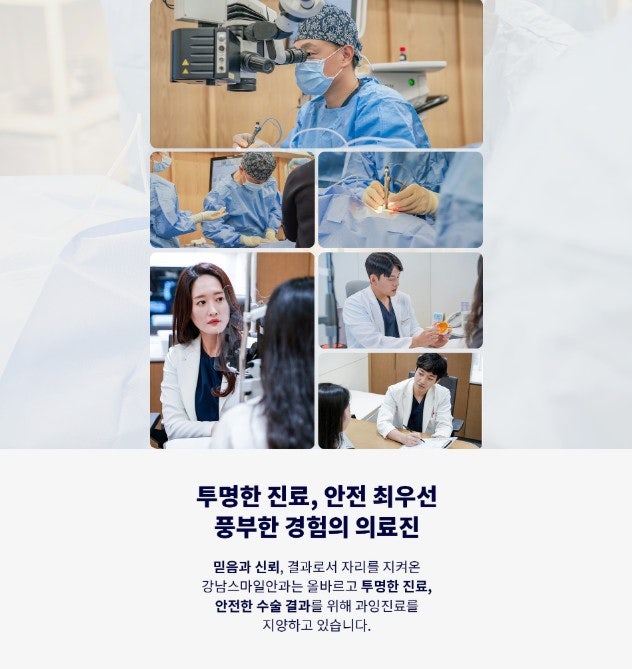
The approach to presbyopia varies depending on an individual's eye condition and lifestyle.
It is paramount to find the most suitable presbyopia correction method through thorough examination and consultation.
At Gangnam Smile Eye Clinic, with extensive experience in presbyopia LASIK and state-of-the-art equipment,
we perform customized monovision LASIK tailored to each individual's eye condition.
If presbyopia has begun,
regain your daily life with a precise presbyopia examination at Gangnam Smile Eye Clinic right now 👁✨
💙 SMILE Surgery is Best at Gangnam Smile Eye Clinic 💙
💙🤍 𝖦𝖠𝖭𝖦𝖭𝖠𝖬 𝖲𝖬𝖨𝖫𝖤 𝖤𝖸𝖤 𝖢𝖫𝖨𝖭𝖨𝖢💙🤍
𝗧𝗛𝗘 𝗟𝗜𝗚𝗛𝗧 𝗔𝗡𝗗 𝗧𝗛𝗘 𝗢𝗖𝗘𝗔𝗡 𝗜𝗡 𝗬𝗢𝗨𝗥 𝗦𝗠𝗜𝗟𝗘












Presbyopia LASIK
Frequently Asked Questions
What is Monovision LASIK?
Monovision LASIK is a presbyopia-correcting surgery designed to reduce near vision discomfort caused by presbyopia, by correcting one eye for distant vision and the other eye for near vision. It balances far and near vision by assigning different roles to each eye.
How is Monovision LASIK different from regular LASIK?
Yes, there is a difference. Regular LASIK primarily focuses on correcting refractive errors like myopia or astigmatism, whereas Monovision LASIK emphasizes improving presbyopia and balancing far and near vision. The target age groups also differ.
How long is the recovery period after Monovision LASIK?
The recovery speed is similar to or faster than regular LASIK. Most people can resume daily activities within a few days, but an adaptation period of 1-2 weeks may be needed to get used to the difference in vision between the two eyes.
Can I undergo Monovision LASIK if I have cataracts?
No, it is a good alternative for those without cataracts or in the early stages. Monovision LASIK is a surgery that improves presbyopia while retaining your natural lens, without the insertion of an artificial lens. If cataracts have progressed, cataract surgery is necessary.
Will my vision be 100% clear after Monovision LASIK?
No, it will not be 100% clear for both far and near distances as it was in your teens or twenties. It's closer to a natural feeling of seeing both far and near distances at about 80-90%. It is important to have realistic expectations.
Is a detailed examination necessary before Monovision LASIK?
Yes, it is absolutely necessary. Presbyopia symptoms vary greatly from person to person, so it is very important to evaluate whether it is suitable for you through a detailed examination rather than deciding on surgery without proper assessment.