2026-09-03
The Key to Naturally Concealing Mini-Facelift Scars is the ‘Direction of Pull’
The key to naturally concealing mini-facelift scars lies in the direction of pull, not just the incision length. Proper tissue fixation and reduced skin tension are crucial for a natural look.

※ This article is for the purpose of providing medical information.
It is not subject to deliberation under Article 56, Paragraph 2 and Article 57 of the Medical Act,
and is not an advertising post unrelated to the content of deliberation.
Hello,
I am Dr. Park Jeong-geun,
Director of Faceplus Plastic Surgery Clinic.

As we age, the areas that concern us most are
the jawline and sagging cheeks.
Looking in the mirror, the deep cheek fat descends,
the area around the mouth appears heavy,
and the overall facial impression starts to look tired.
The surgery many people look into at this point
is a mini-facelift.
In fact, most people who come for consultations
ask the same question first:
‘Will there be a lot of scars?’
‘Will the incision in front of the ear be noticeable?’

However, in a mini-facelift, scars are not
determined solely by the incision length.
What’s even more important is
how the skin is pulled.
Even with the same incision,
if the pulling method is incorrect,
the scars can appear more prominent
and the face can look unnatural.
Table of Contents | ||
Strongly pulling only the skin widens scars Tissue fixation method is important to reduce scars There's a separate reason why scars in front of the ear are noticeable A natural mini-facelift doesn't change facial expressions |
1. Strongly pulling only the skin widens scars
One of the most common problems
in mini-facelifts is skin tension.
If sagging cheek fat is pulled up excessively,
force concentrates on the incision site.
This can cause the earlobe line to widen,
and a red scar to remain for a long time.
The area where hair passes can change unnaturally,
or the earlobe shape might appear pulled.
Especially if only the skin is strongly pulled upwards,
the face can look frozen in a smiling expression.
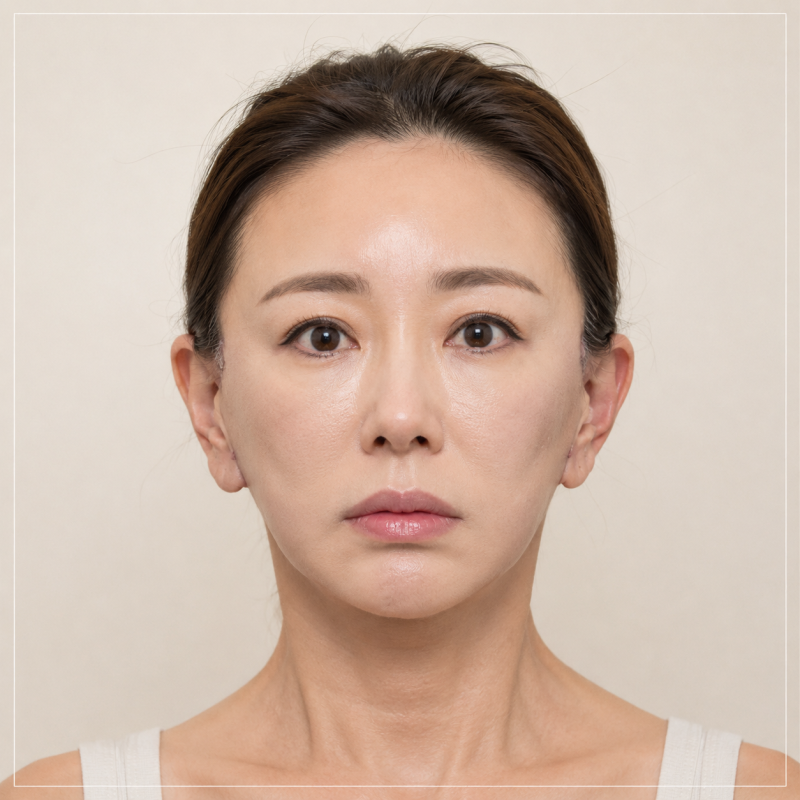
The area around the corners of the mouth is unnaturally pulled,
giving the impression of a ‘surgically altered face’.
A mini-facelift is not a surgery that pulls the skin tightly.
It is a surgery that repositions
the sagging tissues.
2. Tissue fixation method is important to reduce scars
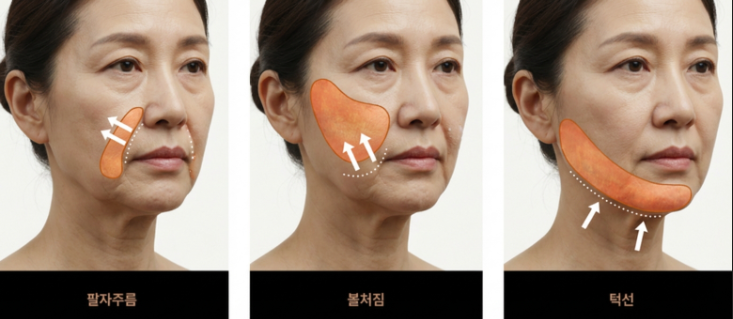
Facial sagging doesn't occur in just one area.
The midface, jawline, and deep cheek fat
each sag along different axes.
Therefore, if all tissues are pulled in the same way,
facial balance is disrupted.
Especially if tension concentrates on the skin in front of the ear,
scars become much more noticeable.
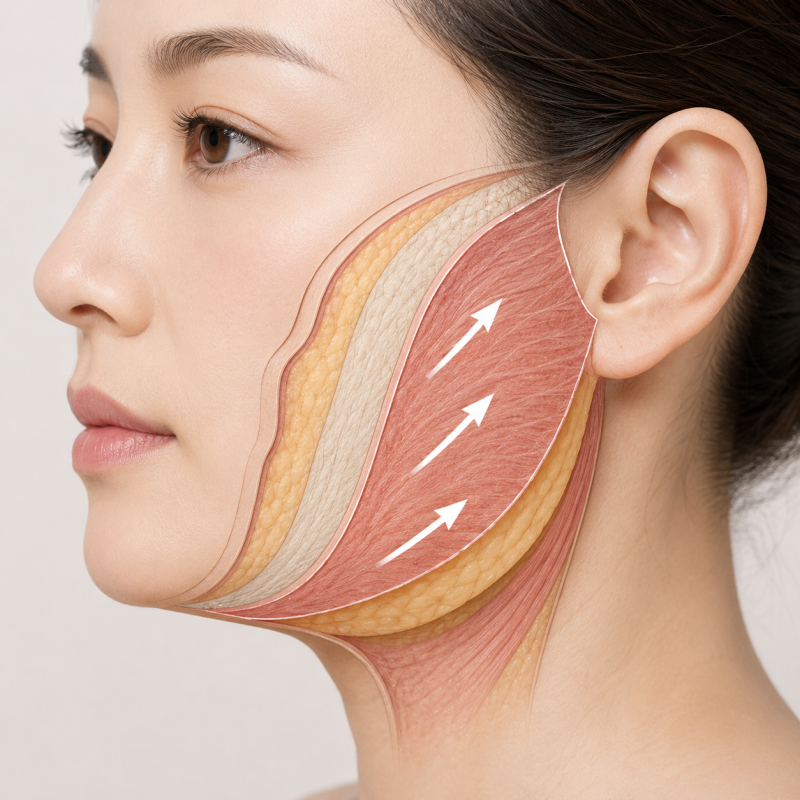
Conversely, if the retaining ligaments are sufficiently dissected
and the sagging SMAS layer is stably fixed,
skin tension is significantly reduced.
At this point, the skin is not forcibly held in place
but naturally drapes over the underlying structures.
Ultimately, scars differ not so much by the incision itself
but by how much skin tension
remains.
Even if they look similar immediately after surgery,
the difference in results becomes clear over time.
3. There's a separate reason why scars in front of the ear are noticeable
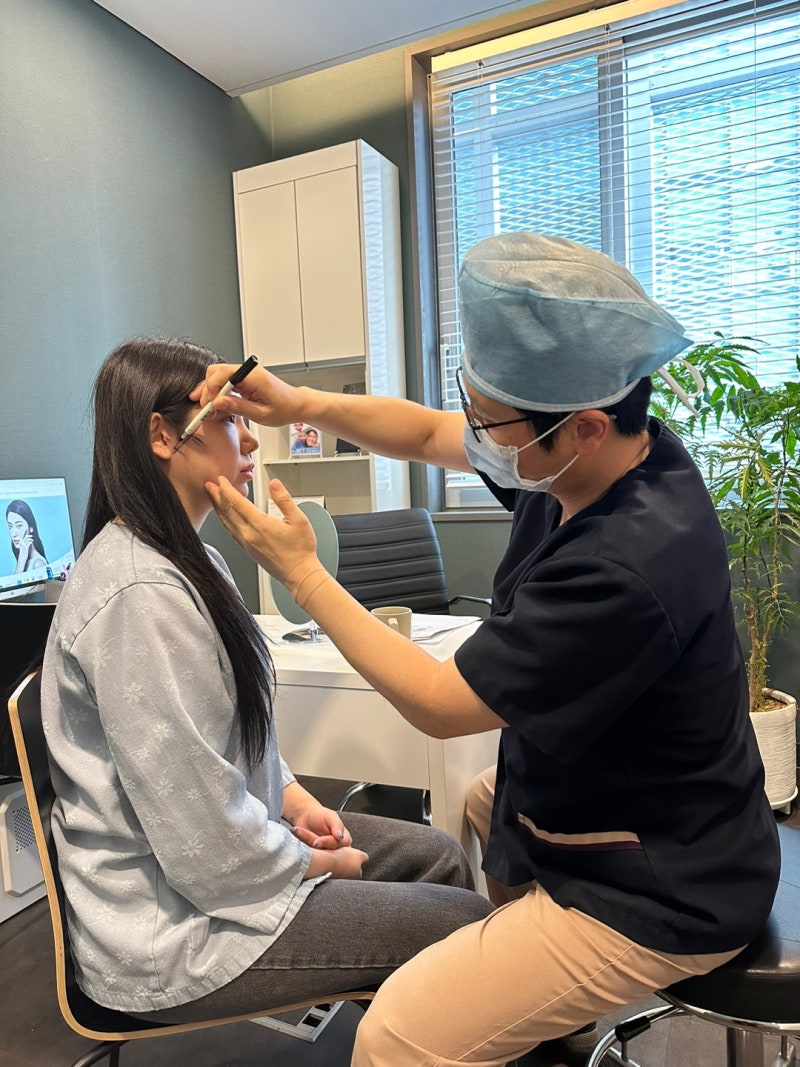
Many people only focus on the incision line location.
However, what actually makes it noticeable
is the change in surrounding structures rather than the incision line itself.
If the earlobe appears pulled downwards,
or the skin in front of the ear is taut and shiny,
the surgery will be noticeable even from a distance.
Sometimes, the hairline can also appear to be pushed back.
Most of these changes occur
when there is excessive skin tension.
This is because the skin was pulled up solely by its own force
without proper tissue fixation.
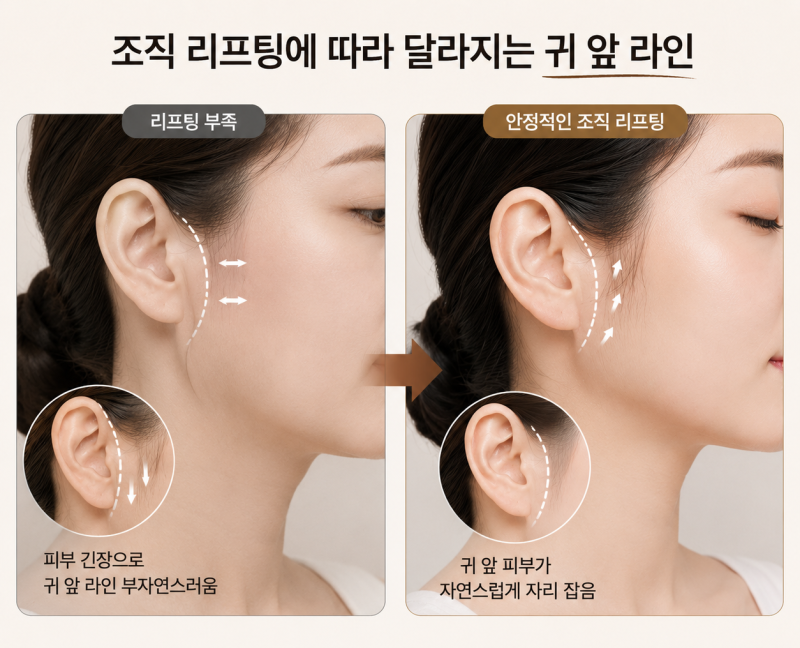
Conversely, if tissue lifting is performed stably,
the skin in front of the ear settles naturally.
The incision line is also stably hidden
between the hairline and wrinkle lines.
Therefore, in reality, the naturalness of facial movement
is much more important than the incision length.
4. A natural mini-facelift doesn't change facial expressions

The highest satisfaction after surgery comes
not from hearing ‘you look younger’
but from hearing ‘you look good’.
If the face suddenly looks too taut,
people around will immediately notice the surgery.
Conversely, if the jawline and cheek lines are refined
and the overall impression becomes naturally clearer,
satisfaction is much higher.
A mini-facelift is not a competition
of how small the incision can be.
The core is how naturally
the facial structure can be restored.

And the biggest factor determining that result
is the pulling method.
By not forcibly pulling the skin upwards
and stably fixing the sagging tissue back to its original position,
scars are less visible
and the face remains natural.
If you are considering a mini-facelift,
don't just look at the incision size,
but also make sure to check
which layers are being fixed and how.
-Operating Hours-
Weekdays 9:00 ~ 18:00 Saturdays 9:00 ~ 16:00 Holidays / Sundays Regular Closure |
-Contact Us-
Faceplus Plastic Surgery Clinic | ||
Consultation Phone: 02-541-8500 Inquiry: KakaoTalk Inquiry |
-Directions-
Frequently Asked Questions
I'm worried about significant scarring after a mini-facelift.
No, mini-facelift scars are not solely determined by the incision length. By not excessively pulling the skin and stably fixing the sagging tissue, you can achieve less visible scars and natural results.
Can the incision area in front of the ear be noticeable after a mini-facelift?
Yes, it can be noticeable. The main reason why the incision area in front of the ear is noticeable is due to excessive skin tension, which can cause the earlobe to be pulled or the hairline to appear pushed back, altering the surrounding structures.
Can my face look unnatural after a mini-facelift?
Yes, it can. If only the skin is strongly pulled upwards, the face can appear frozen in a smiling expression or the corners of the mouth can be unnaturally pulled, making the surgery noticeable.
What is important for reducing mini-facelift scars?
To reduce mini-facelift scars, the tissue fixation method is important. Sufficient dissection of the retaining ligaments and stable fixation of the sagging SMAS layer are crucial to significantly reduce skin tension, making scars less noticeable.
What is the key to achieving natural mini-facelift results?
The key to natural mini-facelift results is how naturally the facial structure is restored. The method of not excessively pulling the skin and stably fixing the sagging tissue back to its original position is important.