2026-07-20
Is SMILE Pro Always the Right Choice?
SMILE Pro isn't for everyone. Learn when this advanced vision correction surgery is most beneficial, especially for those with large pupils, asymmetrical corneas, or astigmatism.
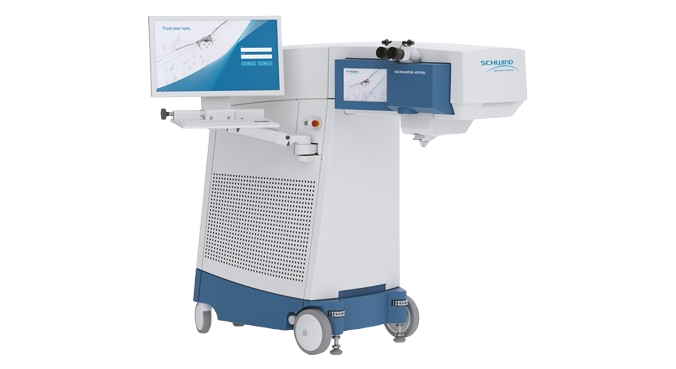

Hello from Gangnam Smile Eye Clinic 😊💙
When researching vision correction surgeries,
one of the most frequently encountered procedures is
SMILE Pro.
However, many people wonder:
The cost is significantly higher, so is SMILE Pro always the best option?
To answer directly,
SMILE Pro is not the right solution for everyone.
However, for individuals with specific conditions,
New SMILE Pro can be a more meaningful choice
than standard SMILE LASIK.
Today, we will explore when SMILE Pro is necessary.
SMILE Pro and New SMILE Pro: Are they recommended simply because they're the latest surgeries?
Sometimes, regarding SMILE Pro,
we hear comments like, ‘Isn’t the hospital just recommending an expensive surgery?’
Of course, it is not advisable to unconditionally recommend SMILE Pro to every patient.
However, conversely,
there are certainly eyes for which SMILE Pro is genuinely beneficial.
Especially in the following cases,
the advantages of SMILE Pro can be significantly impactful.
Cases where SMILE Pro and New SMILE Pro are recommended
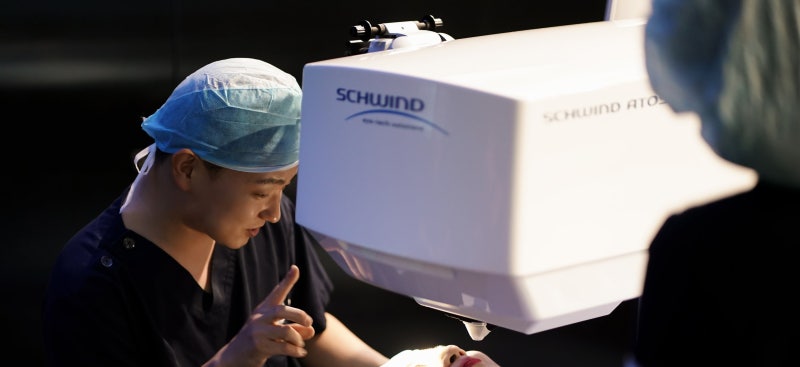
1. People with large pupils
Some people are concerned about glare at night.
Especially when pupil size is larger than average,
they may be sensitive to the phenomenon of light scattering in dark environments.
In such cases, the design of the optical zone and
the importance of central alignment become even greater.
Having large pupils does not necessarily mean SMILE Pro is required.
However, if you prioritize the quality of night vision
or have significant concerns about glare,
SMILE Pro can be one of the options.
2. People with asymmetrical corneas
Everyone's corneal shape is different.
Especially when the left and right sides are not well-symmetrical or the corneal shape is irregular,
how accurately the center is aligned can affect the outcome.
Among patients considering SMILE Pro recently,
some desire a more precise surgery due to these corneal characteristics.
The important thing is not that SMILE Pro itself is a panacea,
but to confirm if it is a good match for your corneal characteristics.
3. People with astigmatism
Astigmatism is a prime example where
SMILE Pro can be particularly meaningful.
Unlike simply having poor eyesight,
astigmatism has a directional component, so precision is crucial
during the correction process.
Especially for patients with moderate to severe astigmatism,
detailed analysis is required from the surgical planning stage.
Therefore, many ophthalmology clinics actually
actively consider SMILE Pro for patients with astigmatism.
Of course, not all astigmatism patients necessarily
need to undergo SMILE Pro.
However, if you have astigmatism,
the advantages of SMILE Pro can be applied more meaningfully.
Ultimately, what matters is not the 'latest surgery,' but the 'right surgery for me.'
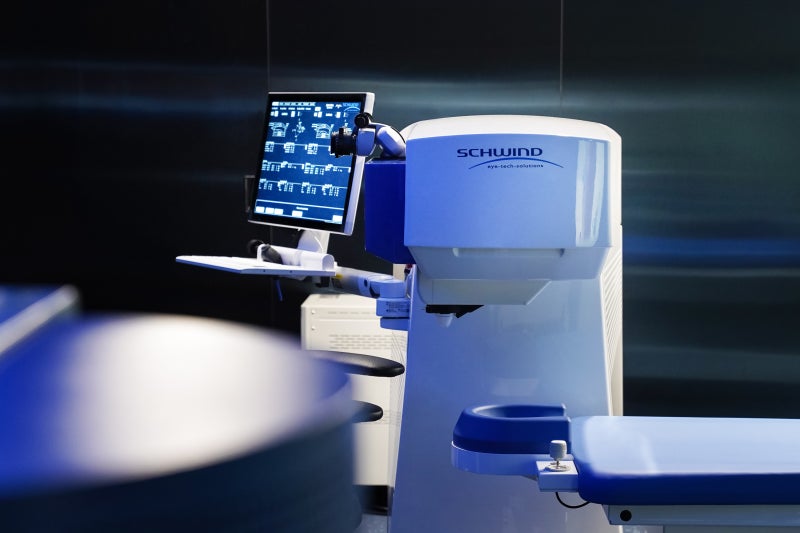
SMILE Pro and New SMILE Pro (Smart Nova) are
undoubtedly good surgeries.
However, the same surgery cannot be the right answer for every patient.
There is something more important than using the latest equipment for vision correction surgery.
That is accurately understanding your eye condition.
Depending on pupil size, corneal shape, and degree of astigmatism,
the factors to consider vary,
and in some cases, based on examination results, standard SMILE LASIK or
other vision correction surgeries may be more suitable.
Therefore, rather than an extreme approach like, ‘SMILE Pro is unconditionally the best,’
or ‘SMILE Pro is just a marketing ploy,’
it is important to undergo a precise examination to confirm your eye condition
and then choose the most suitable surgical method.
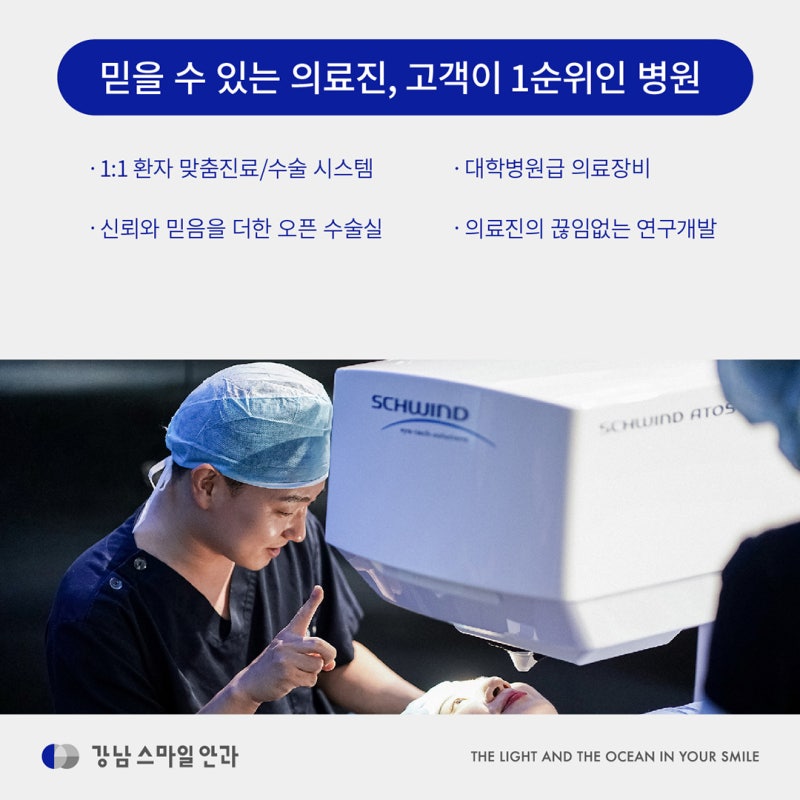

At our clinic, we conduct precise examinations for various vision correction surgeries,
including New SMILE Pro,
and rather than recommending a predetermined type of surgery,
we work with each patient to find the method best suited for their individual eye condition.
Especially if you have astigmatism, an asymmetrical corneal shape,
or prioritize the quality of night vision,
we recommend undergoing a more detailed examination to determine the appropriate surgical method.
Ultimately, the criterion for good vision correction surgery
is not the most expensive or the latest surgery,
but whether it is the best fit for your eyes.
💙 SMILE surgery is best at Gangnam Smile Eye Clinic 💙
💙🤍 𝖦𝖠𝖭𝖦𝖭𝖠𝖬 𝖲𝖬𝖨𝖫𝖤 𝖤𝖸𝖤 𝖢𝖫𝖨𝖭𝖨𝖢💙🤍
𝗧𝗛𝗘 𝗟𝗜𝗚𝗛𝗧 𝗔𝗡𝗗 𝗧𝗛𝗘 𝗢𝗖𝗘𝗔𝗡 𝗜𝗡 𝗬𝗢𝗨𝗥 𝗦𝗠𝗜𝗟𝗘













Frequently Asked Questions
Is SMILE Pro good for everyone?
No, SMILE Pro is not the right answer for everyone. Depending on individual eye conditions such as pupil size, corneal shape, and degree of astigmatism, general SMILE surgery or other vision correction procedures may be more suitable.
When is SMILE Pro particularly recommended?
SMILE Pro can be a meaningful choice especially for people with large pupils, asymmetrical corneas, and moderate to high astigmatism. In these cases, more precise surgery may be required.
Is SMILE Pro absolutely necessary if I have large pupils?
No, having large pupils does not necessarily mean SMILE Pro is absolutely necessary. However, if you prioritize the quality of night vision or have significant concerns about glare, SMILE Pro can be one of the options.
Is SMILE Pro more advantageous for people with astigmatism?
Yes, for people with astigmatism, the advantages of SMILE Pro can be more meaningfully applied. Astigmatism has directionality, making precise correction important, and it is actively considered for patients with moderate to high astigmatism.
Is the latest surgery always the best vision correction surgery?
No, the most expensive or latest surgery is not necessarily always the best. It is important to accurately understand your eye condition and choose the most suitable surgical method through precise examination.