2026-09-07
Why Laminates Break at Dongdae Entrance Station Dental Clinic
Learn why dental laminates break, the importance of diagnostic models, and the benefits and drawbacks of laminate treatment at our Dongdae Entrance Station dental clinic.
Why Laminates Break at Dongdae Entrance Station Dental Clinic
Hello.
I am Dr. Kim Tae-young, the head director of Bareunyoung Dental Clinic,
where the head director directly explains treated cases.
I had laminates done a while ago, but they broke.
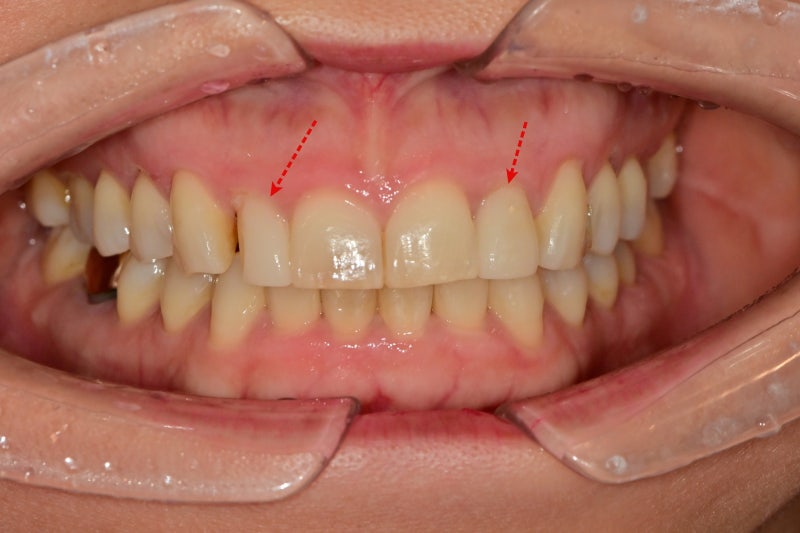
The patient had laminates placed on the two small front teeth next to the central incisors.
They mentioned that after previous orthodontic treatment, the remaining gaps were closed with laminates.
They had used them for a long time, and looking at the fractured area,
we can see that the adjacent canine tooth is worn down.
As the canine tooth wore down, long-term
occlusal interference occurred on the adjacent tooth, leading to a partial
fracture.
The largest central incisor has an angular shape, and when the
restorations were matched to it, the design felt a bit
blocked and stuffy.
While re-fabricating the existing two and also making the adjacent teeth
together would result in a much more natural look,
the patient only wanted to remake the existing laminates and
have whitening done, so we made a diagnosis accordingly.
The Importance of Diagnostic Models
Generally, the advantage of laminates is that
they can be made with no or minimal tooth reduction.
Compared to the method of making traditional crowns, less tooth structure is removed,
and in some cases, they can be made without any reduction.
However, no-prep treatment is not always possible,
and the cases where it is feasible are limited.
Since the degree of protrusion varies for each tooth and the amount of reduction
can differ depending on the area,
it is advisable to create a diagnostic model before treatment
to preview what the tooth shape will be like after treatment.
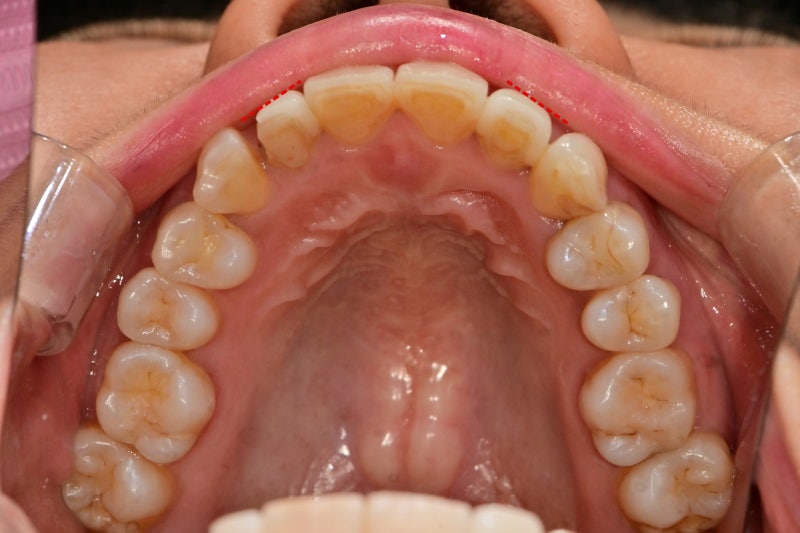
This is a photo of the existing laminates viewed from above.
Although the degree of tooth protrusion differs, the teeth were uniformly
trimmed and made with the same thickness,
making one side of the tooth appear more protruded, which can cause three-dimensional
disharmony.
To resolve this, a diagnostic model can be used to
determine the amount of tooth reduction.
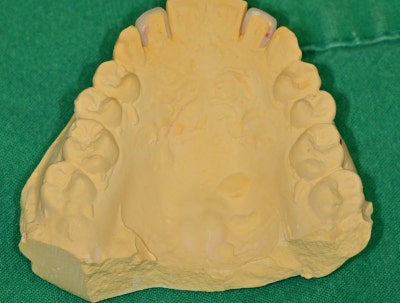
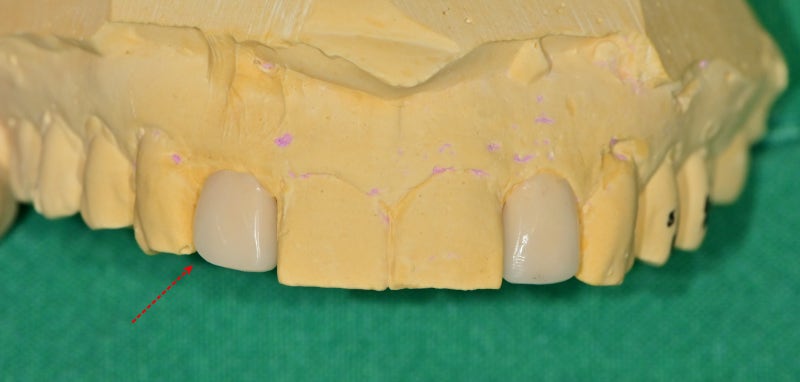
The tooth shape was designed to avoid occlusal interference at the fracture site.
The final restoration should be made to be as consistent as possible with the existing central incisor shape,
creating a symmetrical and uniform appearance.
In this diagnostic model, tooth symmetry was not achieved,
so after modifying the model in the clinic,
an index is created based on it
to determine the amount of tooth reduction.
Determining Tooth Reduction with Diagnostic Models
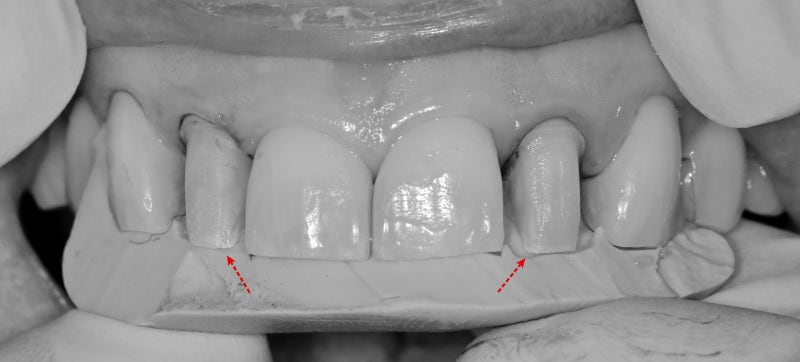
This is a photo after removing the existing laminates.
Since the expected height of the new laminates and the existing tooth height are the same,
insufficient space was provided, which seems to increase the risk of fracture.
Minimal reduction was performed to allow for the minimum thickness,
and the remaining areas had sufficient reduction,
so only minor adjustments for insertion were made before fabrication.
Whitening Treatment After Laminates
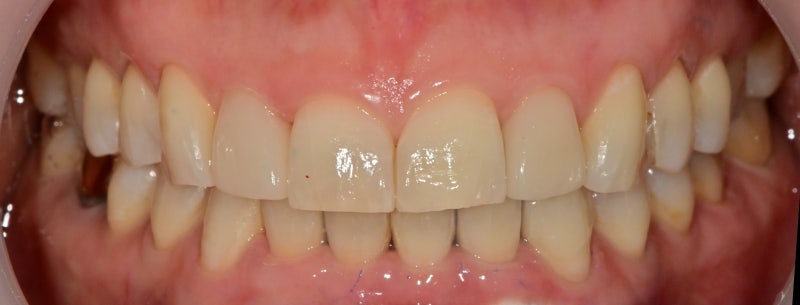
This is a photo immediately after one-day whitening, following laminate bonding.
The patient was concerned about a color difference between the laminates and their natural teeth after whitening,
but fortunately, the color seems to have turned out well.
One or two more whitening sessions in the future would likely make it even more natural.
Since the existing teeth had an angular shape,
there were limitations in making the laminates round,
so we tried to slightly open the closed space to give a sense of openness.
Advantages and Disadvantages of Laminates
Laminates are an excellent treatment that minimizes tooth reduction
and provides aesthetic results.
However, they cannot be applied in all cases,
and there is a risk of fracture depending on occlusion and restoration thickness.
In some cases, root canal treatment may be necessary,
or crown treatment may be more appropriate.
Therefore, it is essential to understand the patient's dental alignment and needs
to make an accurate diagnosis.
If you are considering this treatment,
we recommend visiting us for a consultation and diagnosis.
Today, we discussed re-treatment for fractured laminates
at #DongdaeEntranceStationDentalClinic.
We hope your questions have been answered,
and for detailed consultation, please contact Bareunyoung Dental Clinic.
Thank you.
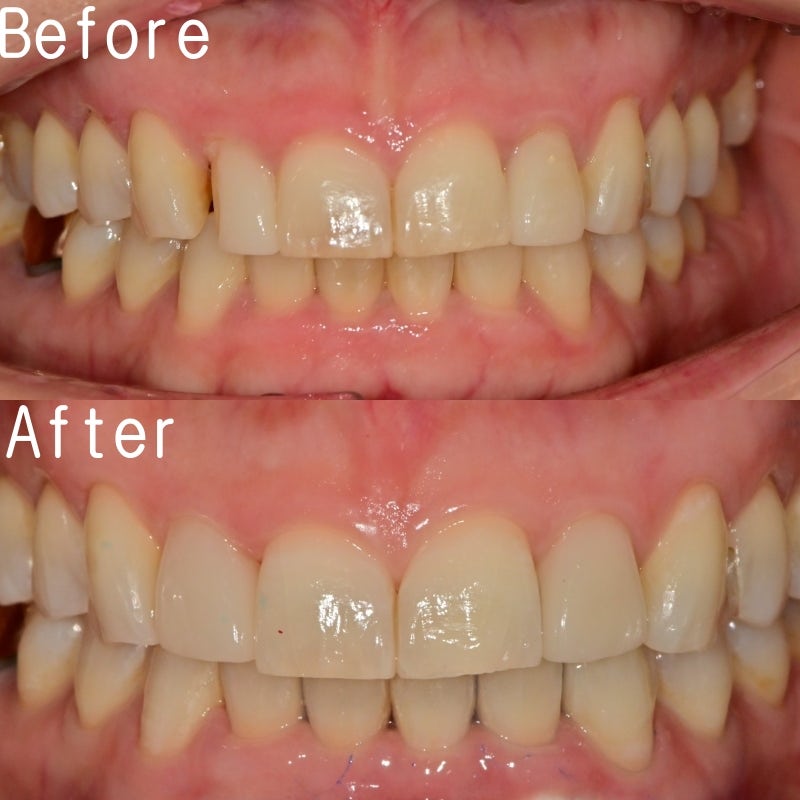
▼ Related cases you might find helpful ▼
We believe that proper treatment leads to proper results. My ideal dental clinic is one where everyone who visits with worries can leave feeling reassured and confident. – Bareunyoung Dental Clinic
Directions: JYJ Building, 2nd Floor, 179 Dongho-ro, Jung-gu, Seoul. Right in front of Exit 6 of Yaksu Station, towards Yaksu Market. Use Village Bus 5 (Yaksu Station), Village Bus 12 (Namsan Town, Yaksu Police Station), or bus stops (Yaksu Heights, Sindang Social Welfare Center, Gaon Library, Kumho Tunnel Entrance) from Yuyu Pharmaceutical towards Kumho Station.
This post was written directly by Bareunyoung Dental Clinic for the purpose of providing medical information and hospital advertising (in compliance with Article 56, Paragraph 1 of the Medical Service Act).
Frequently Asked Questions
What are the main reasons why laminates break?
The main reasons why laminates break can include occlusal interference, the thickness of the restoration, and issues with tooth design. Specifically, if a canine tooth wears down, causing long-term occlusal interference on an adjacent tooth, fracture can occur.
Is no-prep laminate treatment always possible?
No, no-prep treatment is not always possible, and the cases where it is feasible are limited. This is because the degree of tooth protrusion varies for each tooth, and the amount of reduction can differ depending on the area.
Why is a diagnostic model important before laminate treatment?
A diagnostic model is important for previewing what the tooth shape will be like after treatment and for determining the amount of tooth reduction. This helps resolve issues like tooth protrusion or asymmetry.
What should be considered when re-treating existing laminates?
When re-treating existing laminates, it is crucial to avoid occlusal interference at the fracture site and to create a symmetrical restoration that is consistent with the existing central incisor shape. Additionally, sufficient space must be ensured to reduce the risk of fracture.
Can I receive whitening treatment after laminates?
Yes, you can receive whitening treatment after laminate bonding. While there might be concerns about a color difference between the laminates and natural teeth after whitening, the color can be adjusted to blend well.
What are the advantages and disadvantages of laminate treatment?
The advantages of laminates include minimizing tooth reduction and providing aesthetic treatment. However, they cannot be applied in all cases, and disadvantages include the risk of fracture and the possibility of requiring root canal treatment.