2026-07-20
Tears, Foreign Body Sensation, Redness: Is It Conjunctivochalasis, Not Dry Eye? (Conjunctivochalasis Treatment)
Experience tears, discharge, irritation, or redness without feeling sad? It might be conjunctivochalasis, not just dry eye. This common condition, often due to aging or contact lens use, involves the conjunctiva loosening and wrinkling, causing discomfort.
Hello, this is Gangnam Smile Eye Clinic 😊
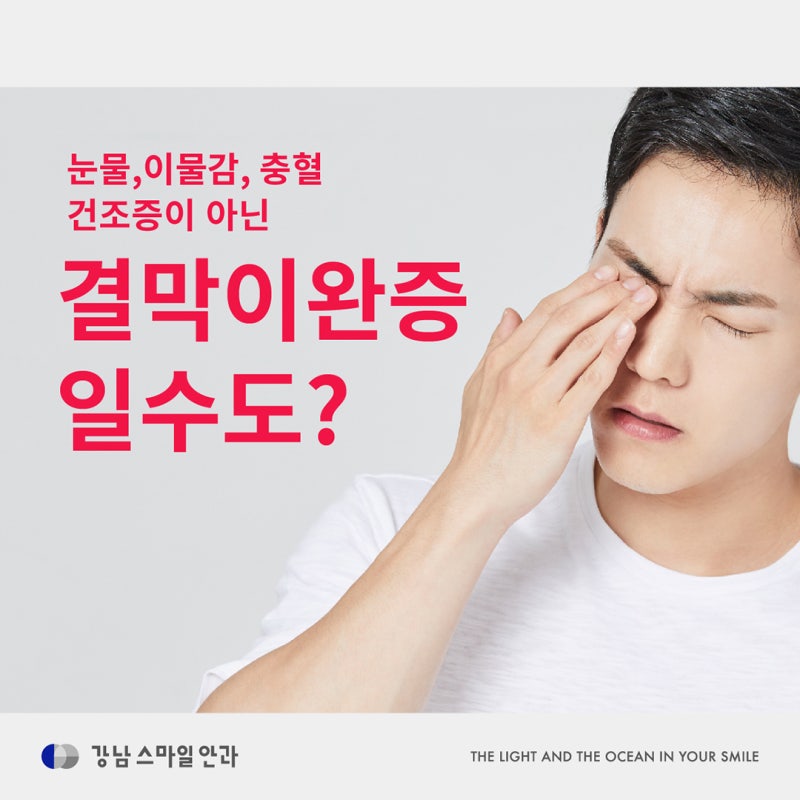
Have you ever experienced tears flowing, eye discharge, stinging, a foreign body sensation, or redness in your eyes, even when you weren't feeling sad?
In such cases, most people tend to think it's dry eye.
However, this discomfort might not be due to simple dry eye, but rather a symptom of ‘conjunctivochalasis’, which occurs when the conjunctiva stretches.
It might be an unfamiliar condition as it's not widely known, but it's one of the fairly common diseases caused by aging or contact lens use.
< What is the Conjunctiva? >
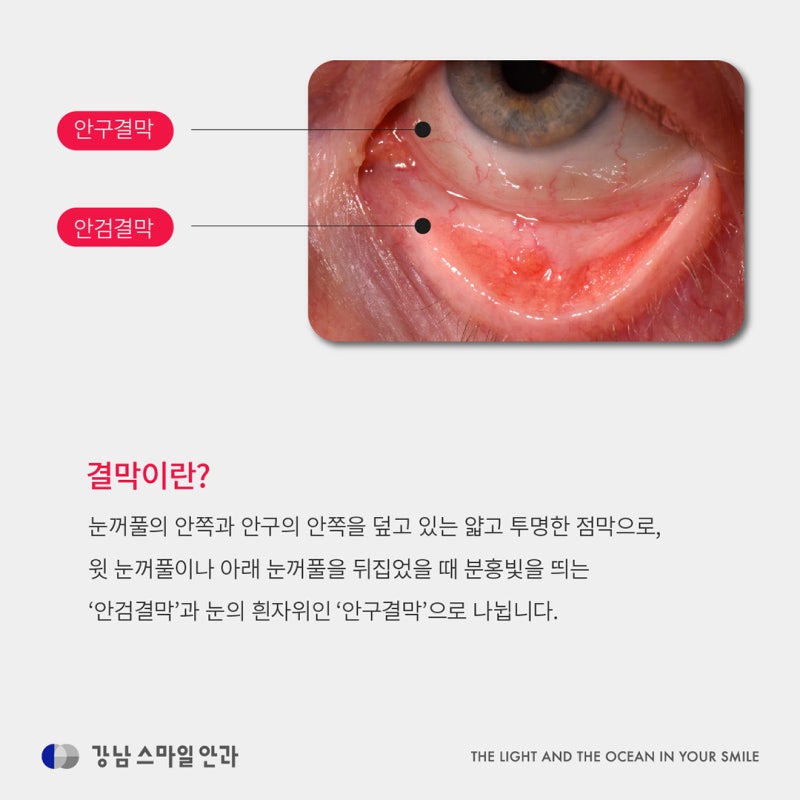
The conjunctiva refers to the thin, transparent mucous membrane that covers the inside of the eyelids and the white part of the eyeball.
It is divided into the ‘palpebral conjunctiva’, which appears pinkish-red when you flip your upper eyelid or pull down your lower eyelid, and the ‘bulbar conjunctiva’, which is the white part of the eye.
< What is Conjunctivochalasis? >
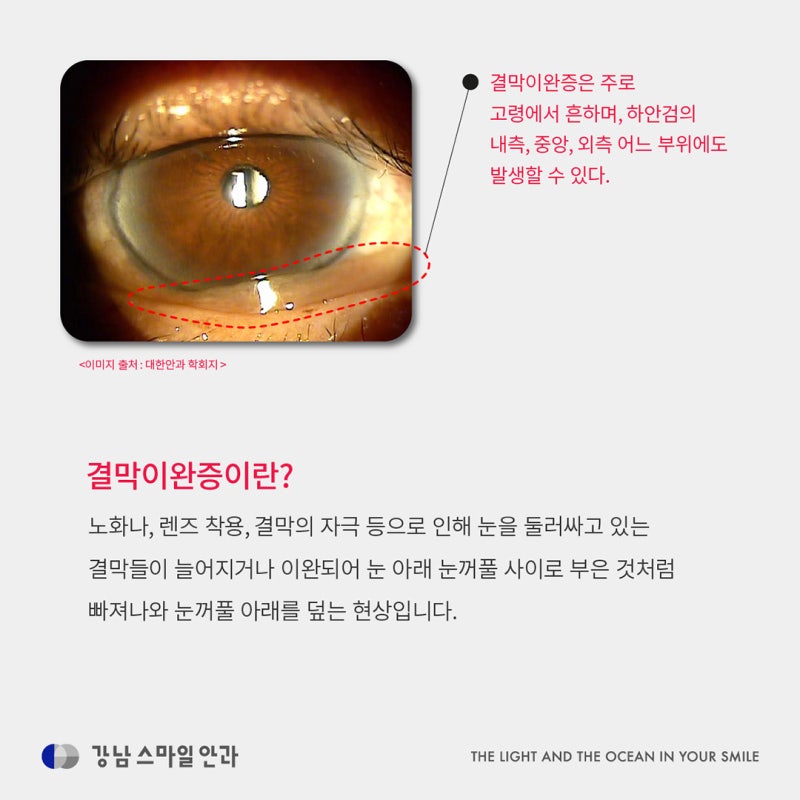
Conjunctivochalasis refers to the phenomenon where these conjunctivae sag or loosen and cover the eyelids.
Many people easily mistake it for ptosis because of the sagging and wrinkling, but it is an entirely different condition.
Since ptosis is located on the exterior of the eye and the conjunctiva is located on the interior of the eye,
conjunctivochalasis is a condition where internal discomfort is felt more than external appearance.
< Causes and Symptoms of Conjunctivochalasis >
Just as skin sags and wrinkles with age,
the formation of wrinkles in the conjunctiva is also one of the natural aging phenomena.
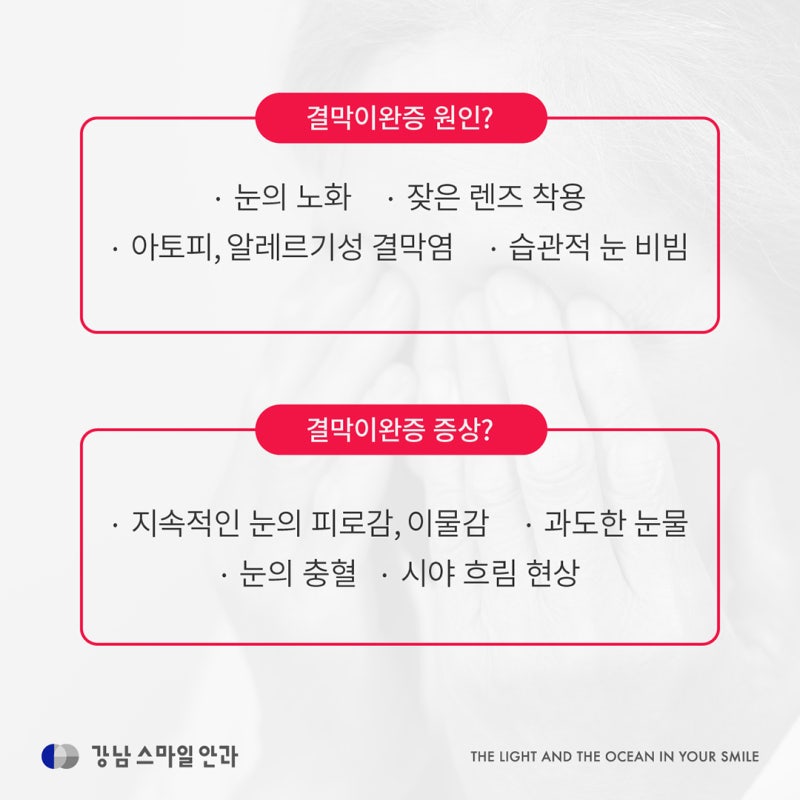
Additionally, if you wear contact lenses for a long time or frequently rub your eyes due to allergic conjunctivitis,
wrinkles can form in the conjunctiva even at a young age.
When lenses or hands irritate the conjunctival epithelium, the conjunctival cells stretch, leading to chalasis.
Typical symptoms include persistent eye fatigue, foreign body sensation, excessive tearing, redness, or blurred vision.
The loosened and sagging conjunctiva forms around the white of the eye, blocking the tear ducts and obstructing tear flow,
which results in symptoms similar to dry eye.
< If Symptoms Occur and Are Left Untreated... >
If symptoms occur but are left untreated,
there is a possibility of chronic inflammation in the eye.
Furthermore, tear drainage function may weaken further, and the skin around the eyes may also be irritated,
and in severe cases, there is a risk of secondary diseases such as keratitis.
Therefore, if tearing, foreign body sensation, redness, etc., persist,
it is important to receive professional diagnosis and treatment early.
< Treatment Methods for Conjunctivochalasis >
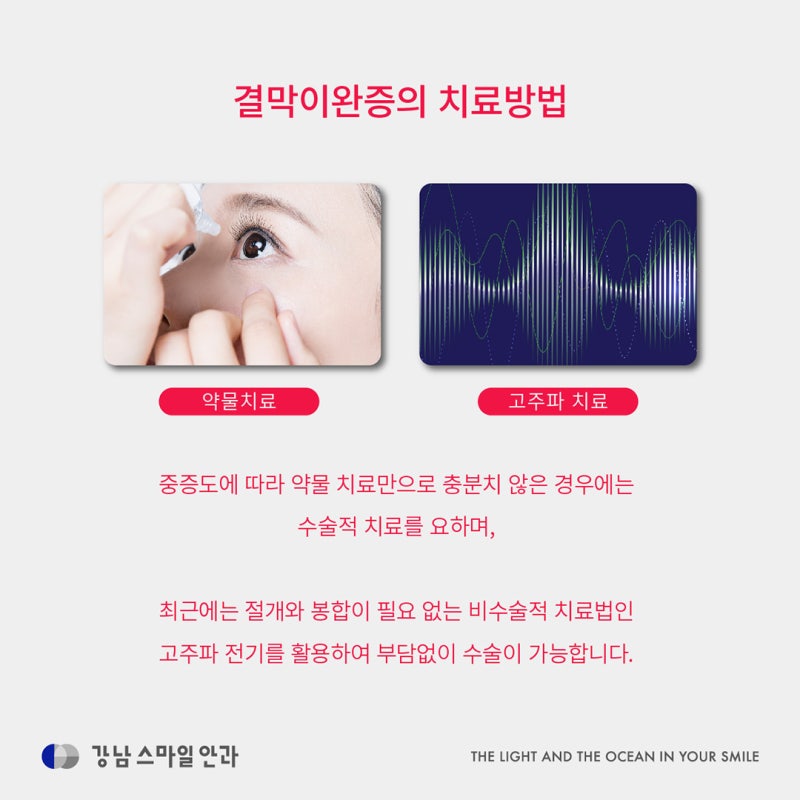
If symptoms are mild, drug treatment is prioritized.
Symptoms are alleviated by using steroid eye drops, antihistamines, and artificial tears.
If drug treatment alone is not sufficient depending on the severity, surgical treatment is required.
Recently, there are also non-surgical treatment methods using high-frequency electricity that do not require incision and suturing,
making it possible to perform the procedure with relatively less burden.
These treatment methods involve shrinking the swollen conjunctiva with a laser or shrinking the conjunctiva with high-frequency conjunctival electrocautery.
However, the treatment method may vary depending on the severity and individual conjunctival condition,
so it is essential to decide on the treatment method after consulting with a specialist.
< Prevention Methods for Conjunctivochalasis >
To prevent conjunctivochalasis, it is advisable to avoid excessive eye irritation,
reduce contact lens wearing time, and frequently rest your eyes.
It is also important to check your eye condition through regular ophthalmological examinations,
or visit an ophthalmologist for an accurate diagnosis if you experience symptoms.
Especially since the symptoms are very similar to dry eye, many people only receive treatment related to dry eye,
which often leads to worsening symptoms and a decrease in quality of life.
Therefore, we strongly recommend visiting an ophthalmologist with extensive experience in diagnosis and treatment.
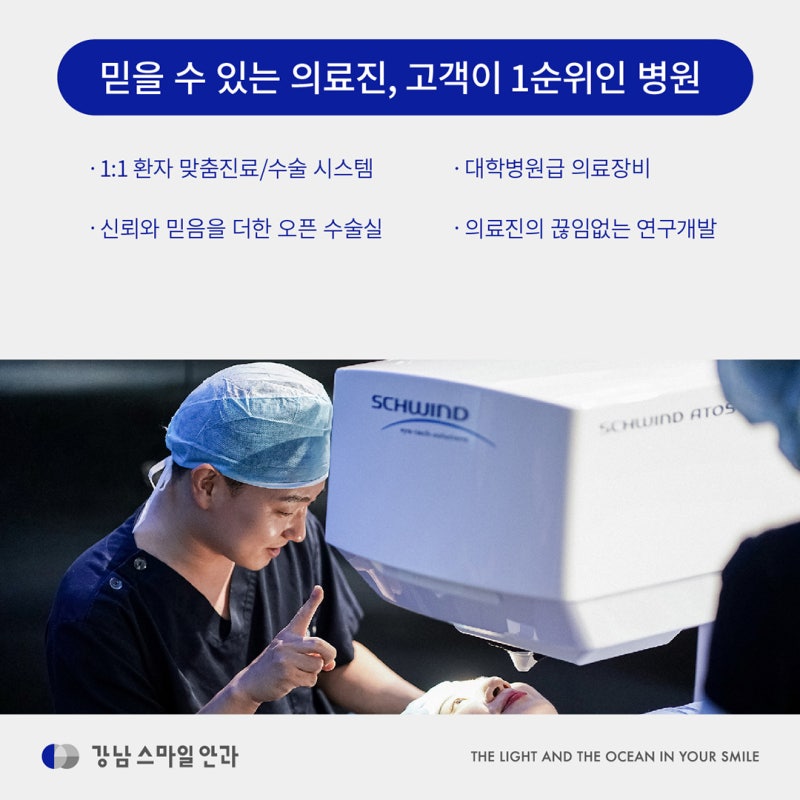
Our Gangnam Smile Eye Clinic
has extensive experience in dry eye and conjunctivochalasis
and provides customized treatment through precise diagnosis by an ophthalmologist.
Furthermore, for all ophthalmic surgeries, not just conjunctivochalasis,
we are equipped with the latest equipment and a systematic examination system
and treat each patient with sincerity through 1:1 customized consultation and surgery.
We always prioritize the patient
and value transparency and safety above all else.
If you have any other inquiries,
please feel free to contact the eye clinic at any time.
💙🤍 𝖦𝖠𝖭𝖦𝖭𝖠𝖬 𝖲𝖬𝖨𝖫𝖤 𝖤𝖸𝖤 𝖢𝖫𝖨𝖭𝖨𝖢💙🤍
𝗧𝗛𝗘 𝗟𝗜𝗚𝗛𝗧 𝗔𝗡𝗗 𝗧𝗛𝗘 𝗢𝗖𝗘𝗔𝗡 𝗜𝗡 𝗬𝗢𝗨𝗥 𝗦𝗠𝗜𝗟𝗘
dry eye tears, dry eye redness, dry eye foreign body sensation

Today LASIK Smile Eye Clinic



Frequently Asked Questions
What is conjunctivochalasis?
Conjunctivochalasis is a condition where the conjunctiva, the thin, transparent mucous membrane covering the inside of the eyelids and the eyeball, sags or relaxes and covers the eyelids. It is a condition where internal discomfort in the eye is felt more than external cosmetic problems.
What are the main causes of conjunctivochalasis?
The main cause of conjunctivochalasis is the natural aging process, where the conjunctiva develops wrinkles, similar to how skin sags and wrinkles with age. It can also occur due to prolonged contact lens wear or frequently rubbing the eyes due to allergic conjunctivitis.
What are the typical symptoms of conjunctivochalasis?
Typical symptoms of conjunctivochalasis include persistent eye fatigue, foreign body sensation, excessive tearing, redness, and blurred vision. The sagging conjunctiva can block the tear ducts, obstructing tear flow and causing symptoms similar to dry eye syndrome.
How is conjunctivochalasis treated?
The treatment for conjunctivochalasis varies depending on the severity of the symptoms. For mild cases, drug therapy such as steroid eye drops, antihistamines, and artificial tears is prioritized. For moderate to severe cases, surgical treatment or non-surgical treatments like radiofrequency conjunctival electrocautery may be considered.
Can conjunctivochalasis be prevented?
Yes, conjunctivochalasis can be prevented. It is advisable to avoid excessive eye irritation, reduce contact lens wearing time, and rest your eyes frequently. Regular ophthalmological check-ups to monitor eye health are also important.
Are conjunctivochalasis and dry eye syndrome the same condition?
No, conjunctivochalasis and dry eye syndrome are different conditions. Conjunctivochalasis can cause symptoms similar to dry eye syndrome by obstructing tear flow due to sagging conjunctiva, but the causes and treatments are different, so an accurate diagnosis is necessary.