2026-07-20
What is Myopia? Ophthalmic Information from Gangnam Smile Eye Clinic!
Learn about myopia, its causes, symptoms, and treatment options from Gangnam Smile Eye Clinic. Discover why regular eye exams are crucial for maintaining good vision.
What is Myopia? Ophthalmic Information from Gangnam Smile Eye Clinic!
Hello everyone, we are Gangnam Smile Eye Clinic,
dedicated to your eye health!
Gangnam Smile Eye Clinic provides valuable eye health information
through our YouTube channel, Smile Doctor Yeom Sabu TV!
▼ Click here to watch useful ophthalmic information! ▼
If you visit and subscribe,
you can receive a variety of useful ophthalmic information
that is regularly updated.
Today, let's learn about myopia, a topic we previously covered on Smile Doctor Yeom Sabu TV!
What is Myopia? Useful Ophthalmic Information with Gangnam Smile Eye Clinic!


Myopia is a condition where you can see nearby objects clearly,
but distant objects appear blurry!
Recently, the risk of myopia has been increasing due to increased use of smartphones,
close-up reading, TV watching, and computer gaming.
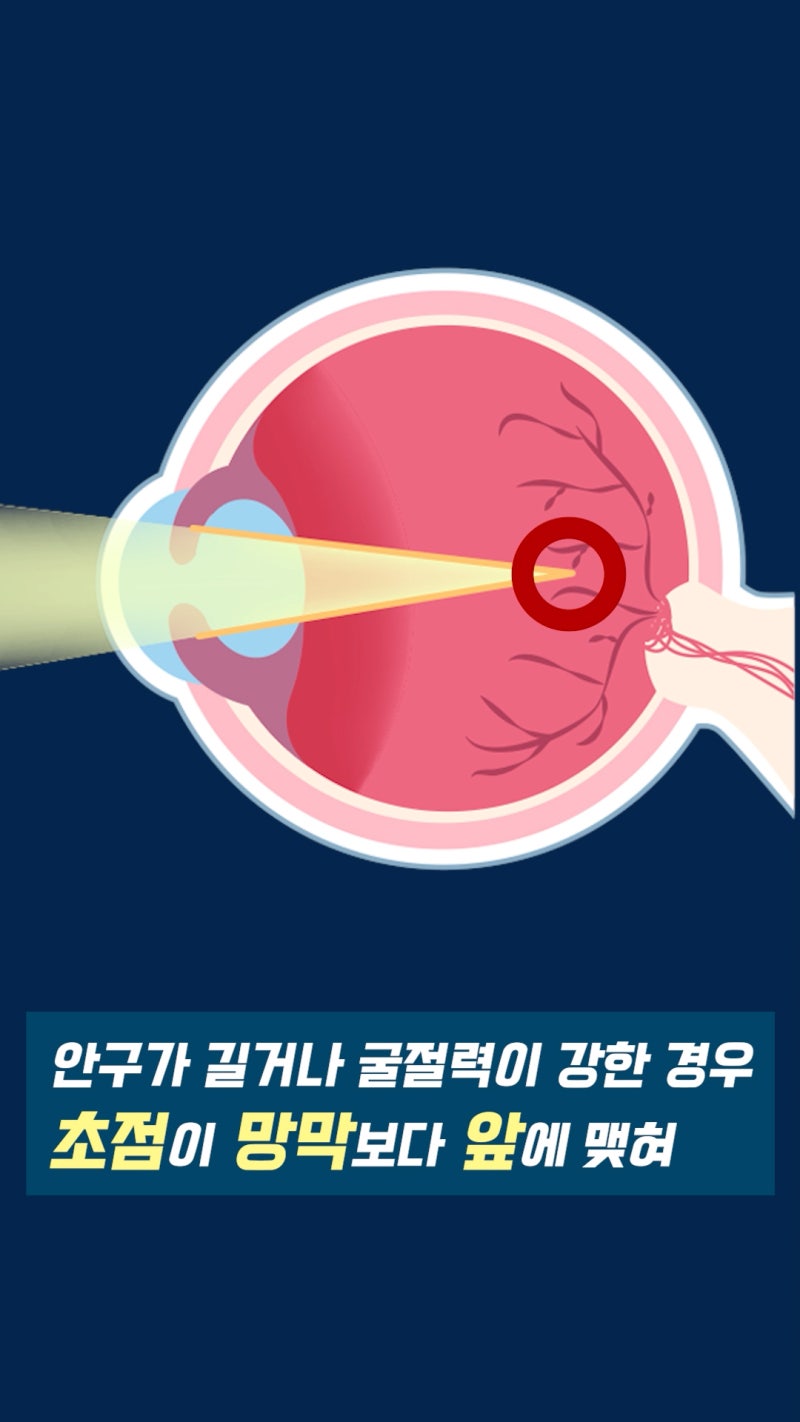
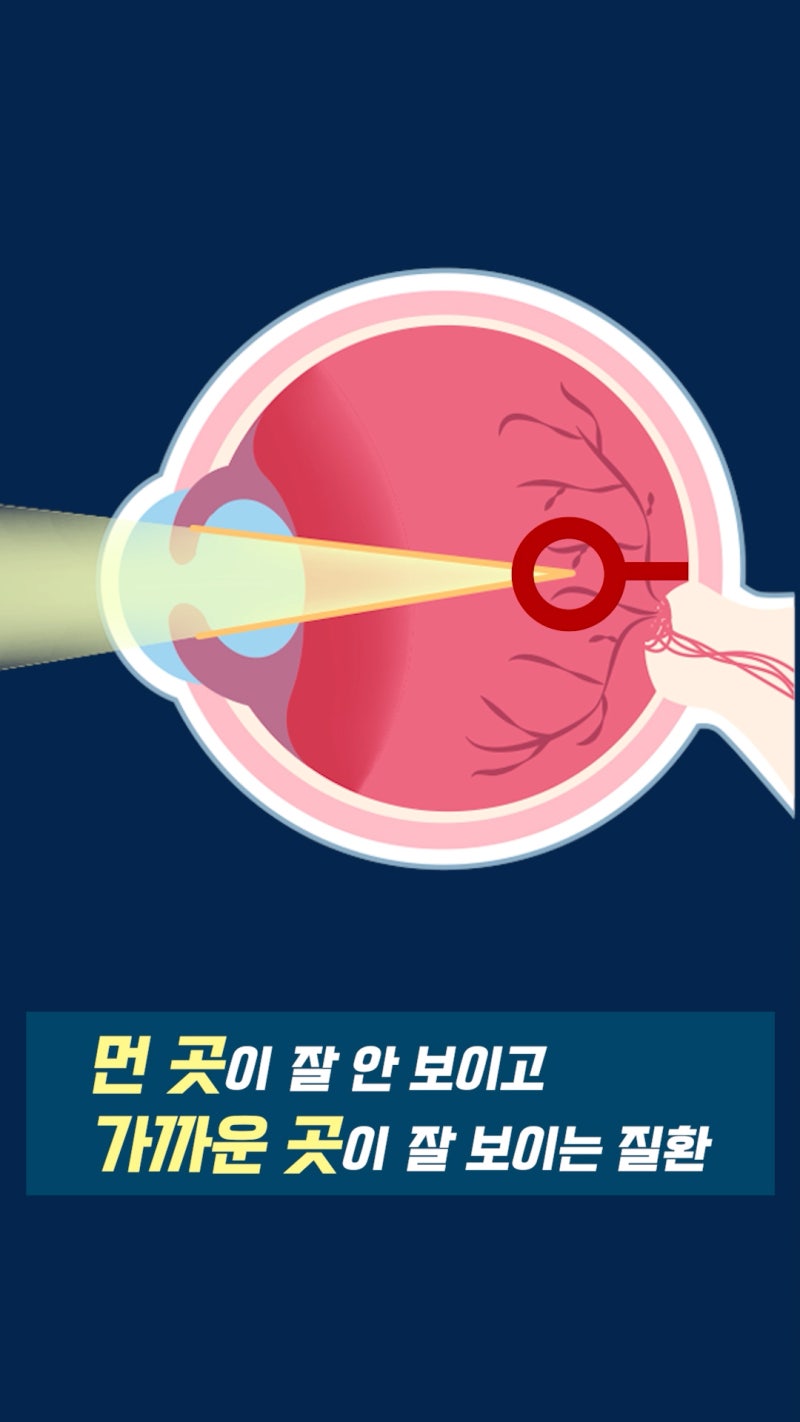
Myopia occurs when the eyeball is too long or the refractive power is weak,
causing the focal point to fall in front of the retina.
Let's delve deeper into its causes.

The causes of myopia include
genetic factors and nutritional factors such as hyperinsulinemia.
It can also be caused by prolonged close-up work
or stress. These are environmental factors.
Furthermore, in today's digital age, factors such as
smartphone use, TV watching, and computer gaming
also contribute to myopia.
Staring at close objects for extended periods, such as during close-up reading,
can also be a cause of myopia.
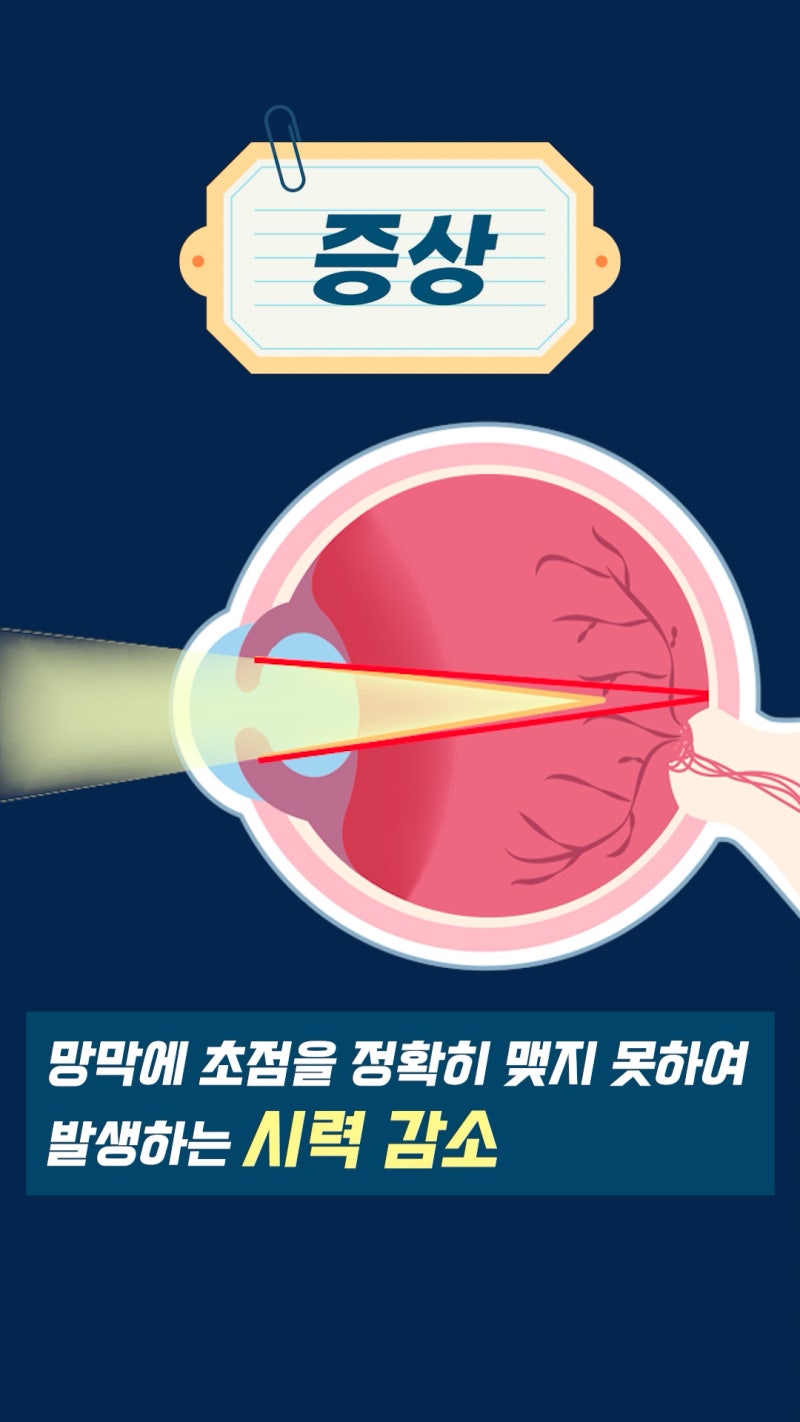
Myopia is a condition where distant objects appear blurry
because the focal point does not land precisely on the retina.
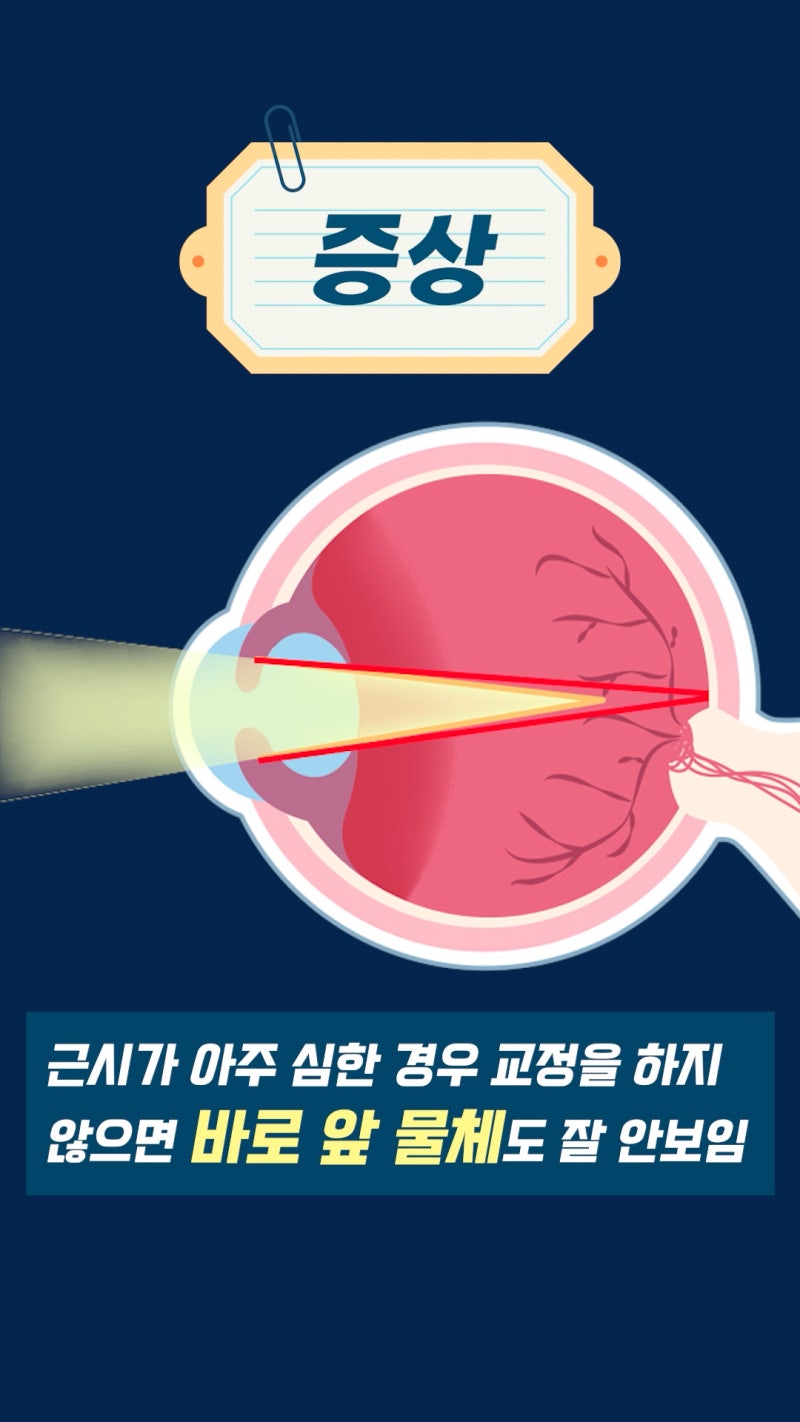
If myopia is severe, not only distant objects but also
nearby objects may appear blurry, making correction necessary.
If a child squints, turns their head, or complains of headaches
when looking at distant objects,
it's important to consider if these behaviors are due to vision discomfort
and seek an eye examination.
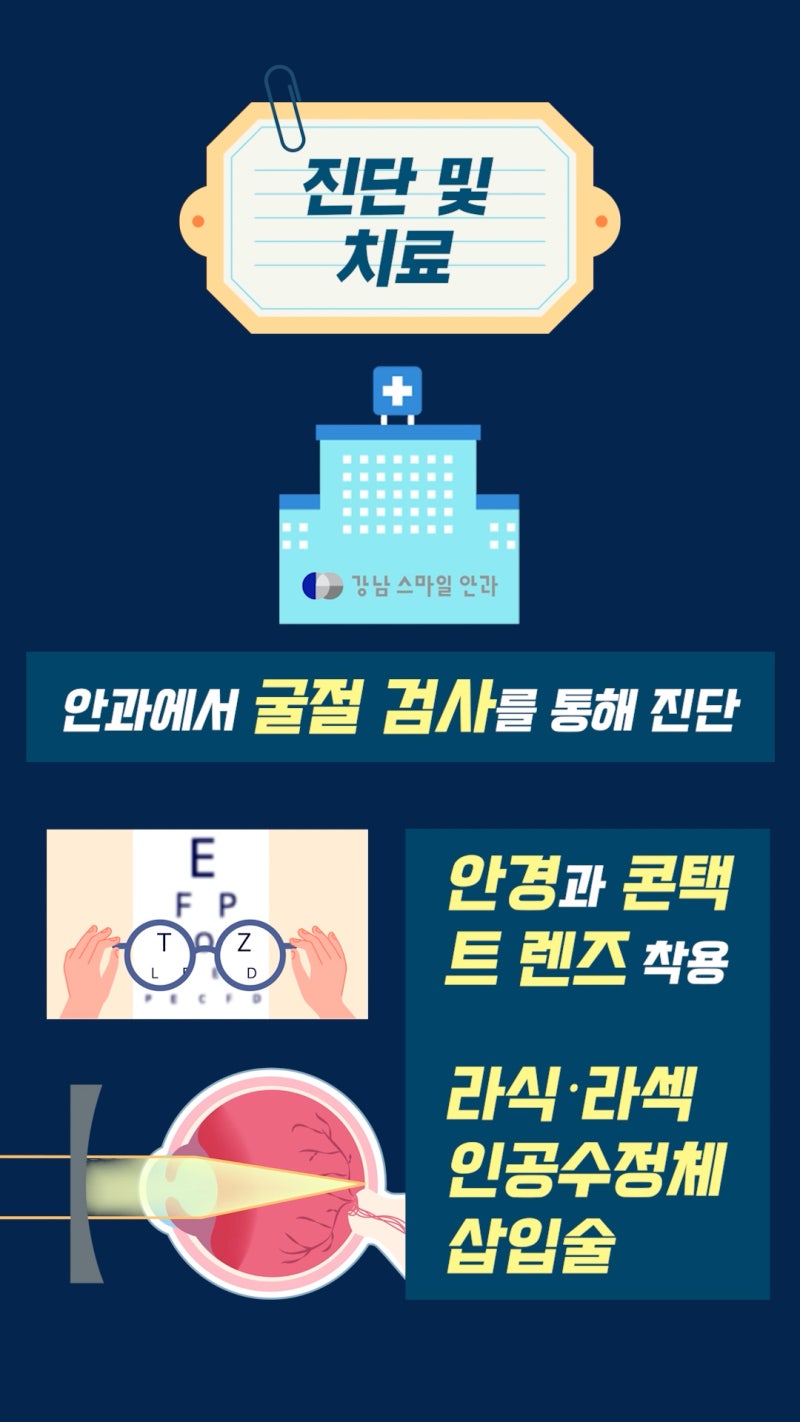
For myopia, you should visit an ophthalmologist and undergo a refraction test
to check for refractive errors.
If an error is confirmed, depending on the degree of myopia,
correction with glasses or contact lenses, or surgical treatments
such as LASIK, LASEK, or intraocular lens implantation (lens insertion surgery)
may be necessary.

Severe myopia can lead to an elongation of the eyeball,
causing the retina to stretch and potentially result in retinal detachment.
Retinal detachment is a phenomenon where a part of the visual field
is obscured, much like a curtain being drawn.
Furthermore,
floaters, where black spots appear to drift in the field of vision,
can also occur.
While most cases of floaters are harmless, they can sometimes be symptoms of
retinal tears or retinal detachment, so an eye examination is necessary if floaters appear.
Do you wear glasses or contact lenses?
Get an examination once every 6 months.
If you use glasses or contact lenses,
it's necessary to regularly check for refractive errors through vision tests.
Correcting your vision with glasses or lenses that do not match your eye's refractive power
can cause eye fatigue and have negative effects.
Therefore, you should visit an ophthalmologist once every 6 months
to ensure that the prescription of your glasses or lenses is appropriate.
Gangnam Smile Eye Clinic: A Specialty Eye Clinic for Vision Correction with State-of-the-Art Facilities in Gangnam
Gangnam Smile Eye Clinic is an eye clinic with excellent facilities, scale, and medical standards.
If you are experiencing myopia and are uncomfortable because you can't see distant objects clearly,
or if you need regular eye check-ups,
come to Gangnam Smile Eye Clinic, where you'll find medical staff with extensive experience and expertise.
▼ Directions ▼
Gangnam Smile Eye Clinic is located directly in front of Gangnam Station Exit 10,
on the 4th and 6th floors of the Tongyeong Building.
▼ Phone Consultation ▼
☎ 02) 553-0210
▼ Go to KakaoTalk Consultation ▼
#Myopia #GangnamSmileEyeClinic #SmileEyeClinic #SmileLASIK #SmartLASIK #LASIK #LASEK #ImplantableCollamerLens #DryEyeSyndrome #Cataract #PresbyopiaCataract #CataractSurgery #GangnamStationEyeClinic #GangnamEyeClinic #PresbyopiaSurgery #AllLaserLASEK #APEXSmile #FlexSmile #RelexSmile
Frequently Asked Questions
Why does myopia occur?
Myopia occurs when the eyeball lengthens or the refractive power weakens, causing the focal point to form in front of the retina. Genetic factors and environmental factors such as excessive close-up work and smartphone use are also major causes.
What problems can arise if myopia is severe?
Yes, severe myopia can lead to complications such as retinal detachment or floaters. Retinal detachment is a phenomenon where part of the visual field is obscured, and floaters are symptoms of black spots floating around, which may require ophthalmological examination.
How is myopia diagnosed and corrected?
Myopia is diagnosed through a refractive error test at an ophthalmologist. Correction methods include wearing glasses or contact lenses, and surgical treatments such as LASIK, LASEK, and intraocular lens implantation are also possible.
Are regular check-ups necessary if I use glasses or lenses?
Yes, if you use glasses or contact lenses, it is recommended to visit an ophthalmologist once every six months to check for refractive errors through an eye exam. Incorrect prescriptions can cause eye fatigue.
How can I tell if my child is nearsighted?
If your child squints or turns their head when looking at distant objects, or complains of headaches, it may be due to vision discomfort, so it is recommended to get an eye exam.