2026-09-03
Gangnam Nasolabial Fold Lifting: How Effective Is It for Hollowing and Sagging? A Comparison of Thread Types
This article explains the causes of nasolabial folds (hollowing vs. sagging) and how thread lifting in Gangnam can address them. It details the differences between thread types and emphasizes the importance of personalized design for natural results.

※ This article is intended to provide medical information.
It is not subject to deliberation under Article 56, Paragraph 2 and Article 57 of the Medical Act,
and is not an advertising post unrelated to the content of deliberation.
Hello,
I am Dr. Park Jeong-geun,
Director of Faceplus Plastic Surgery Clinic.

Once nasolabial folds start to bother you, the frequency with which you look in the mirror changes.
Lines that used to only appear when you smiled now remain even when your face is at rest,
and when you hear comments like ‘you look tired’ or ‘you look older’, it can be quite disheartening.

In the consultation room, I most often hear:
I don’t know if this is a wrinkle, a hollow, or sagging.
Indeed, if this distinction is not made correctly,
the satisfaction with any chosen procedure can be low.
What causes nasolabial folds?
Changes in this area generally manifest in two ways.
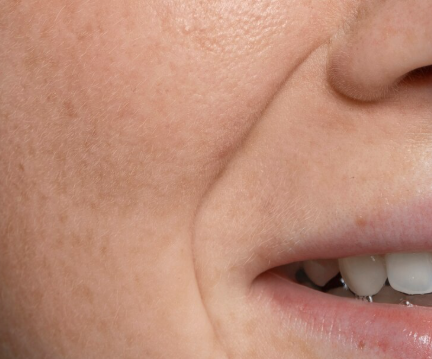
One is hollowing due to volume loss,
and the other is sagging that occurs as the upper tissue moves downwards.
The problem is that these two often appear simultaneously.
Therefore, if you only focus on the line itself, the results may feel limited.
I always try to explain the underlying cause of the change first,
rather than just the visible line on the surface.
This allows for a more understandable subsequent choice.
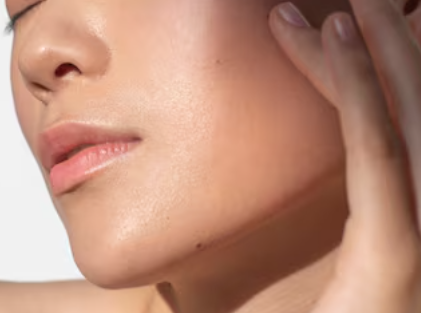
Thread lifting is a method that can help with changes involving ‘tissue displacement’, or sagging.
It is closer to the concept of reorganizing the direction of the descended structures.
However, not all concerns can be resolved with this single method.
If volume loss is the primary cause, other approaches may be needed in conjunction,
whereas if tissue displacement is central, the role of threads becomes relatively clear.

It is not advisable to make a decision based solely on explanations like ‘it’s good for this area’ without making this distinction.
The approach also varies depending on the characteristics of the threads used.
Threads with strong fixation aim to support descended tissue,
while relatively softer threads focus on improving skin elasticity and texture.
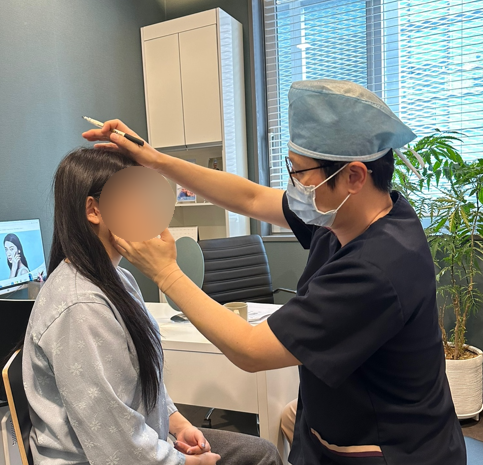
Rather than concluding which thread is better,
it is important to choose based on which change is more prominent on your face.
Even for the same concern, the application method may vary depending on facial thickness, elasticity, and the direction of sagging.
Different criteria are needed for each face.
In this process, what I consider most important is ‘design’.
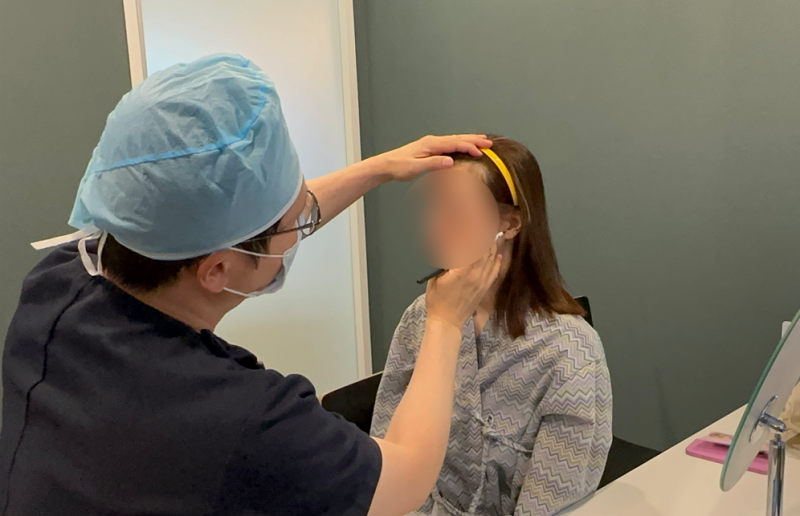
I believe that thread lifting is not merely a technique of pulling,
but a procedure that involves designing the desired impression of the face.
Even with the same concern, some people want to look softer when they smile,
while others want their profile line to appear more defined.
Therefore, I first confirm
‘what kind of impression they wish to convey’,
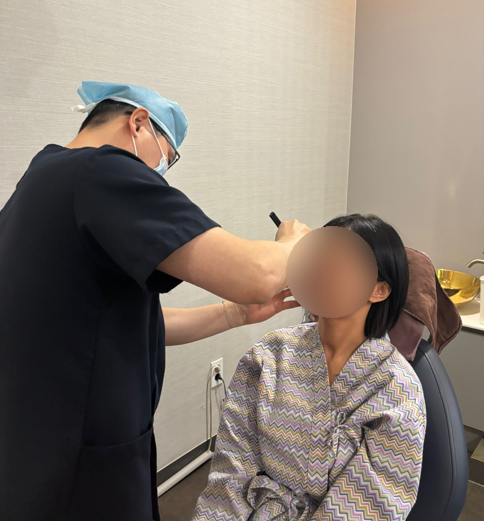
and then examine where the hollowing and sagging began,
whether it’s an area with a lot of movement, and what the skin thickness and elasticity are like.
Even if the desired direction is clear, the facial structure may not always follow suit.
In such cases, excessive pulling can lead to unnatural tension or awkward expressions,
Conversely, if the approach is too conservative,
you might feel that ‘the change is smaller than expected’.
Therefore, I focus more on ‘where, at what angle, and to what extent’ is natural,
rather than ‘how much can be lifted’.
I believe that balancing this is the role of the practitioner,
and that we must take full responsibility for designing the procedure to achieve the patient’s desired impression.
First, consider the right direction for your face.
Changes in this area are not a matter to be decided in the short term.
It requires a calm process of distinguishing whether it’s hollowing, sagging, or both,
and then considering appropriate methods.
Thread lifting is just one of those options,
and it is not the correct answer for all cases.
I hope this article has helped you establish criteria for making your own judgment,
rather than advocating for a specific choice.

It’s not too late to decide after fully understanding.
Thank you for reading.
-Operating Hours-
Weekdays 9:00 ~ 18:00 Saturdays 9:00 ~ 16:00 Public Holidays / Sundays Regularly Closed |
-Contact Us-
Faceplus Plastic Surgery Clinic | ||
Consultation Phone: 02-541-8500 Inquiries: KakaoTalk Inquiry |
-Directions-
Frequently Asked Questions
Why do nasolabial folds appear?
Nasolabial folds primarily appear due to two reasons. First, ‘hollowing’ occurs as volume decreases, and second, ‘sagging’ appears as the upper tissue moves downwards. Most often, these two causes act simultaneously.
In which cases is nasolabial fold thread lifting effective?
Thread lifting for nasolabial folds can primarily help when ‘tissue displacement’, i.e., sagging, is the main cause. The approach is based on reorganizing the direction of the descended tissue.
How are thread types chosen for nasolabial fold thread lifting?
It is important to choose the thread type based on which change is more prominent on the current face. Threads with strong fixation focus on supporting sagging tissue, while softer threads focus on improving skin elasticity and texture.
What is the most important consideration for nasolabial fold lifting?
The most important consideration is ‘design’. It is not merely a technique of pulling, but rather designing ‘where, at what angle, and to what extent’ to lift naturally, considering the patient’s desired impression and facial structure.
Can severe hollowing of nasolabial folds be improved with thread lifting alone?
No, that is not the case. If hollowing due to volume loss is the primary cause, satisfaction with thread lifting alone may be low, and other approaches may be needed in conjunction.
What should be considered before undergoing nasolabial fold improvement procedures?
Before the procedure, it is necessary to calmly distinguish whether your nasolabial folds are due to hollowing, sagging, or both, and then consider appropriate methods. It is important to make a decision after fully understanding.