2026-07-20
Essential LASIK/LASEK Questions from Gangnam Station Eye Clinic
Considering LASIK or LASEK? This guide from Gangnam Smile Eye Clinic covers three crucial questions to ask during your consultation for a safe and satisfactory outcome.


Hello from Gangnam Station Eye Clinic,
We are Gangnam Smile Eye Clinic😊💙
Recently, more and more people are considering vision correction surgery,
and many wonder, ‘What should I ask?’ before going for a consultation.
Today, Gangnam Station Eye Clinic will summarize three key questions
that are essential to ask during your LASIK/LASEK consultation.
Gangnam Station Eye Clinic: Is this corneal thickness acceptable?

Both LASIK and LASEK
correct vision by removing a certain thickness of corneal tissue, so
the safety of the ‘residual corneal thickness’ after surgery is very important.
The typical corneal thickness is around 500-550µm (micrometers),
and for procedures like New Smile LASIK, surgery is often possible
when the thickness is 490µm or more.
The U.S. FDA also recommends maintaining a residual cornea of at least 250-300µm
after surgery for safety.
Especially if you have high myopia or high astigmatism requiring significant correction,
the amount of tissue removed increases,
which may limit LASIK if your cornea is thin.
This is because a larger ablation zone can lead to an excessively thin residual cornea, causing structural instability,
and, though rare, can increase the risk of complications like corneal ectasia.
Therefore, it's not just about whether surgery is possible right now, but rather,
✅How stably the cornea will be maintained after surgery
✅Whether the residual cornea is sufficient
It is most important to get an accurate diagnosis on these points.
Gangnam Station Eye Clinic: What equipment and systems are good?
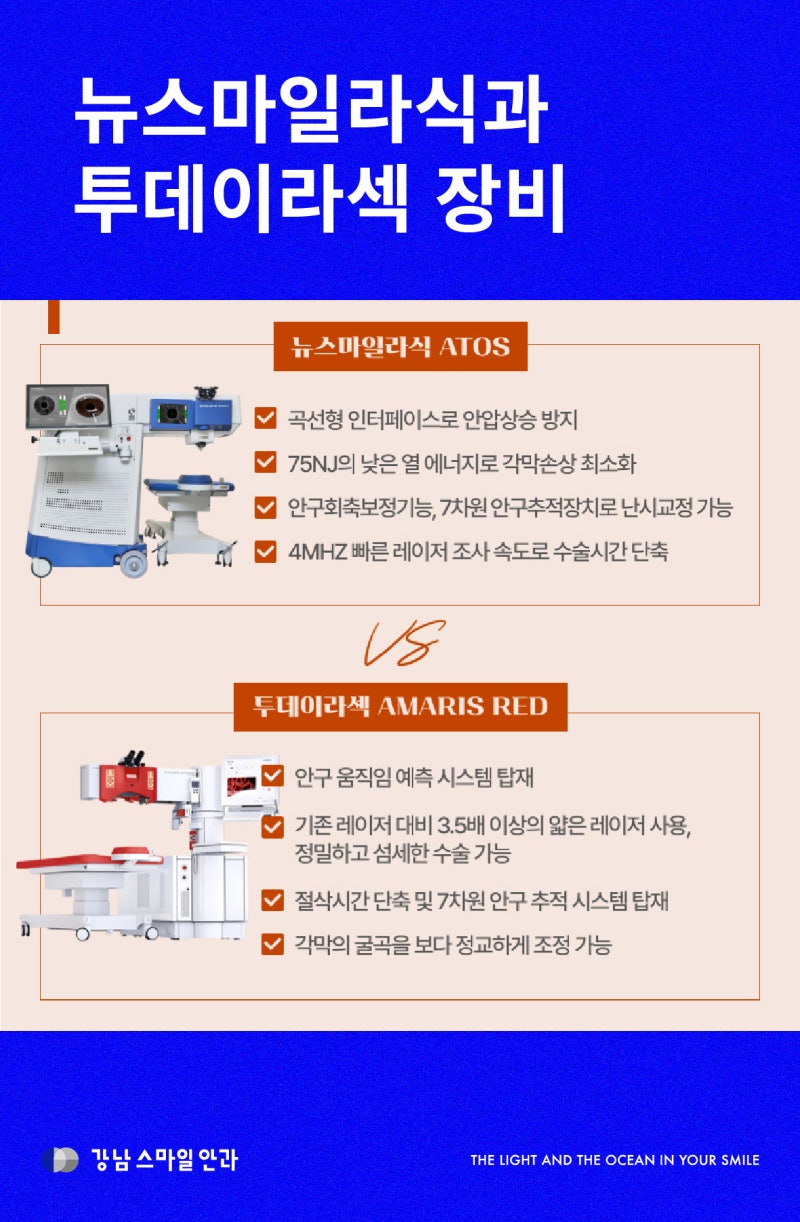
Even for the same LASIK/LASEK procedure,
the results can differ depending on the equipment used.
The latest equipment features
✅Real-time eye tracking
✅Customized laser adjustment according to corneal curvature
✅Precise astigmatism axis correction
These functions allow for more delicate correction.
Especially for those with astigmatism, the difference in equipment can be more significant.
Because astigmatism causes light to scatter rather than focus on a single point,
even a slight misalignment of the axis can reduce the correction effect
or result in residual astigmatism after surgery.
Therefore, what you must confirm during the consultation is:
✅How the astigmatism axis is measured
✅What system is used to prevent axis misalignment during surgery
✅Whether personalized laser treatment tailored to your eyes is possible
These are the three points.
If you have even a slight astigmatism,
checking whether precise equipment is used is a crucial point.
Gangnam Station Eye Clinic: What about glare or dry eyes after surgery?
The most commonly reported discomfort after vision correction surgery
is night glare.
This usually occurs due to the difference in size between the nocturnal pupil
and the corrected area (optical zone) treated by the laser.
It's a phenomenon where, when the pupil dilates in a dark environment after being fine during the day,
light outside the corrected range scatters and appears blurry.
Therefore, before surgery,
✅What is your nocturnal pupil size in mm?
✅Is the optical zone set wide enough compared to your pupil?
It's good to check these carefully.
Another concern is dry eyes,
which is a natural process that occurs due to temporary damage to corneal nerves during surgery,
leading to a decrease in tear secretion regulation.
If you frequently experience dryness,
✅Dry eye examination before surgery
✅Proceeding with surgery after treatment if necessary
Such procedures can be helpful.
Recently, there are also surgical methods that can reduce dry eyes,
so it's best to choose one that suits your eye condition.
Asking questions during a consultation is never a burden.


When asking these questions during a consultation,
you might worry about appearing like a difficult patient,
but good clinics actually trust patients who ask proactive questions more.
It's important to remember that LASIK/LASEK is not a one-size-fits-all surgery,
and the optimal method varies depending on various factors such as
corneal thickness, presence and axis of astigmatism, pupil size, and lifestyle.
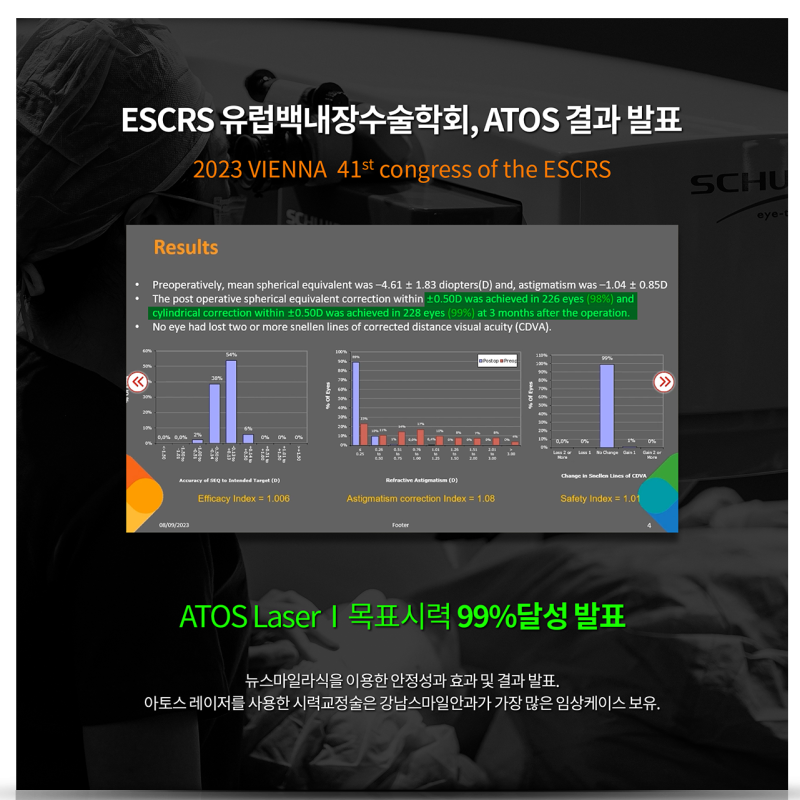
Refer to the three questions summarized today
to prepare more thoroughly for your Gangnam Station Eye Clinic consultation,
and choose the safest and most satisfactory vision correction method for you.
💙 Smile Surgery is Best at Gangnam Smile Eye Clinic 💙
💙🤍 𝖦𝖠𝖭𝖦𝖭𝖠𝖬 𝖲𝖬𝖨𝖫𝖤 𝖤𝖸𝖤 𝖢𝖫𝖨𝖭𝖨𝖢💙🤍
𝗧𝗛𝗘 𝗟𝗜𝗚𝗛𝗧 𝗔𝗡𝗗 𝗧𝗛𝗘 𝗢𝗖𝗘𝗔𝗡 𝗜𝗡 𝗬𝗢𝗨𝗥 𝗦𝗠𝗜𝗟𝗘













Frequently Asked Questions
Is surgery impossible if the corneal thickness is thin?
No, the feasibility of surgery depends on the safety of the residual corneal thickness. The US FDA recommends maintaining a residual cornea of at least 250-300µm after surgery. In cases of high myopia or high astigmatism, surgery may be limited if the cornea is thin due to the large amount of tissue removed.
Is the choice of LASIK/LASEK equipment important?
Yes, there can be differences in results depending on the equipment. The latest equipment allows for delicate correction with features such as eye movement tracking, customized corneal curvature adjustment, and precise astigmatism axis correction. Especially if you have astigmatism, you must confirm whether precise equipment is used.
Why does night glare occur after surgery?
Night glare occurs due to the difference between the pupil size at night and the size of the optical zone corrected by the laser. When the pupil dilates in the dark, light outside the corrected range scatters and appears blurred. It is advisable to check the pupil size and optical zone settings before surgery.
How do I manage dry eyes after surgery?
Dry eyes can occur due to reduced tear secretion function from corneal nerve damage during surgery. If you normally experience dryness, it is helpful to undergo a dry eye examination and treatment before surgery, or to choose a surgical method that can reduce dryness.
Is vision correction surgery possible for high myopia/astigmatism?
Yes, it is possible. However, high myopia or high astigmatism requires a larger ablation amount, so surgery may be limited if the the cornea is thin. The most important thing is to get an accurate diagnosis of how stably the cornea will be maintained after surgery and whether there is sufficient residual cornea.