2026-07-09
Secrets to Successful Breast Augmentation at Clyve Plastic Surgery
Discover Clyve Plastic Surgery's unique approach to breast augmentation, focusing on minimizing tissue damage, reducing recovery time, and prioritizing patient comfort without mandatory general anesthesia.

Secrets to Successful Breast Augmentation at Clyve Plastic Surgery
When considering breast augmentation, many people express concerns not only about the results but also about the surgical process, recovery, and the burden of general anesthesia. In fact, during consultations, questions like ‘Is general anesthesia absolutely necessary?’ and ‘How much does it affect recovery?’ are frequently asked. Breast augmentation is not merely a procedure to increase size; it's a surgery where the outcome and satisfaction can vary significantly depending on the approach and process.
Therefore, Clyve Plastic Surgery aims to explain not only the results of breast augmentation but also the process itself.
Traditional understanding of breast augmentation: Why was general anesthesia considered standard?
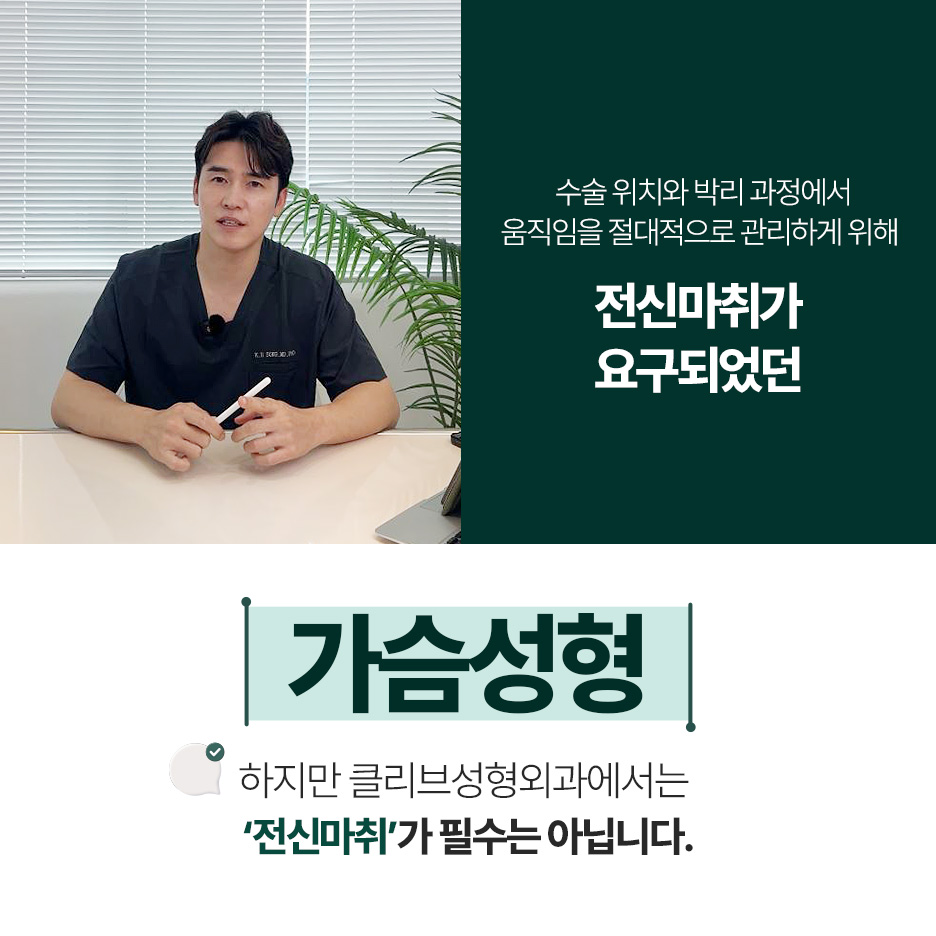
For a long time, breast augmentation was widely perceived as a procedure that inherently required general anesthesia. It was considered essential because complete control over movement during surgery and ample space for dissection were necessary. Especially, to minimize tissue damage during implant insertion, a stable surgical environment was crucial, often leading to limited choices in anesthesia methods.
Clyve Plastic Surgery's standard: General anesthesia is not always mandatory.
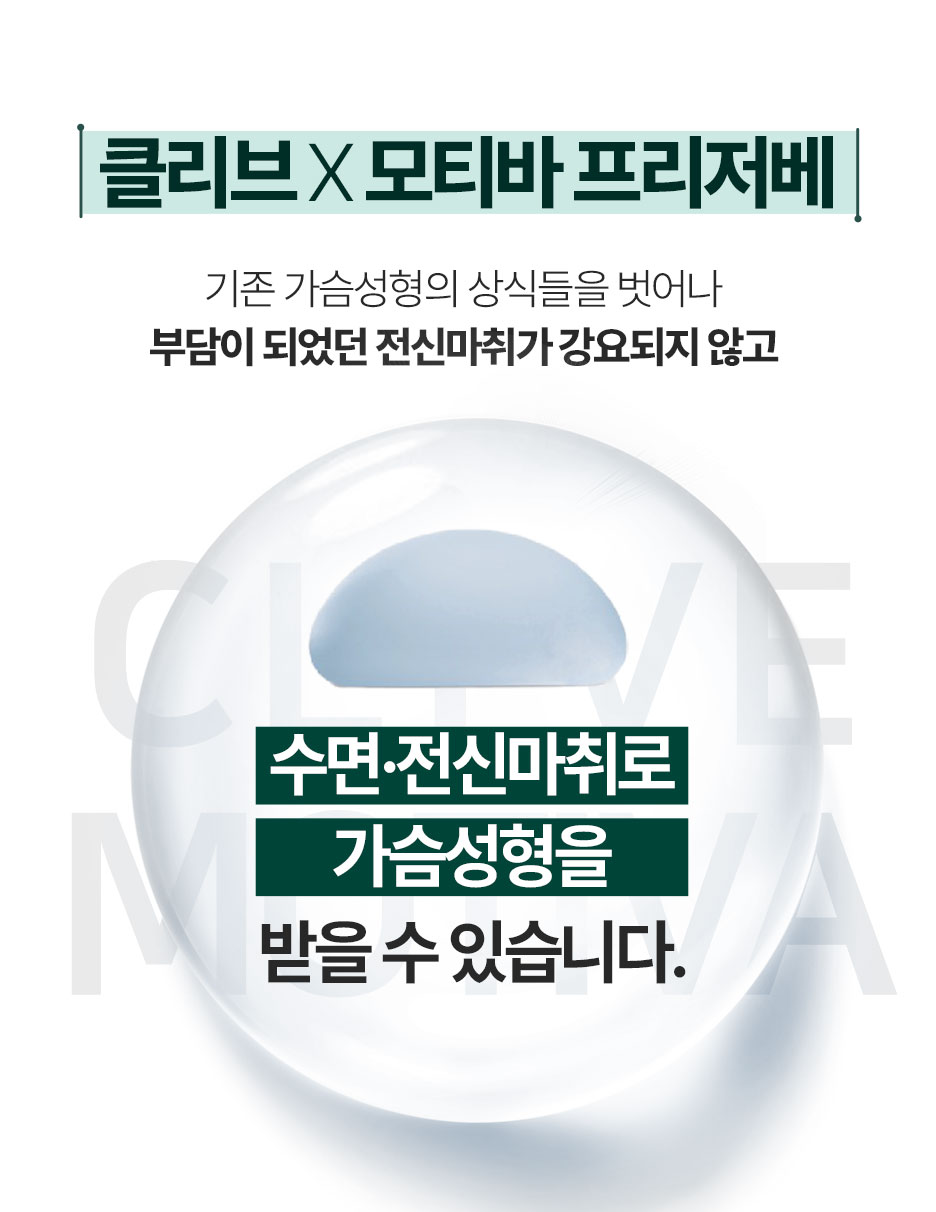
At Clyve Plastic Surgery, we do not uniformly apply general anesthesia for all breast augmentation procedures. We differentiate cases where surgery can be sufficiently performed under sedation or general anesthesia, depending on the surgical scope, incision method, and extent of dissection. This is not merely a choice to reduce the burden of anesthesia but a standard that also considers the pre- and post-operative recovery process and overall physical strain.
Clyve × Motiva Preserve: A difference in approach
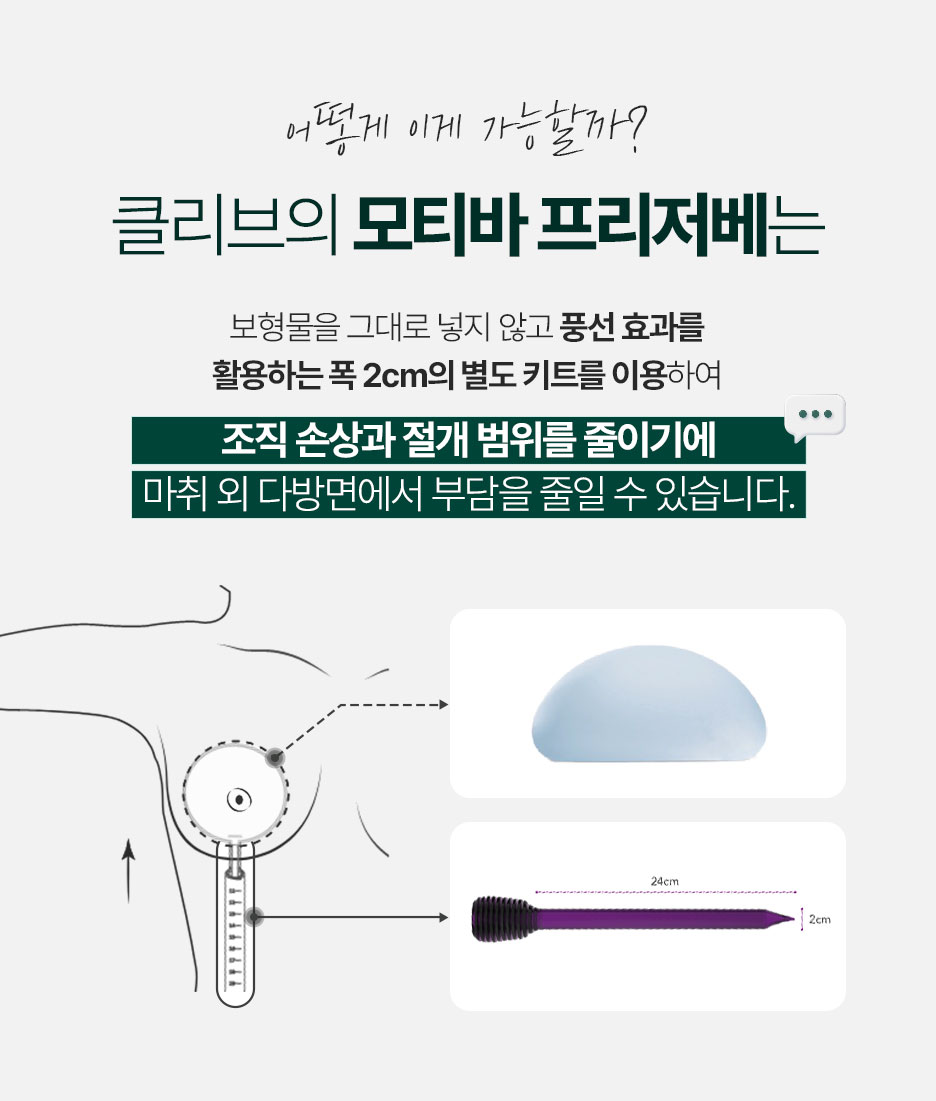
Motiva Preserve breast augmentation performed at Clyve differs from the traditional ‘implant pushing method.’ It utilizes a separate kit, approximately 2cm wide, based on the principle of balloon expansion, to gradually secure the necessary space. This process aims to reduce unnecessary dissection and minimize tissue damage and incision size.
Reasons for reducing tissue damage and incision size
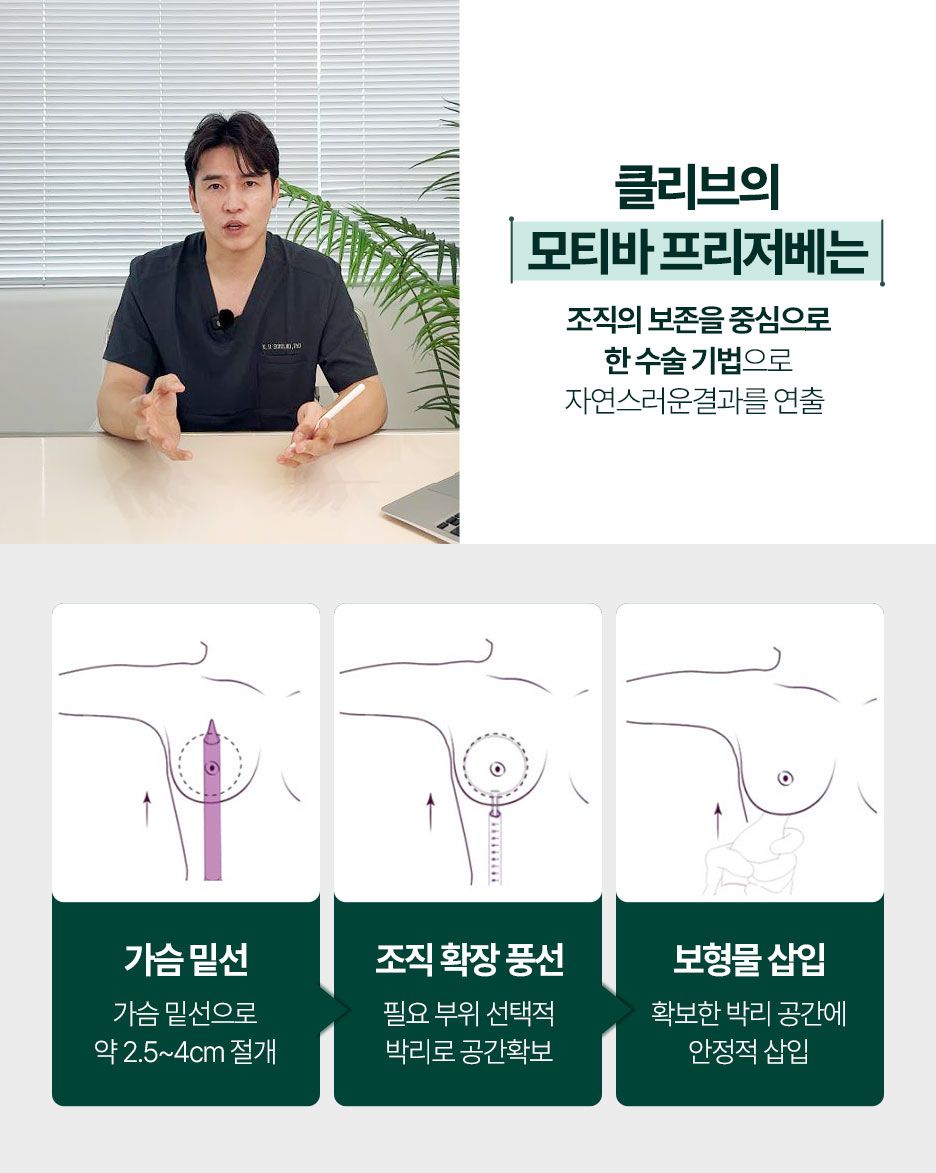
A wider dissection area can lead to increased tissue damage, bleeding, and recovery burden. Clyve's Motiva Preserve method focuses on reducing overall physical stress during surgery, not just the anesthesia burden, by selectively dissecting only the necessary areas to create space. This is directly linked to the stability of the breast augmentation results.
The surgery is performed through an inframammary incision within a range of approximately 2.5 to 4 cm, designed to ensure the implant is stably positioned within the secured space. Tissue expansion, space creation, and implant insertion occur in stages, allowing for a structure that considers the smoothness of the breast line and a natural feel.
Key factors influencing the outcome

Reducing implant movement and damage during the dissection process naturally leads to different results. A smooth breast line, natural feel, and stability in everyday movements are outcomes accumulated from each step of the surgical process. Breast augmentation is not solely determined by implant size.
Differences in recovery period and return to daily life
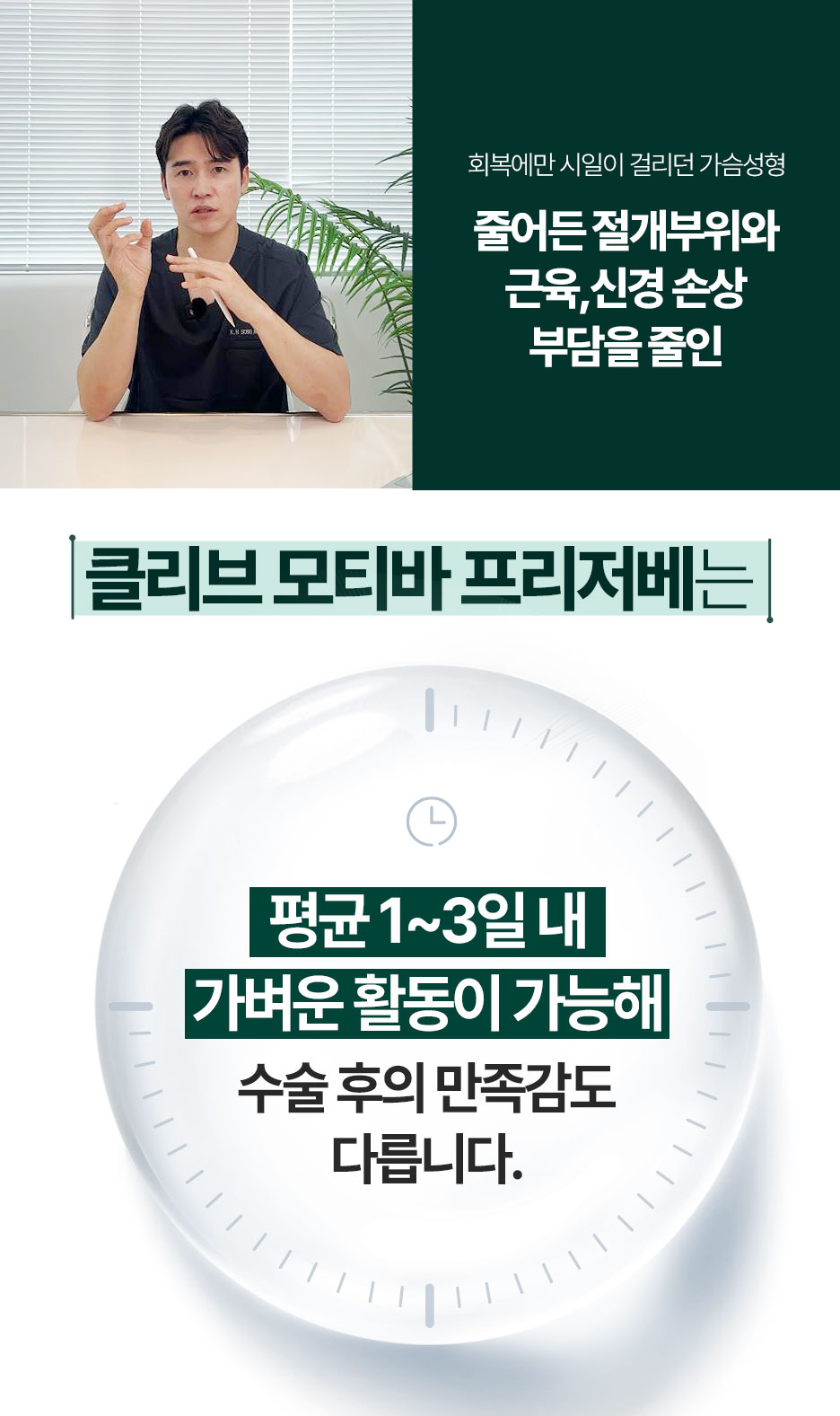
Surgical methods that reduce tissue damage and incision size also show differences in the recovery process. On average, light daily activities are often possible within 1 to 3 days, and a different recovery pattern can be expected compared to traditional breast augmentation, which often required dedicated recovery time. However, individual differences may exist depending on body type and recovery speed.
Why proficiency and system are important
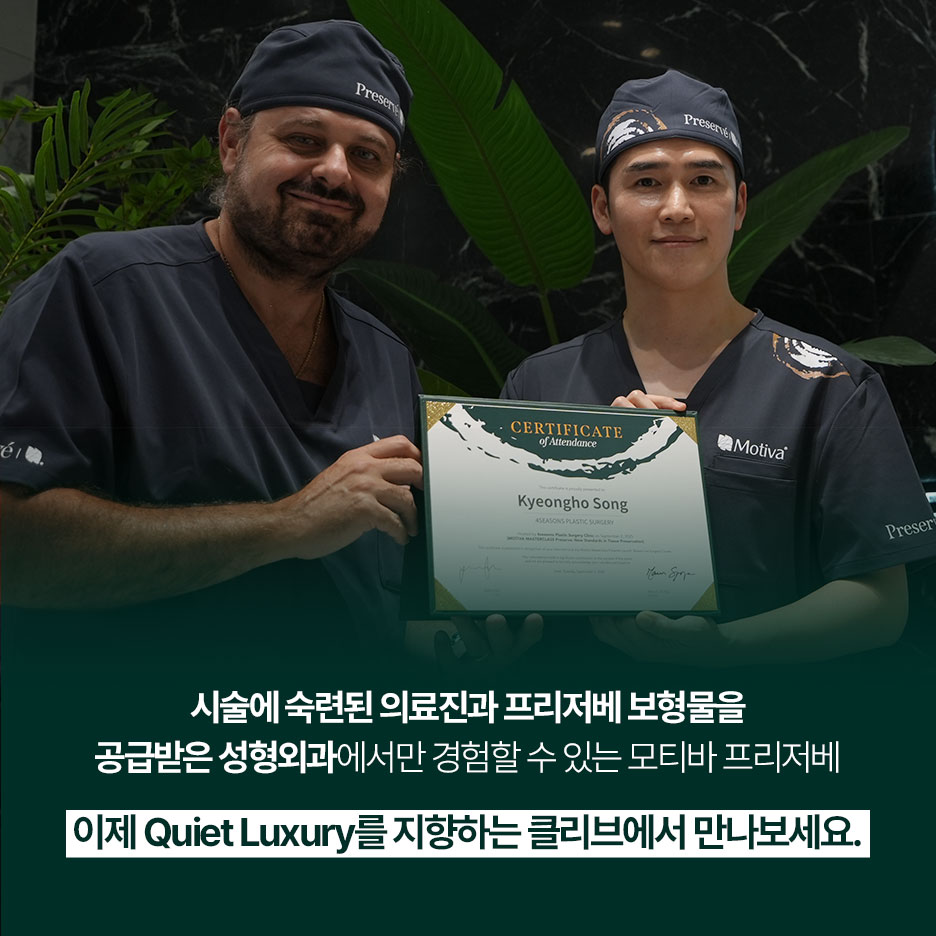
Motiva Preserve breast augmentation requires not only implant selection but also an understanding and proficiency in surgical techniques. At Clyve Plastic Surgery, these implants are stably supplied, and medical staff with relevant surgical experience perform the procedures directly. This choice considers the shape and feel that are maintained not only immediately after surgery but also over time.
The standard for successful breast augmentation is the ‘process.’
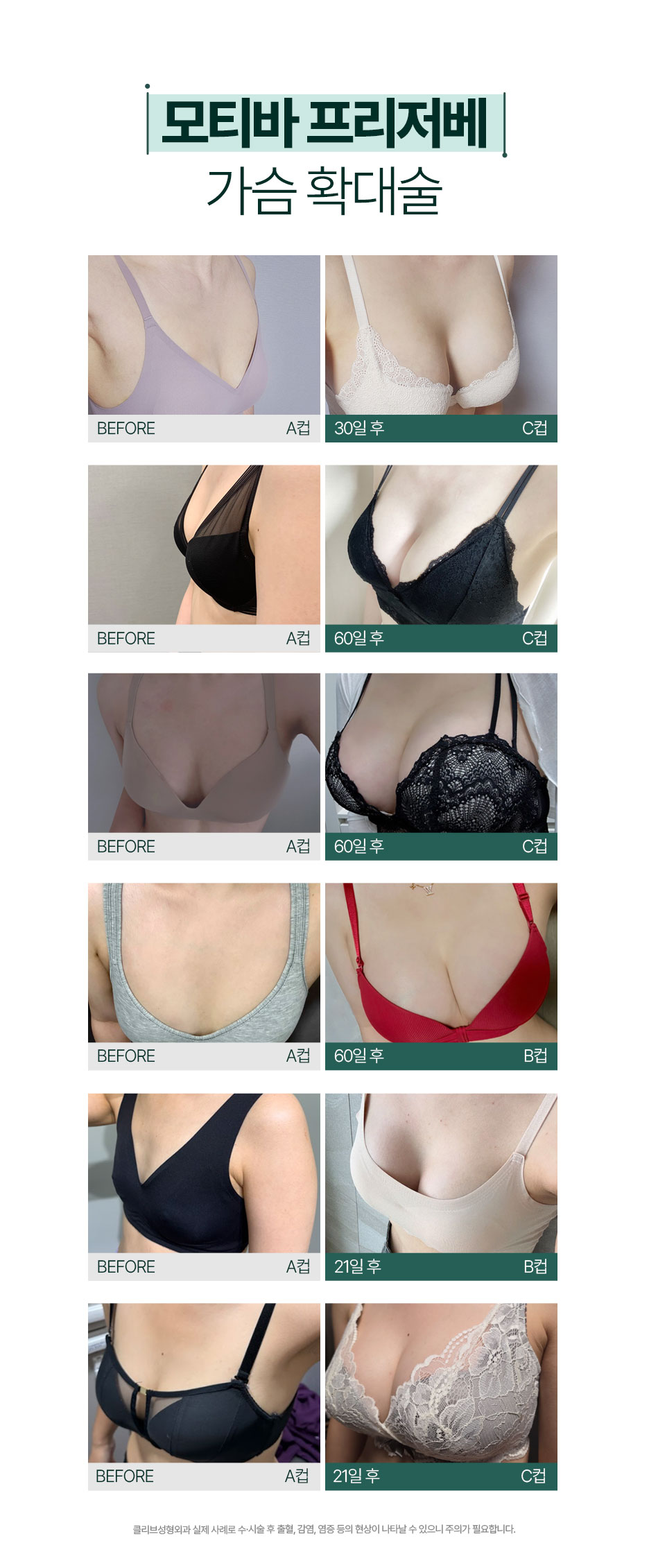
The success of breast augmentation is not determined by a single factor. All processes, from anesthesia method, incision location, dissection range, implant selection, to surgical technique, work organically to create the result. Clyve Plastic Surgery aims for stable results through a surgical process that reduces unnecessary burden and focuses on the inherent purpose of breast augmentation.




Secrets to Successful Breast Augmentation at Clyve Plastic Surgery

When I first considered breast augmentation, the most confusing part was the overwhelming amount of information. Every review said something different, and I felt lost about what criteria to use for judgment. So, instead of just looking for a breast augmentation clinic that appeared frequently, I started by examining why certain clinics were trusted. That's how I discovered Clyve. Even before the consultation, I had the impression that the clinic's system and direction were relatively clear.
The difference in ‘structural explanation’ felt during the consultation process

During the actual consultation, what stood out most was the explanation style. Instead of vaguely saying, ‘This will make you beautiful,’ they outlined the possible range based on my body type, skin condition, and rib cage structure. This is when I truly understood why consultation is so important when choosing a breast augmentation clinic. They discussed realistic results rather than presenting unrealistic goals, which built trust. The fact that they didn't rush my decision was also impressive.
Realistic criteria that were important in implant selection

The explanation about implants was also impressive. They repeatedly emphasized that not only touch and size but also durability and maintenance should be considered. Instead of definitively stating which implant was better, they explained it in a way that matched my lifestyle and ability to manage, making it easy to understand. Through this process, I realized that choosing a breast augmentation clinic is not just about selecting a surgical location. Ultimately, the idea that the implant is a choice that accompanies you through the time after surgery resonated with me.
Recovery management felt more important than the surgery itself

I thought everything would be over once the surgery was done, but in reality, what came after was even more crucial. Specific instructions for recovery were provided, along with explanations of why they were necessary. I physically felt that basic care, such as wearing a compression garment or restricting activities, influenced the outcome. Through this experience, I learned that the role of a breast augmentation clinic is not limited to the day of surgery.
The standard of ‘success’ has changed.






Over time, my criteria for evaluating the results also changed. The comfort I felt in daily life became more significant than noticeable changes. Feeling natural when dressing or looking in the mirror gave me confidence in my choice. So now, I remember my experience at Clyve Plastic Surgery not as a ‘radical change’ but as a ‘process of finding balance.’






Looking back, there was one reason why I felt the surgery was successful: the standards remained consistent from beginning to end. I believe this outcome was possible because Clyve Plastic Surgery respected choices that suited my body rather than following trends or comparisons. If you are facing similar concerns, I encourage you to take time to establish your own criteria before making a quick decision. That process itself was already the beginning of success.